Với hơn 10 năm kinh nghiệm về vận chuyển khí nén, Headpowder Sơn Đông cung cấp hệ thống, thiết bị và quạt gió toàn chuỗi, đảm nhận các dự án kỹ thuật bột trọn gói trên toàn quốc.
When handling boron powder in industrial applications, selecting the right conveying method is crucial for efficiency, safety, and cost-effectiveness. As a leading manufacturer in the field, Shandong HeadPowder Engineering Co., Ltd. from China provides insights into the common boron powder conveying methods, helping clients make informed decisions based on their specific operational needs.
Introduction to Boron Powder Conveying
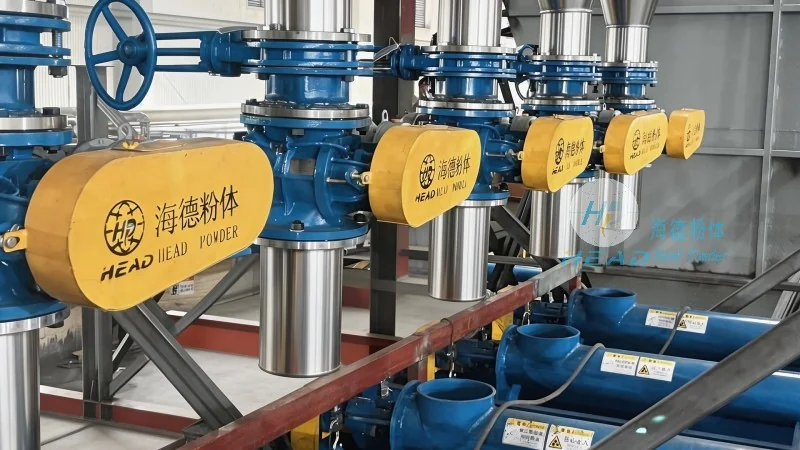
Boron powder, a key material in various industries such as metallurgy, ceramics, and chemical processing, requires specialized handling due to its fine particle size and potential dust hazards. Conveying systems must ensure minimal product loss, maintain product integrity, and comply with safety regulations. Shandong HeadPowder Engineering Co., Ltd., based in Shandong, China, specializes in designing and manufacturing efficient conveying solutions tailored to boron powder characteristics.
1. Gravity Conveying Systems
Gravity conveying relies on the natural force of gravity to move boron powder from one point to another. This method is typically used for short horizontal or slight incline distances where the material can flow freely. One of the primary advantages of gravity conveying is its simplicity and low operational cost, as it often requires minimal mechanical components. However, its effectiveness is limited by the material's flowability and the slope of the conveyor. For boron powder, which may have poor flow characteristics due to its fine particles, gravity systems may not be suitable for long distances or steep inclines. Additionally, gravity conveying can lead to uneven flow rates, potentially causing bottlenecks or product accumulation at certain points.
2. Pneumatic (Air) Conveying Systems
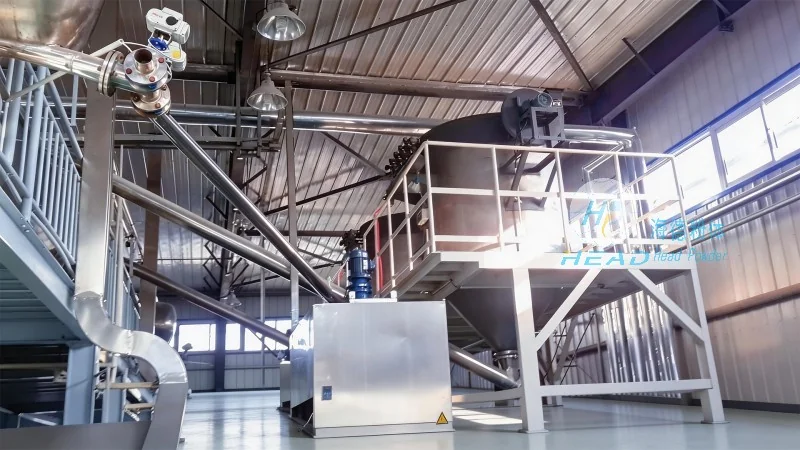
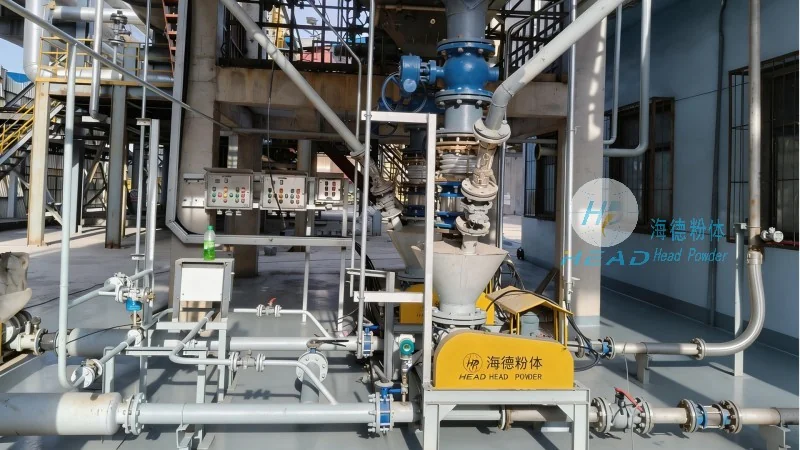
Pneumatic conveying uses compressed air to transport boron powder through a pipeline. This method is widely adopted for its ability to handle fine powders over longer distances and at varying elevations. One of the key advantages is the ability to transport materials in a closed system, reducing dust emissions and improving safety. Pneumatic systems also allow for precise control over flow rates and can handle abrasive materials like boron powder without significant wear on components. However, they have higher energy consumption compared to other methods, as compressed air requires additional power. Moreover, the system's performance can be affected by air pressure, particle size, and moisture content. For boron powder, which may be sensitive to moisture, proper moisture control is essential to prevent clumping or degradation during transport.
3. Mechanical Conveying Systems
Mechanical conveying systems, including screw conveyors, belt conveyors, and bucket elevators, use mechanical components to move boron powder. Screw conveyors are particularly effective for horizontal or slight incline transport, as they can handle a wide range of particle sizes and flow rates. The main advantage is their reliability and ability to operate continuously without the need for external power sources like air compressors. However, screw conveyors may cause particle degradation due to friction, especially for brittle materials like boron powder. Belt conveyors are suitable for longer horizontal distances and can handle larger quantities of material. They are cost-effective and easy to install, but may require regular maintenance to prevent belt wear. Bucket elevators are ideal for vertical transport, providing high capacity and efficiency. However, they can be more complex and expensive to install compared to other mechanical systems.
4. Comparison of Conveying Methods
When selecting a boron powder conveying method, several factors must be considered, including the material's properties, distance, elevation, and operational requirements. Gravity conveying is best suited for short distances and low flow rates, offering low cost but limited flexibility. Pneumatic systems excel in long-distance and vertical transport, providing dust control and precise flow control but at higher energy costs. Mechanical systems, such as screw and belt conveyors, offer reliable and continuous operation with lower energy consumption but may require more maintenance and can cause particle degradation.
Conclusion
Choosing the right boron powder conveying method is critical for optimizing industrial processes. Shandong HeadPowder Engineering Co., Ltd. provides comprehensive solutions tailored to specific applications, ensuring efficiency, safety, and product integrity. By understanding the advantages and disadvantages of each method, industries can select the most suitable conveying system for their boron powder handling needs.

 Shandong Headpowder Engineering Co., Ltd.
 156-6277-7102(Quản lý Trương)
  0531-83386006
  Thành phố Tế Nam, Tỉnh Sơn Đông, Trung Quốc
Điện thoại
WeChatTư vấn
Lên đầu