Với hơn 10 năm kinh nghiệm về vận chuyển khí nén, Headpowder Sơn Đông cung cấp hệ thống, thiết bị và quạt gió toàn chuỗi, đảm nhận các dự án kỹ thuật bột trọn gói trên toàn quốc.
For industries dealing with rare earth powders, selecting the right conveying method is crucial for efficiency, safety, and product integrity. This article provides a detailed comparison of common methods used to transport rare earth powders, focusing on their applications, advantages, and limitations. The information is presented by Shandong HeadPowder Engineering Co., Ltd., a leading provider of specialized conveying solutions for the rare earth industry.
Introduction to Rare Earth Powder Conveying
Rare earth powders, such as neodymium, praseodymium, and cerium, are critical components in modern manufacturing, including electronics, renewable energy, and automotive industries. These materials are often handled in bulk and require reliable, low-dust, and efficient conveying systems to maintain their quality and prevent contamination. The choice of conveying method depends on factors like powder properties, production scale, environmental regulations, and operational requirements. This comparison aims to help manufacturers and engineers make informed decisions by evaluating the most common techniques.
1. Screw Conveyors for Rare Earth Powders
Screw conveyors, also known as auger conveyors, are among the most widely used equipment for transporting bulk materials, including rare earth powders. These systems consist of a rotating helical screw inside a tube or trough, which moves material from one end to the other through gravitational force and the screw's rotation. For rare earth powders, screw conveyors are particularly effective when the material is free-flowing and has low to moderate moisture content. They are simple in design, easy to install, and can operate in horizontal or slight incline configurations. However, screw conveyors may not be suitable for powders with high moisture or those that tend to clog, as the screw can become stuck or cause excessive wear. Shandong HeadPowder Engineering Co., Ltd. offers customized screw conveyor solutions tailored to the specific characteristics of rare earth powders, ensuring optimal performance and minimal downtime.
2. Pneumatic Conveying Systems
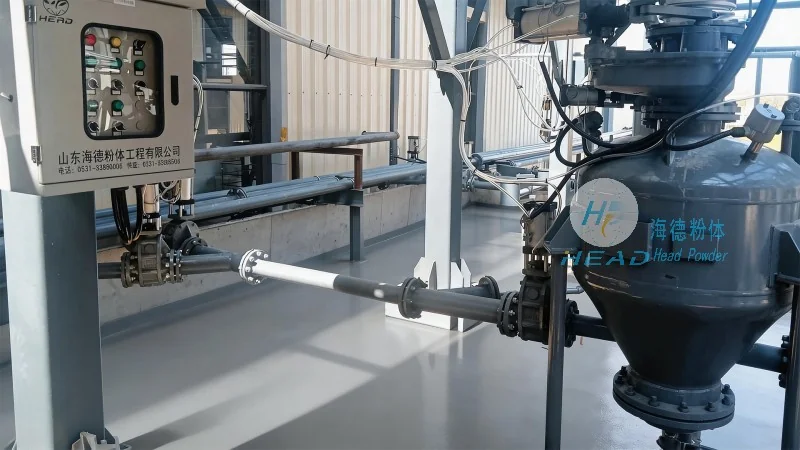
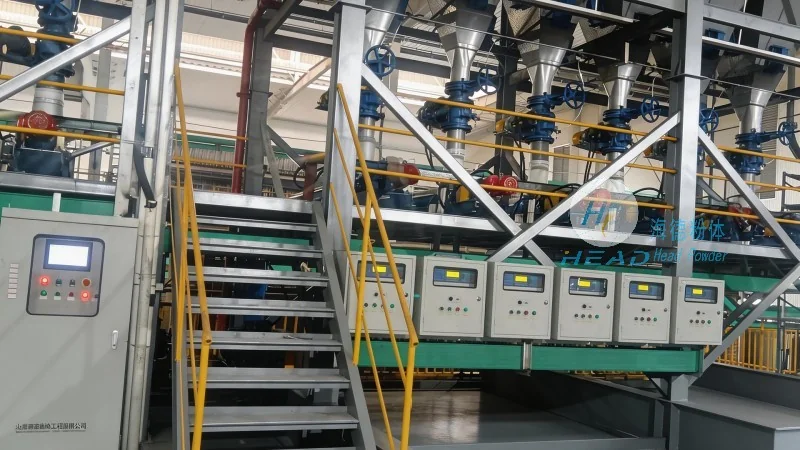
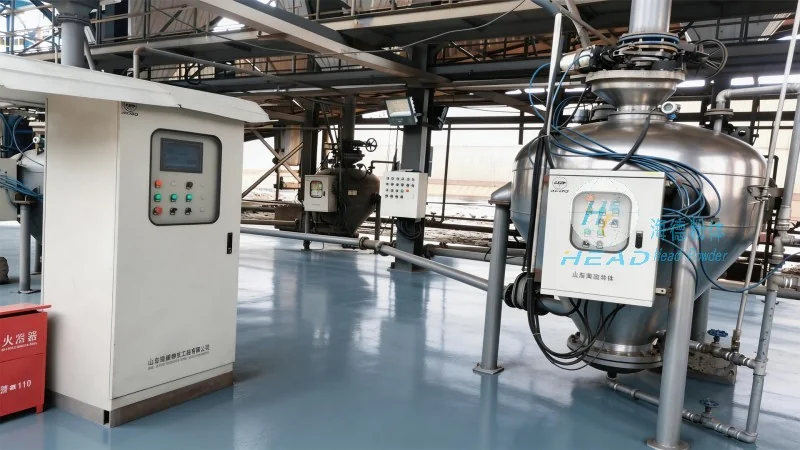
Pneumatic conveying, or air-based transport, is another popular method for moving rare earth powders, especially in applications requiring long-distance or high-volume transport. This technique uses compressed air to create a flow that carries the powder through a pipeline. There are two main types: dilute-phase and dense-phase pneumatic conveyors. Dilute-phase systems are suitable for short to medium distances and low to medium powder loads, while dense-phase systems are ideal for longer distances and higher loads, as they maintain a higher powder-to-air ratio, reducing particle degradation and wear on the system components. Pneumatic conveying offers advantages such as enclosed transport, which minimizes dust exposure and environmental impact, and the ability to integrate with other processing equipment. However, it requires a robust air compression system and may experience pressure drops over long distances, potentially affecting flow rates. The choice between dilute and dense-phase depends on the specific application and the need for efficient, low-dust transport.
3. Vibrating Conveyors
Vibrating conveyors use mechanical vibrations to move rare earth powders along a trough. The system consists of a conveyor bed that is excited by an electromagnetic or mechanical vibrator, causing the material to move forward due to the vibration-induced motion. This method is effective for handling powders with high moisture content or those that tend to stick to surfaces, as the vibration helps break up agglomerates and prevent clogging. Vibrating conveyors are also suitable for inclined or vertical transport, making them versatile for various production setups. They are relatively low-maintenance and can operate continuously without the need for significant power input. However, the design must be carefully optimized to avoid excessive vibration that could damage the equipment or cause noise pollution. Shandong HeadPowder Engineering Co., Ltd. specializes in designing vibrating conveyors that meet the unique demands of rare earth powder handling, ensuring smooth and efficient material transport.
4. Belt Conveyors
Belt conveyors are commonly used in bulk material handling for transporting rare earth powders over long distances or in large quantities. These systems consist of a continuous belt that moves over rollers or idlers, carrying the material from the loading point to the discharge point. Belt conveyors are highly efficient for horizontal or slightly inclined transport and can handle a wide range of powder types, including those with high abrasiveness or moisture content. They are capable of high throughput and can be integrated with other processing equipment, such as storage silos or processing units. However, belt conveyors require regular maintenance to ensure the belt remains in good condition and to prevent material buildup or spillage. The design must also consider the potential for dust generation and the need for proper sealing to maintain product integrity. For rare earth powder applications, belt conveyors are often used in combination with other equipment to form a complete material handling system.
5. Comparison and Selection Criteria
When selecting a conveying method for rare earth powders, several factors must be considered to ensure the best fit for the application. The first consideration is the powder's physical properties, such as particle size, moisture content, and flowability. Powders with high moisture or tendency to agglomerate may require vibrating or pneumatic conveyors, while free-flowing powders can be handled by screw or belt conveyors. The second factor is the distance and volume of material to be transported. Short distances and low volumes may be suitable for screw conveyors, while long distances and high volumes may require pneumatic or belt conveyors. Environmental regulations and safety requirements also play a role, as some methods, like pneumatic conveying, offer better dust control. Cost and maintenance considerations are also important, as different systems have varying upfront costs and operational expenses. Ultimately, the choice of conveying method should align with the overall production goals, ensuring efficiency, reliability, and compliance with industry standards.
Conclusion
Each conveying method for rare earth powders has its strengths and limitations, and the optimal choice depends on the specific application and operational requirements. Shandong HeadPowder Engineering Co., Ltd. provides comprehensive solutions tailored to the needs of rare earth powder handling, including customized screw conveyors, pneumatic systems, and vibrating conveyors. By understanding the characteristics of each method and considering the relevant factors, manufacturers can select the most effective conveying system to enhance productivity, maintain product quality, and ensure safe operation. The goal is to achieve efficient, low-dust, and reliable transport of rare earth powders, supporting the growth and sustainability of the industries that rely on these critical materials.

 Shandong Headpowder Engineering Co., Ltd.
 156-6277-7102(Quản lý Trương)
  0531-83386006
  Thành phố Tế Nam, Tỉnh Sơn Đông, Trung Quốc
Điện thoại
WeChatTư vấn
Lên đầu