Với hơn 10 năm kinh nghiệm về vận chuyển khí nén, Headpowder Sơn Đông cung cấp hệ thống, thiết bị và quạt gió toàn chuỗi, đảm nhận các dự án kỹ thuật bột trọn gói trên toàn quốc.
For industrial applications, the efficient and reliable transport of coal particles is crucial for maintaining operational efficiency and safety. Shandong HeadPowder Engineering Co., Ltd., a leading provider of bulk material handling solutions, specializes in various coal particle conveying systems tailored to different operational needs. This article explores the primary methods used for coal particle transport, highlighting their features, advantages, and typical applications.

1. Belt Conveyor Systems
Belt conveyors are among the most common and versatile methods for transporting coal particles over long distances and varying elevations. These systems consist of a continuous loop of a durable rubber or fabric belt that moves over rollers and pulleys. The belt is supported by idlers and carries the coal from the loading point to the discharge point. A key advantage of belt conveyors is their ability to handle large volumes of material with minimal maintenance. They are widely used in coal mines, power plants, and processing facilities due to their high capacity and reliability. The design can be customized to accommodate different particle sizes and moisture content, ensuring optimal performance.
2. Screw Conveyors
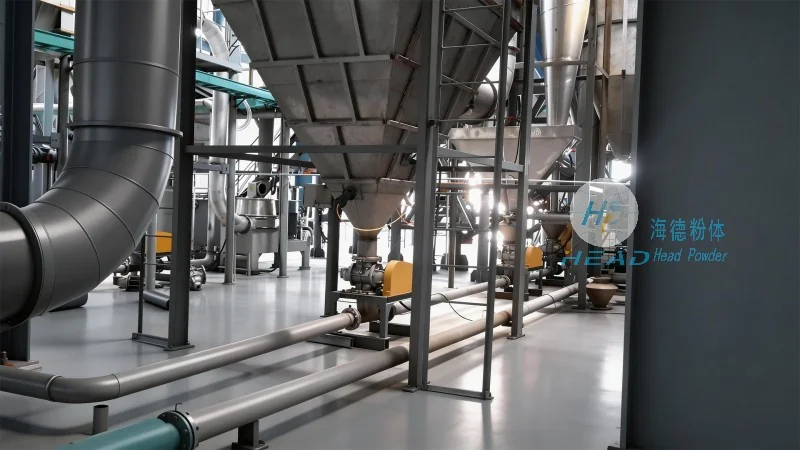
Screw conveyors, also known as auger conveyors, are another popular choice for transporting coal particles, especially in applications requiring vertical or inclined movement. These systems use a rotating screw (auger) inside a trough to move material forward. The screw's rotation creates a pushing action that propels the coal along the conveyor. Screw conveyors are ideal for handling fine or dry coal particles and are often used in feeders, mixers, and storage silos. They are compact and can be installed in confined spaces, making them suitable for processing plants where space is limited. The design allows for easy cleaning and maintenance, reducing downtime and operational costs.
3. Pneumatic Conveying Systems
Pneumatic conveying systems utilize air or gas to transport coal particles through a pipeline. This method is particularly effective for handling fine or dusty coal, as it minimizes dust generation and provides a closed system for environmental control. There are two main types of pneumatic conveyors: positive displacement and pressure systems. Positive displacement systems use a pump to create a vacuum or pressure to move the material, while pressure systems rely on compressed air to push the coal through the pipeline. Pneumatic conveying is often used in applications where dust control is critical, such as in food processing or where the coal needs to be transported over short to medium distances. The system can be designed for both dilute and dense phase conveying, offering flexibility in handling different particle sizes and flow rates.
4. Bucket Elevators
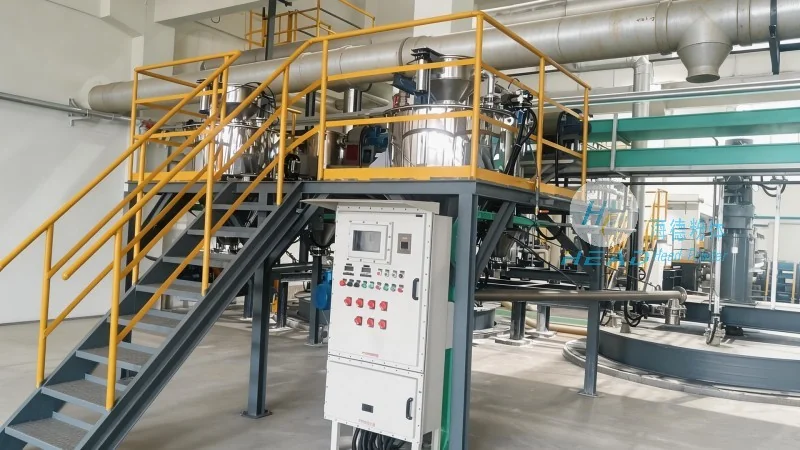
Bucket elevators are vertical or inclined conveyors that use a series of buckets attached to a chain or belt to transport coal particles vertically. The buckets are filled at the bottom and then travel up the elevator, discharging the material at the top. This method is highly efficient for vertical transport and is commonly used in coal handling facilities to move material from ground level to storage silos or processing equipment. Bucket elevators can handle a wide range of particle sizes and are capable of transporting large volumes of material with high vertical lift capabilities. They are designed with heavy-duty components to withstand the abrasive nature of coal particles, ensuring long service life and minimal maintenance. The enclosed design of bucket elevators also helps in controlling dust and maintaining a clean working environment.
5. Vibrating Conveyors
Vibrating conveyors use vibration to move coal particles along a trough. The conveyor is equipped with an oscillating mechanism that causes the material to move forward through the use of gravity and the vibrational force. These systems are suitable for transporting coal particles over short to medium distances and are often used in feeders and transfer points. Vibrating conveyors are particularly effective for handling sticky or wet coal, as the vibration helps to break up clumps and prevent material buildup. They are also used in applications where gentle handling is required to avoid damaging the coal particles. The design is simple and low-cost, making it an economical choice for many industrial applications. However, they are generally limited to horizontal or slightly inclined transport and may not be suitable for long-distance or high-capacity operations.
6. Hydraulic Conveyors
Hydraulic conveyors use water or a slurry to transport coal particles through a pipeline. This method is primarily used for transporting coal in a slurry form, often from mining sites to processing plants. The coal is mixed with water to create a slurry, which is then pumped through a pipeline to the destination. Hydraulic conveyors are effective for long-distance transport and can handle large volumes of material. However, they require a significant amount of water and energy for pumping, which can increase operational costs. The system is also susceptible to clogging if the coal particles are too large or if the water quality is poor. Despite these challenges, hydraulic conveyors are still used in certain applications where other methods are not feasible.

 Shandong Headpowder Engineering Co., Ltd.
 156-6277-7102(Quản lý Trương)
  0531-83386006
  Thành phố Tế Nam, Tỉnh Sơn Đông, Trung Quốc
Điện thoại
WeChatTư vấn
Lên đầu