Với hơn 10 năm kinh nghiệm về vận chuyển khí nén, Headpowder Sơn Đông cung cấp hệ thống, thiết bị và quạt gió toàn chuỗi, đảm nhận các dự án kỹ thuật bột trọn gói trên toàn quốc.
When considering the application of nanoscale calcium carbonate (n-CaCO₃) in various industrial processes, the choice of delivery method is critical. The effectiveness of n-CaCO₃ as a functional additive depends significantly on how it is introduced into the production line. This article outlines the primary delivery methods used by Shandong HeadPowder Engineering Co., Ltd., a leading manufacturer based in Shandong, China, focusing on the technical aspects and practical considerations for each approach.
1. Bulk Handling and Conveying Systems
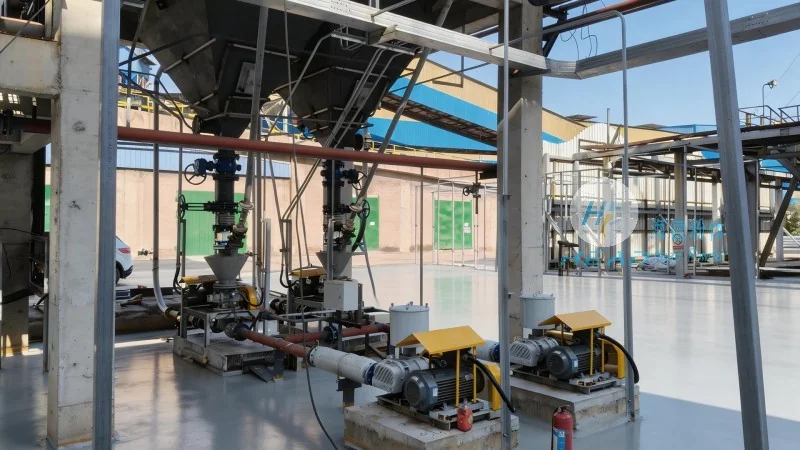
For large-scale production environments, bulk handling systems are commonly employed to transport n-CaCO₃ from storage silos or bulk containers to processing equipment. These systems typically involve screw conveyors, pneumatic conveying lines, or bucket elevators. The choice of equipment depends on the particle size distribution, moisture content, and flow characteristics of the n-CaCO₃. For instance, screw conveyors are effective for handling free-flowing powders with minimal dust generation, while pneumatic conveying systems are suitable for materials that require airtight containment to prevent contamination or loss. Shandong HeadPowder Engineering Co., Ltd. specializes in designing and integrating such systems to ensure efficient and reliable material transfer, minimizing downtime and maximizing productivity.
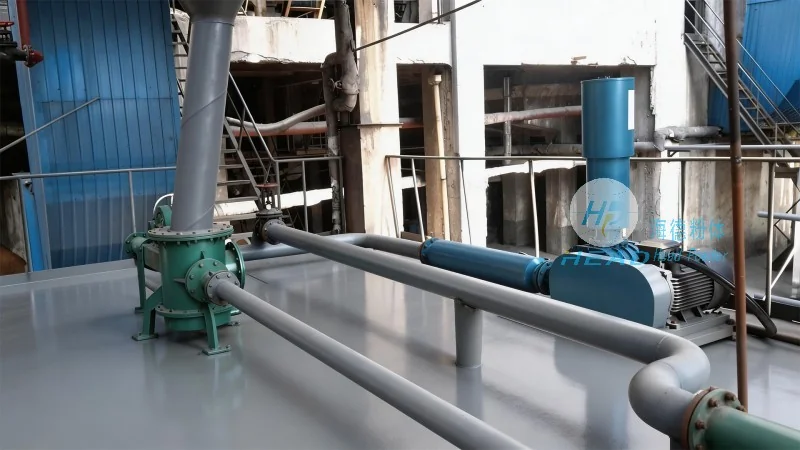
2. Metering and Dosing Equipment
In applications where precise control over the dosage of n-CaCO₃ is essential, specialized metering and dosing equipment is utilized. This includes gravimetric feeders, volumetric screw feeders, and rotary valves. Gravimetric feeders provide high accuracy by measuring the mass of material being dispensed, which is crucial for maintaining consistent product quality in downstream processes such as polymer compounding or coating formulation. Volumetric screw feeders, on the other hand, are simpler and more cost-effective for applications where exact mass control is less critical. The selection of metering equipment is influenced by factors like the required dosage range, the viscosity of the host material, and the need for integration with process control systems. At Shandong HeadPowder Engineering Co., Ltd., engineers work closely with clients to select the most appropriate dosing solution based on their specific operational requirements.
3. Dispersion and Mixing Systems
After delivery, n-CaCO₃ often needs to be dispersed uniformly within a liquid or solid matrix. This is achieved through various mixing and dispersion systems, including high-shear mixers, colloid mills, and ultrasonic processors. High-shear mixers are widely used for blending n-CaCO₃ into polymers or coatings, as they can break down agglomerates and achieve a stable dispersion. Colloid mills further refine the particle size and improve the surface area of the n-CaCO₃, enhancing its functional properties. Ultrasonic systems are particularly effective for sensitive materials that require minimal shear stress. The efficiency of these systems is directly related to the design of the mixing equipment and the processing parameters, such as speed, temperature, and residence time. Proper dispersion is vital to ensure that the n-CaCO₃ particles are evenly distributed, maximizing their performance as a reinforcing or functional additive.
4. Pneumatic Conveying for Controlled Flow
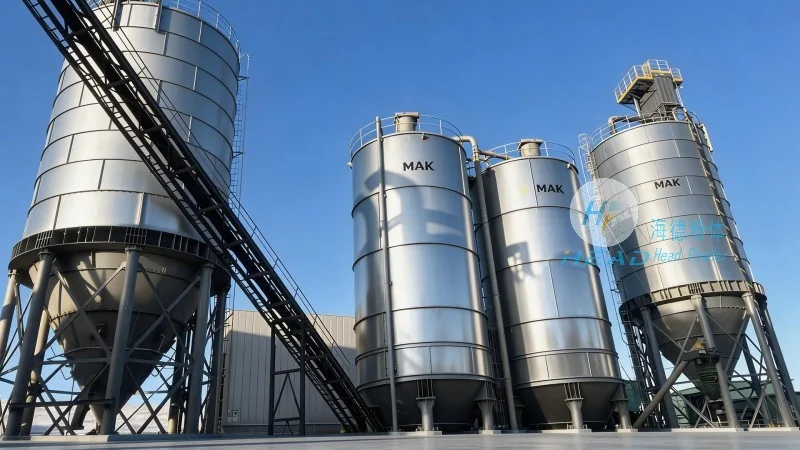
Pneumatic conveying systems offer a flexible and efficient method for transporting n-CaCO₃, especially in applications where dust control and precise control over flow rates are necessary. These systems use compressed air to move the powder through a pipeline, allowing for both positive and negative pressure operation. Positive pressure systems push the material from the source to the destination, while negative pressure systems draw the material into the system. The choice between the two depends on the distance, height, and layout of the production facility. Pneumatic conveying is particularly advantageous for handling n-CaCO₃ with low bulk density or high moisture content, as it minimizes material degradation and ensures a consistent flow rate. Shandong HeadPowder Engineering Co., Ltd. has extensive experience in designing pneumatic conveying lines that meet the specific needs of clients, ensuring reliable operation and minimal maintenance.
5. Handling and Storage Solutions
The delivery process also includes considerations for handling and storage of n-CaCO₃. Proper storage is essential to maintain the quality of the material, as n-CaCO₃ can be sensitive to moisture and temperature changes. Silos, hoppers, and bulk bags are commonly used for storage, with the design of these containers tailored to the flow characteristics of the powder. For example, hoppers with conical bases and smooth internal surfaces prevent material buildup and ensure uniform discharge. The storage area should be equipped with moisture control measures, such as dehumidifiers or desiccant systems, to protect the n-CaCO₃ from degradation. Additionally, proper ventilation and lighting are necessary to facilitate inspection and maintenance of the storage equipment. Shandong HeadPowder Engineering Co., Ltd. provides comprehensive storage solutions that integrate seamlessly with the delivery systems, ensuring that the n-CaCO₃ remains in optimal condition until it is ready for use.

 Shandong Headpowder Engineering Co., Ltd.
 156-6277-7102(Quản lý Trương)
  0531-83386006
  Thành phố Tế Nam, Tỉnh Sơn Đông, Trung Quốc
Điện thoại
WeChatTư vấn
Lên đầu