Với hơn 10 năm kinh nghiệm về vận chuyển khí nén, Headpowder Sơn Đông cung cấp hệ thống, thiết bị và quạt gió toàn chuỗi, đảm nhận các dự án kỹ thuật bột trọn gói trên toàn quốc.
HeadPowder, a leading manufacturer in the battery material processing industry, specializes in providing efficient and reliable solutions for handling cathode and anode materials. As a company based in Shandong, China, we understand the critical role that material handling systems play in ensuring the quality and consistency of battery production. This article explores the various methods used to transport and manage these essential materials, offering insights into the technologies that support modern battery manufacturing processes.
Understanding the Importance of Material Handling in Battery Production
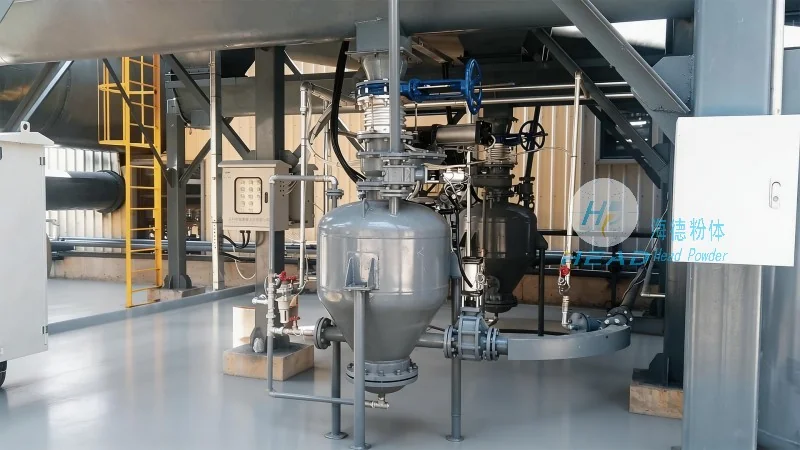
In the battery manufacturing sector, the handling of cathode and anode powders is a critical step that directly impacts the final product's performance and reliability. Efficient material handling systems not only enhance production throughput but also maintain the purity and uniformity of the materials. At HeadPowder, we recognize that each material has unique properties, such as particle size, moisture content, and reactivity, which require specialized handling approaches. By selecting the appropriate handling method, manufacturers can minimize material loss, reduce contamination risks, and optimize the overall production line.
Common Cathode and Anode Material Handling Methods
There are several established methods for transporting cathode and anode materials, each with its own advantages and applications. The choice of method depends on factors like material characteristics, production scale, and environmental considerations. Below are some of the most commonly used techniques in the industry:
Screw Conveyors for Fine Powder Handling
Screw conveyors, also known as auger conveyors, are widely used for transporting fine powders, including cathode and anode materials. These systems consist of a rotating helical screw inside a tube or trough, which moves material from one point to another through gravity or mechanical force. Screw conveyors are particularly effective for handling dry, free-flowing powders with relatively small particle sizes. They offer several benefits, including compact design, low maintenance requirements, and the ability to handle materials at various angles. For example, in the production of lithium-ion batteries, screw conveyors are often used to transport cathode active materials from storage bins to mixing or coating equipment. The smooth operation of screw conveyors ensures minimal material degradation, preserving the material's properties for optimal battery performance.
Belt Conveyors for Bulk Material Transport
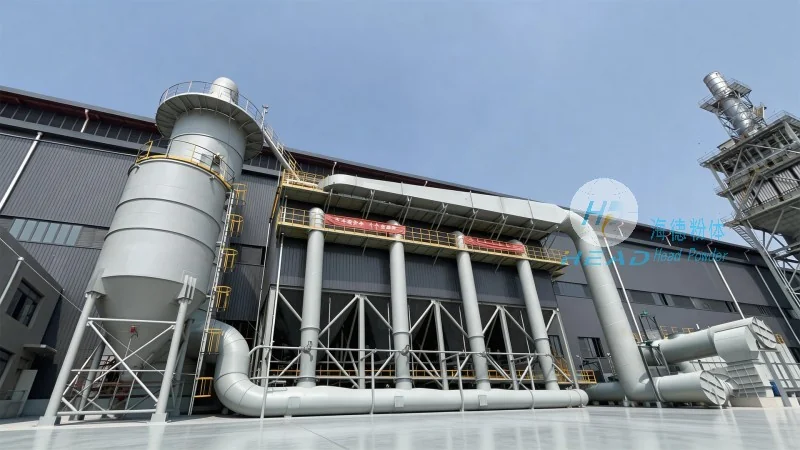
Belt conveyors are another common solution for transporting bulk quantities of cathode and anode materials. These systems use a continuous belt that moves materials along a path, typically supported by rollers or idlers. Belt conveyors are ideal for handling larger particles or bulk materials, such as raw ore or pre-processed powders. They can be designed to operate at high speeds and over long distances, making them suitable for large-scale production facilities. At HeadPowder, we design belt conveyor systems that can handle heavy loads while maintaining precise material control. For instance, a belt conveyor might transport anode materials from a storage silo to a mixing station, ensuring consistent material flow and preventing segregation. The robust construction of belt conveyors allows them to withstand the abrasive nature of battery materials, reducing wear and extending the system's lifespan.
Airborne (Pneumatic) Conveying Systems
Airborne or pneumatic conveying systems use compressed air to transport powders through a pipeline. This method is particularly effective for handling fine, dust-like materials that are prone to segregation or contamination. Pneumatic conveyors can be classified into two main types: dilute-phase and dense-phase. Dilute-phase systems use low air velocities to move materials in a suspended state, while dense-phase systems use higher air velocities to push material in a compacted form. Airborne conveying offers advantages such as enclosed transport, which minimizes dust exposure and environmental impact. Additionally, these systems can be integrated with other processing equipment, such as mixers or dryers, to create a seamless production line. HeadPowder has expertise in designing pneumatic conveying systems tailored to the specific needs of cathode and anode materials. For example, a dense-phase system might be used to transport high-value cathode powders, ensuring minimal loss and maintaining material integrity during transport.
Vertical Lift Conveyors for Multi-Level Handling
Vertical lift conveyors are essential for moving materials between different levels in a production facility. These systems use a combination of horizontal and vertical components to transport materials vertically, often with the assistance of gravity or mechanical drives. Vertical lift conveyors are commonly used in battery manufacturing to move materials from ground-level storage to upper-level processing equipment. They are particularly useful in facilities with limited horizontal space, as they save floor area while providing efficient material transport. At HeadPowder, we design vertical lift systems that can handle varying material loads and maintain consistent flow rates. For instance, a vertical lift conveyor might transport anode materials from a lower-level storage silo to a coating machine on an upper floor. The design of these systems ensures minimal material spillage and maintains the material's quality, which is critical for achieving uniform battery performance.
Hybrid and Custom Handling Solutions
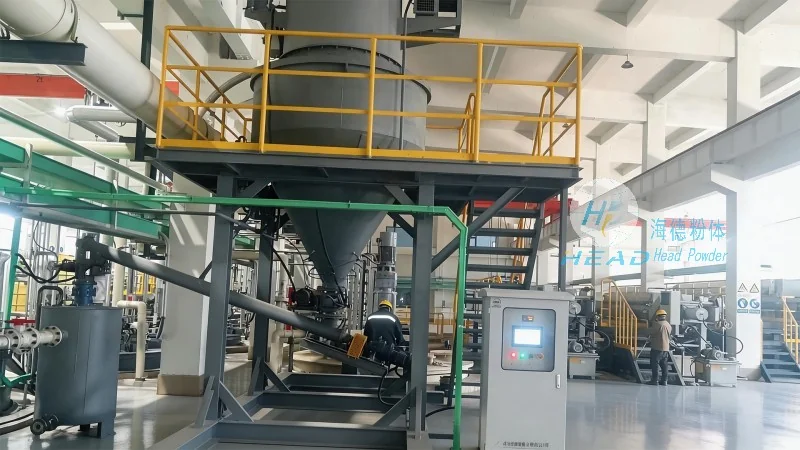
Many modern battery manufacturing facilities employ hybrid or custom handling solutions that combine multiple technologies to meet specific production requirements. These systems may integrate screw conveyors, belt conveyors, and pneumatic conveyors to create a comprehensive material handling network. Custom solutions are often required for complex production lines that involve multiple material types or processing steps. HeadPowder specializes in developing tailored handling systems that address the unique challenges of each client. For example, a hybrid system might use a screw conveyor to transport fine powders horizontally and a pneumatic conveyor to lift them vertically to a mixing station. This approach optimizes material flow and reduces downtime by minimizing the need for manual intervention. By leveraging our expertise in material handling, we help clients improve their production efficiency and maintain the quality of their battery materials.
Key Considerations for Selecting the Right Handling Method
When choosing a material handling method for cathode and anode materials, several factors must be considered to ensure optimal performance. First, the physical properties of the material, such as particle size, density, and moisture content, play a crucial role in determining the most suitable system. For example, fine powders with high moisture content may require a system with better moisture control, such as a belt conveyor with a cover or a pneumatic system with moisture-resistant components. Second, the production scale and throughput requirements influence the capacity and speed of the handling system. Large-scale facilities may need high-capacity conveyors, while smaller operations may opt for more compact solutions. Third, environmental and safety considerations are critical, especially when handling powders that can be hazardous or cause dust pollution. Enclosed systems, such as belt conveyors with dust collection or pneumatic conveyors with filtration, are often preferred to minimize environmental impact and ensure worker safety. Finally, maintenance and operational costs should be evaluated, as different systems have varying levels of complexity and upkeep requirements. At HeadPowder, we work closely with clients to assess these factors and recommend the most appropriate handling method for their specific needs.
Conclusion
Efficient material handling is a cornerstone of modern battery manufacturing, and the choice of handling method directly impacts the quality, consistency, and efficiency of the production process. HeadPowder, based in Shandong, China, offers a range of specialized solutions for transporting cathode and anode materials, including screw conveyors, belt conveyors, pneumatic systems, and vertical lift conveyors. By understanding the unique properties of each material and the specific requirements of the production line, manufacturers can select the most suitable handling method to optimize their operations. With our expertise in material handling technology, HeadPowder helps clients enhance their production capabilities and maintain the high standards required for today's battery applications.

 Shandong Headpowder Engineering Co., Ltd.
 156-6277-7102(Quản lý Trương)
  0531-83386006
  Thành phố Tế Nam, Tỉnh Sơn Đông, Trung Quốc
Điện thoại
WeChatTư vấn
Lên đầu