Với hơn 10 năm kinh nghiệm về vận chuyển khí nén, Headpowder Sơn Đông cung cấp hệ thống, thiết bị và quạt gió toàn chuỗi, đảm nhận các dự án kỹ thuật bột trọn gói trên toàn quốc.
For industrial applications involving gypsum powder, selecting the right conveying method is crucial for efficiency, safety, and cost-effectiveness. Gypsum powder, a common building material, is often used in construction, plastering, and other manufacturing processes. The way it is transported from storage to processing equipment can significantly impact production line performance. This article explores common gypsum powder conveying methods, with a focus on the advantages and applications of pneumatic conveying systems.
Traditional Gypsum Powder Conveying Methods and Their Limitations
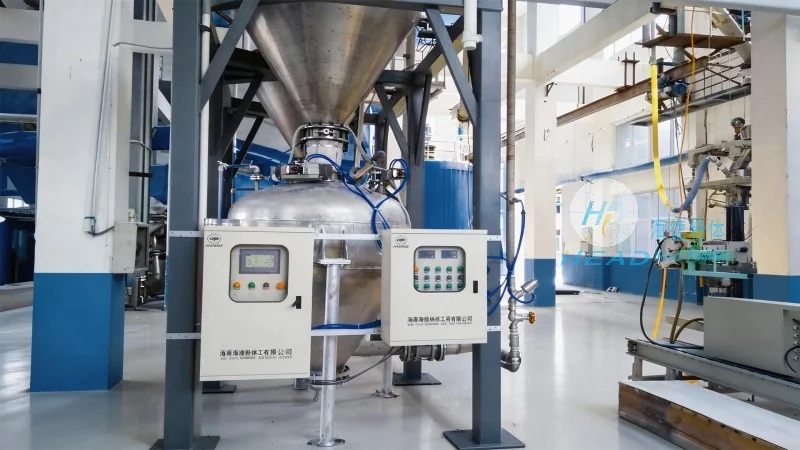
Before discussing modern solutions, it is important to understand the traditional methods used for gypsum powder transport. These methods typically include gravity feed, mechanical screw conveyors, and belt conveyors. While these systems have been in use for decades, they often present several challenges. For instance, gravity feed systems require specific topography and may not be suitable for vertical or long-distance transport. Mechanical screw conveyors can handle dry powders but are prone to clogging, especially with fine gypsum particles. Belt conveyors, on the other hand, are effective for bulk material transport but can generate dust and require regular maintenance. These limitations highlight the need for more advanced and reliable conveying solutions.
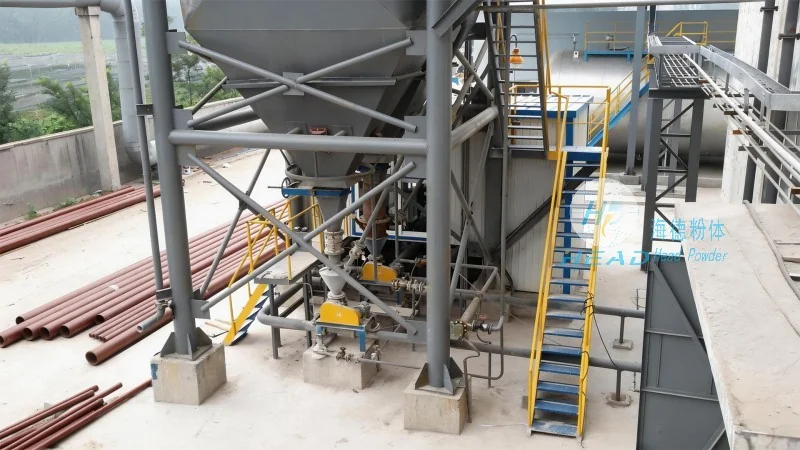
Introduction to Gypsum Powder Pneumatic Conveying Systems
Pneumatic conveying, or air-powered transport, offers a versatile and efficient alternative to traditional methods. This technology uses compressed air to move gypsum powder through a pipeline system. The system typically consists of a hopper, a rotary airlock valve, a conveying line, and a receiver. The process involves feeding the powder into the hopper, where it is then drawn into the conveying line by the air flow. The compressed air propels the powder particles through the pipeline, allowing for both horizontal and vertical transport. Pneumatic conveying systems are particularly well-suited for gypsum powder due to its fine particle size and potential for dust generation.
Key Advantages of Gypsum Powder Pneumatic Conveying
There are several key advantages that make pneumatic conveying an attractive option for gypsum powder transport. First, it provides a dust-free environment, which is essential for maintaining workplace safety and compliance with environmental regulations. Unlike mechanical systems that can generate significant dust, pneumatic systems keep the powder contained within the pipeline, reducing the risk of inhalation and contamination. Second, pneumatic conveying offers high efficiency and flexibility. The system can handle both short and long distances, as well as vertical lifts, without the need for additional equipment. This adaptability makes it suitable for various industrial settings, from small-scale operations to large-scale manufacturing plants. Third, the technology minimizes material degradation and loss. Since the powder is not in direct contact with mechanical parts, there is less risk of abrasion or breakage. This is particularly important for gypsum powder, which can be sensitive to handling and may degrade if exposed to friction or impact. Finally, pneumatic conveying systems are relatively easy to install and maintain. The components are straightforward, and the system can be integrated into existing production lines with minimal disruption. This reduces downtime and operational costs for businesses.
Components of a Typical Gypsum Powder Pneumatic Conveying System
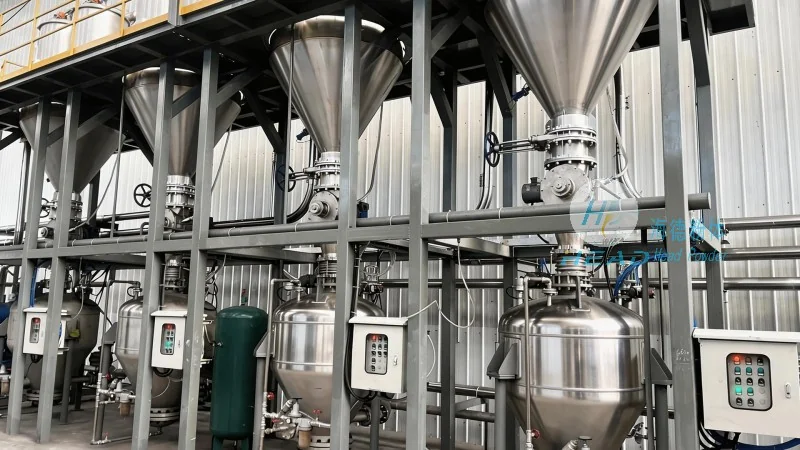
To understand how pneumatic conveying works, it is helpful to examine the key components of a system. The primary components include a hopper for material storage, a rotary airlock valve to control the flow of powder into the conveying line, a blower or compressor to generate the air pressure, a conveying line (usually made of stainless steel or other corrosion-resistant materials), and a receiver to collect the material at the destination. The hopper is designed to hold a sufficient quantity of gypsum powder, ensuring a continuous feed to the system. The rotary airlock valve acts as a gate, allowing powder to enter the conveying line while preventing air from escaping back into the hopper. The blower or compressor provides the necessary air pressure to move the powder through the pipeline. The conveying line is typically straight or with gentle bends to minimize pressure loss and ensure smooth flow. The receiver is where the powder is deposited, often equipped with a discharge valve to control the release of material. Each component plays a critical role in the overall efficiency and reliability of the system.
Applications of Gypsum Powder Pneumatic Conveying
Gypsum powder pneumatic conveying systems are widely used in various industries. In the construction sector, these systems are commonly employed in plastering and drywall manufacturing plants. They help transport gypsum powder from storage silos to mixing equipment, ensuring a consistent and controlled feed. In the manufacturing of gypsum products, such as wallboards and ceiling tiles, pneumatic conveying is used to move raw materials to production lines, improving production speed and quality. Additionally, in the agricultural and food industries, where gypsum is used as a soil conditioner or dietary supplement, pneumatic systems are used to transport the powder to processing equipment. The versatility of pneumatic conveying makes it suitable for a wide range of applications, from small-scale operations to large industrial plants.

 Shandong Headpowder Engineering Co., Ltd.
 156-6277-7102(Quản lý Trương)
  0531-83386006
  Thành phố Tế Nam, Tỉnh Sơn Đông, Trung Quốc
Điện thoại
WeChatTư vấn
Lên đầu