Với hơn 10 năm kinh nghiệm về vận chuyển khí nén, Headpowder Sơn Đông cung cấp hệ thống, thiết bị và quạt gió toàn chuỗi, đảm nhận các dự án kỹ thuật bột trọn gói trên toàn quốc.
Carburizer purification ash, a byproduct from the production of calcium carbide, requires efficient and reliable conveying methods to ensure safe and effective handling. The choice of conveying system depends on various factors including the ash's physical properties, production scale, and the specific requirements of the industrial application. This article explores several common methods used for carburizer purification ash conveying, highlighting their advantages and practical applications.
Key Considerations for Selecting a Conveying System
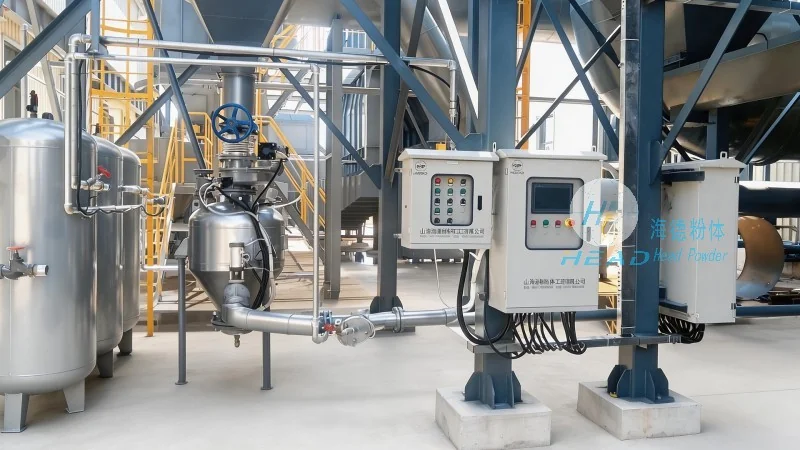
Before choosing a conveying method, it is essential to evaluate several key factors. The moisture content and particle size of the ash are critical, as they affect the system's efficiency and maintenance needs. Additionally, the distance over which the ash needs to be transported and the required throughput rate will influence the selection. For instance, a short-distance, low-volume application might benefit from a simple screw conveyor, while a long-distance, high-volume operation may necessitate a more complex system like a pneumatic conveyor. The environmental impact and safety considerations, such as dust control and explosion prevention, are also paramount in industrial settings.
Pipeline Conveying Systems
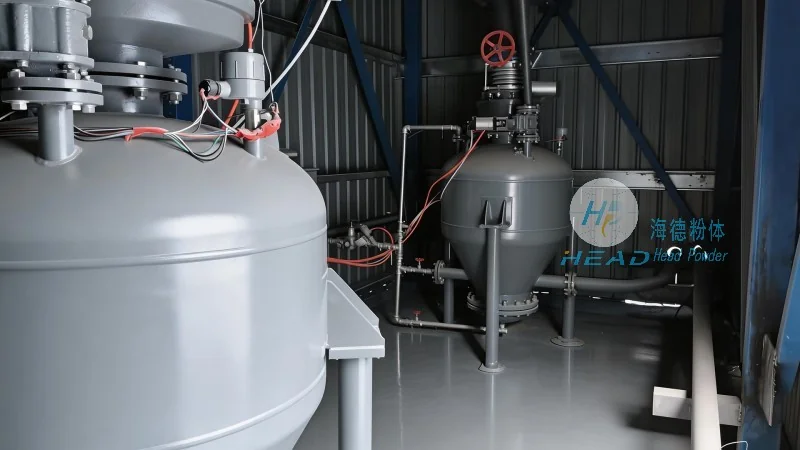
Pipeline conveying, also known as pneumatic or hydraulic conveying, is a widely used method for transporting carburizer purification ash. This system involves moving the material through a network of pipes using air or a liquid as the conveying medium. There are two main types: dilute-phase and dense-phase conveying. Dilute-phase systems use high-velocity air to suspend the ash particles, making them suitable for short to medium distances and low to medium particle sizes. Dense-phase systems, on the other hand, use lower air velocities and higher material concentrations, which is ideal for long-distance transport and handling of larger particles. The choice between these depends on the specific operational needs. For example, in a steel plant where large quantities of ash need to be moved over several kilometers, a dense-phase pneumatic conveyor can be highly effective. The system typically includes a hopper to feed the ash, a blower to generate the air flow, and a receiver to collect the material at the destination. This method offers advantages such as minimal space requirement, the ability to convey materials through vertical and horizontal paths, and effective dust suppression due to the enclosed pipeline.
Screw Conveyors
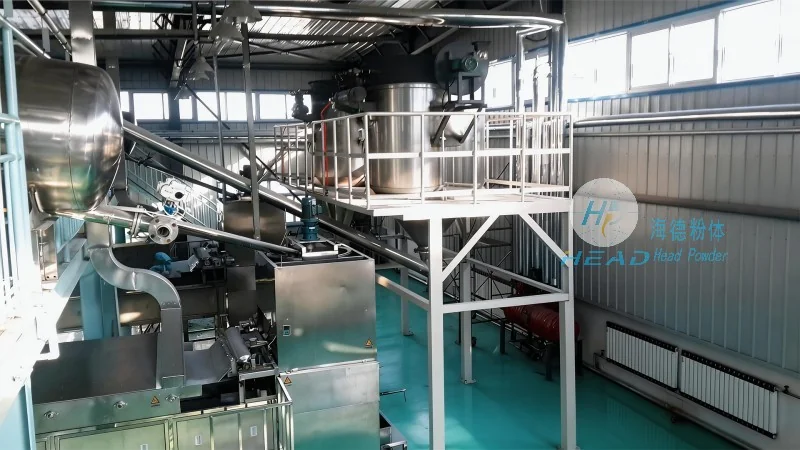
Screw conveyors, also called auger conveyors, are another common method for carburizer purification ash conveying. These systems consist of a rotating screw (auger) inside a trough or tube, which moves the material along the length of the conveyor. Screw conveyors are particularly suitable for handling dry, free-flowing materials like carburizer ash, especially when the conveying distance is relatively short (typically up to 30 meters) and the throughput is moderate. The design can be horizontal, vertical, or inclined, allowing flexibility in layout. Horizontal screw conveyors are used for level transport, while vertical ones are ideal for elevating the material to higher levels. The key advantages of screw conveyors include their simplicity, low maintenance, and ability to operate in a closed environment, which helps in controlling dust and preventing material spillage. However, they may not be suitable for very abrasive or sticky materials, as this can lead to increased wear and reduced efficiency. In industrial applications, screw conveyors are often used in conjunction with other equipment, such as crushers or classifiers, to prepare the ash for further processing.

 Shandong Headpowder Engineering Co., Ltd.
 156-6277-7102(Quản lý Trương)
  0531-83386006
  Thành phố Tế Nam, Tỉnh Sơn Đông, Trung Quốc
Điện thoại
WeChatTư vấn
Lên đầu