Với hơn 10 năm kinh nghiệm về vận chuyển khí nén, Headpowder Sơn Đông cung cấp hệ thống, thiết bị và quạt gió toàn chuỗi, đảm nhận các dự án kỹ thuật bột trọn gói trên toàn quốc.
Rare earth powders are widely used in various high-tech industries, and efficient conveying methods are crucial for their handling and transportation. The choice of conveying method depends on factors such as powder properties, production scale, and operational environment. Among the various options, air-driven (pneumatic) conveying stands out as a versatile and effective solution for handling rare earth powders.
Overview of Conveying Methods for Rare Earth Powders
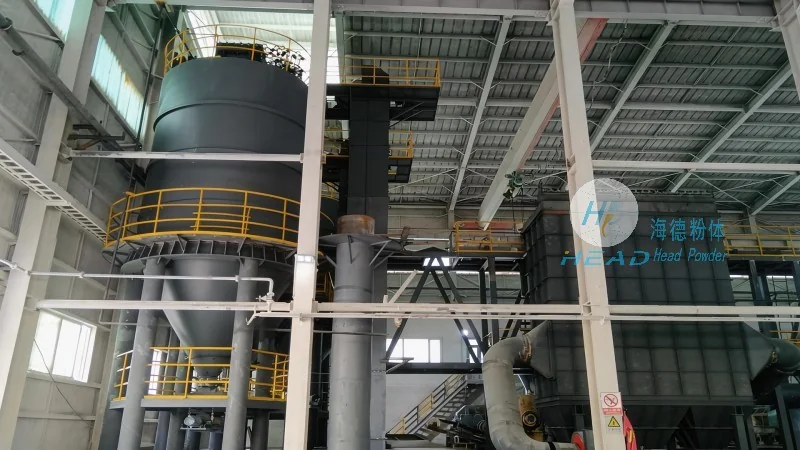
When selecting a conveying method for rare earth powders, it is essential to consider the unique characteristics of these materials. Rare earth powders are often fine, abrasive, and can be sensitive to handling conditions. Therefore, conventional methods like gravity or mechanical conveyors may not be suitable due to their limitations in controlling particle flow and preventing degradation.
Gravity Conveying: A Basic Approach
Gravity conveying relies on the natural movement of powder due to gravity. This method is typically used for short horizontal or inclined distances where the powder is free-flowing and non-abrasive. It involves setting up a sloped pipe or chute that allows the powder to slide from one point to another. While simple and low-cost, gravity conveying has significant limitations. The distance it can cover is limited, and it lacks the ability to control the flow rate or direction. Additionally, it is not suitable for vertical transport or when the powder needs to be moved against gravity.
Mechanical Conveying: Traditional Solutions
Mechanical conveyors, including screw conveyors, belt conveyors, and bucket elevators, are widely used in industrial applications. These systems use mechanical components to move powders through a system of tubes or belts. Screw conveyors, for example, use a rotating screw to push the powder forward, while belt conveyors use a moving belt to transport the material. Mechanical conveyors offer reliability and continuous operation, making them suitable for many applications. However, they have drawbacks when handling fine rare earth powders. The mechanical friction and impact can cause particle attrition, leading to reduced product quality. Moreover, these systems are prone to blockages and require regular maintenance to ensure smooth operation. For rare earth powders, which are often sensitive to handling, mechanical conveyors may not be the optimal choice.
Air-Driven Conveying: The Preferred Solution
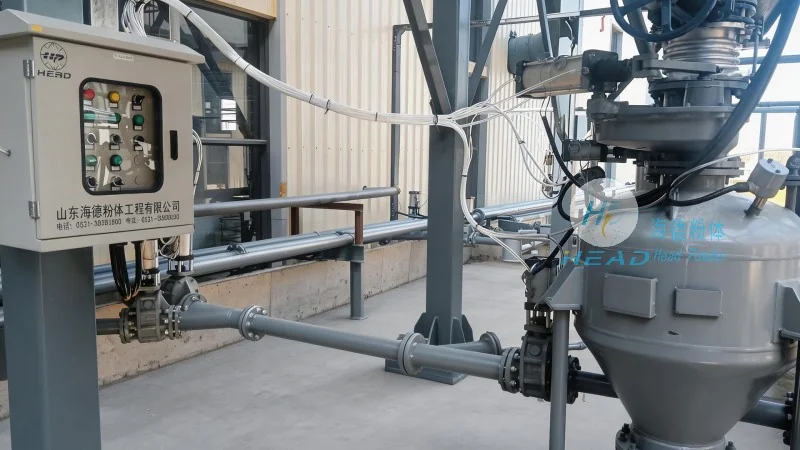
Air-driven or pneumatic conveying uses compressed air to transport powders through a pipeline. This method is particularly well-suited for rare earth powders due to its ability to handle fine, abrasive, and sensitive materials. The system operates by feeding the powder into a hopper, where it is then entrained by a high-velocity air stream generated by a blower. The powder-air mixture travels through the pipeline to a receiver, where the air is separated from the powder and recirculated back to the blower. This process ensures efficient and clean transport of rare earth powders without exposing them to external contaminants or excessive mechanical stress.
Advantages of Air-Driven Conveying for Rare Earth Powders
The air-driven conveying system offers several key advantages that make it the preferred choice for handling rare earth powders:
High Transport Capacity and Efficiency: The system can handle large volumes of powder over long distances with minimal energy consumption. Compared to mechanical conveyors, pneumatic systems can transport materials more efficiently, especially for fine powders that are difficult to move mechanically.
Product Protection and Quality Preservation: The enclosed pipeline design prevents contamination from external sources and reduces particle attrition. This is crucial for rare earth powders, which are often used in high-value applications where product purity is critical. The system minimizes dust generation and ensures that the powder remains in its original state, maintaining its chemical and physical properties.
Flexibility and Layout Adaptability: Air-driven conveying systems can be easily integrated into existing production layouts. They can be designed for both positive and negative pressure operation, allowing for flexibility in layout changes and the ability to transport powders between multiple locations. The system can also be scaled up or down to accommodate changes in production capacity.
Enhanced Safety and Environmental Control: The enclosed design of pneumatic conveying reduces dust emissions and improves workplace safety. This is particularly important when handling rare earth powders, which may contain hazardous components or generate dust that can be harmful if inhaled. The system also allows for better control over the environment, such as temperature and humidity, which can affect the powder's properties.
Shandong HeadPowder Engineering Co., Ltd.: Expert in Rare Earth Conveying Solutions
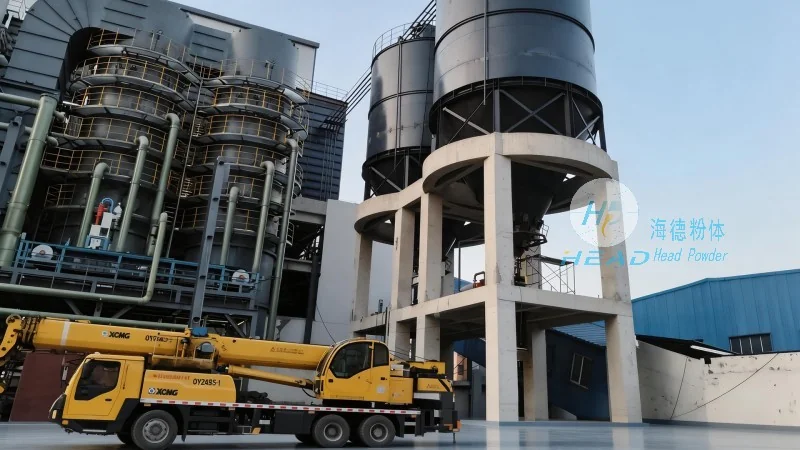
Shandong HeadPowder Engineering Co., Ltd., commonly known as headpowder, is a leading provider of specialized conveying solutions for rare earth and other industrial powders. With a strong focus on quality and customer satisfaction, headpowder has established itself as a trusted partner in the rare earth industry. The company's expertise lies in the design, manufacturing, and installation of high-performance air-driven conveying systems tailored to the specific needs of clients.
headpowder's team of experienced engineers works closely with clients to assess their conveying requirements. This includes evaluating the characteristics of the rare earth powder, such as particle size, density, and abrasiveness, as well as the production scale and operational constraints. Based on this comprehensive assessment, the company designs a customized pneumatic conveying system that optimizes efficiency, minimizes downtime, and ensures compliance with industry standards.
The systems offered by headpowder are built using durable and corrosion-resistant materials, such as stainless steel, to withstand the harsh conditions of rare earth processing. The company uses advanced technology and rigorous quality control processes to ensure that each system meets the highest standards. Additionally, headpowder provides comprehensive support, including installation, commissioning, and after-sales service, to ensure that clients can fully benefit from their conveying solutions.
Customized Solutions for Diverse Applications
headpowder understands that rare earth processing facilities have diverse and unique conveying needs. Therefore, the company offers a range of air-driven conveying solutions, including positive pressure, negative pressure, and hybrid systems. These systems can be configured to handle different powder types and flow rates, ensuring that clients can find a solution that matches their specific requirements. Whether it's a small-scale operation or a large industrial facility, headpowder has the expertise and equipment to provide effective conveying solutions.
Conclusion: The Role of Air-Driven Conveying in Rare Earth Processing
In conclusion, air-driven conveying is a superior method for transporting rare earth powders due to its efficiency, product protection, and flexibility. For businesses in the rare earth industry, choosing the right conveying method is critical to maintaining production efficiency and product quality. With its advanced technology and customer-centric approach, Shandong HeadPowder Engineering Co., Ltd. provides reliable and customized air-driven conveying solutions that help clients achieve their operational goals. By leveraging the advantages of pneumatic conveying, headpowder helps clients optimize their powder handling processes and stay competitive in the market.

 Shandong Headpowder Engineering Co., Ltd.
 156-6277-7102(Quản lý Trương)
  0531-83386006
  Thành phố Tế Nam, Tỉnh Sơn Đông, Trung Quốc
Điện thoại
WeChatTư vấn
Lên đầu