Với hơn 10 năm kinh nghiệm về vận chuyển khí nén, Headpowder Sơn Đông cung cấp hệ thống, thiết bị và quạt gió toàn chuỗi, đảm nhận các dự án kỹ thuật bột trọn gói trên toàn quốc.
Talc powder, a soft and non-abrasive mineral, is widely utilized in cosmetics, pharmaceuticals, and industrial sectors. The efficiency of material handling directly impacts production costs and product quality. This article provides a comprehensive comparison of common talc powder conveying methods, focusing on their operational principles, advantages, and limitations to assist industries in selecting the most suitable solution for their specific needs.
Overview of Talc Powder Conveying Methods
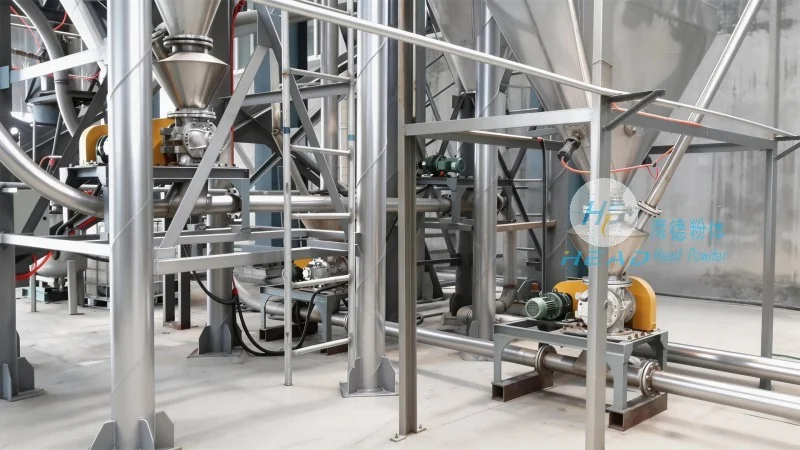
Talc powder, with its fine particle size and low bulk density, demands specialized equipment to ensure safe and efficient transport. Conveying systems must minimize dust generation, prevent clogging, and maintain product integrity. The primary methods employed in the industry include pneumatic conveying, screw conveying, belt conveying, and bucket elevators. Each method offers distinct benefits and is tailored to different operational scenarios, from small-scale processing to large-scale industrial applications.
Pneumatic Conveying: Air-Driven Efficiency
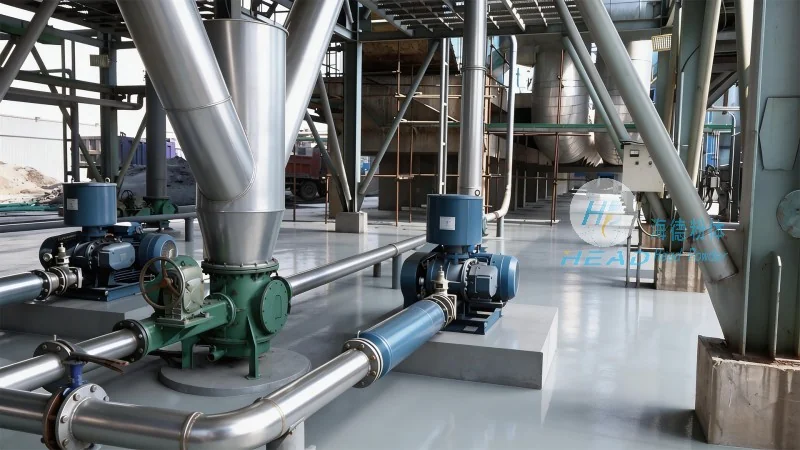
Pneumatic conveying utilizes compressed air to transport talc powder through a pipeline system. This method is particularly effective for fine powders and can cover long distances. There are two main types: pressure systems (ideal for short to medium distances, pushing material through the line) and vacuum systems (suitable for longer routes or multiple source points, drawing material into the line). The key advantage of pneumatic conveying is its ability to handle talc powder without mechanical components that might cause abrasion or contamination. However, it requires substantial energy input and may be less efficient for very fine powders prone to settling in the pipeline.
Screw Conveying: Mechanical Reliability
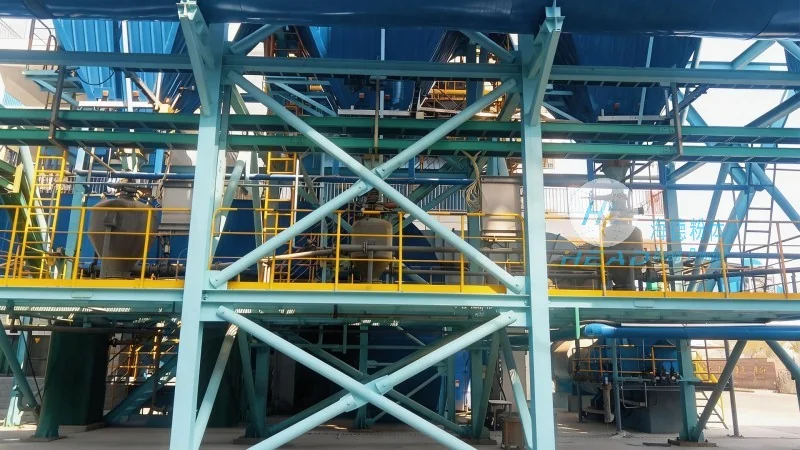
Screw conveying, or auger conveying, employs a rotating screw to move talc powder through a tube or trough. It is commonly used for horizontal or slightly inclined transport within processing facilities. The screw conveyor is simple in design, requiring minimal maintenance, and can accommodate a wide range of particle sizes. It is an excellent choice for moderate volumes and continuous production processes. However, it may not be ideal for very fine talc powders, as they can cause clogging or faster wear on the screw. The mechanical nature provides a steady flow rate, making it reliable for consistent material handling.
Belt Conveying: High-Capacity Versatility
Belt conveying systems use a continuous belt to transport talc powder, often with idlers and pulleys to guide the material. This method excels in high-volume applications, such as bulk material handling in mining or industrial plants. Belt conveyors can handle large quantities over long distances, including horizontal and inclined routes. The primary advantage is high capacity and resistance to abrasive materials, minimizing belt wear. However, it requires more space and maintenance compared to other methods, and may not suit very fine powders that could cause belt slippage or degradation over time.
Bucket Elevators: Vertical Transport Excellence
For vertical transport of talc powder, bucket elevators are a preferred solution. These systems consist of a vertical conveyor with buckets attached to a chain or belt, scooping material at the bottom and discharging at the top. Bucket elevators are highly efficient for lifting material from lower to upper levels, making them essential for processing plants with significant vertical elevation changes. They can handle various particle sizes and high speeds with minimal material loss. The main benefit is vertical transport without additional equipment like pumps or compressors. However, they require regular maintenance for buckets and chains and are more complex to install compared to other methods.
Key Factors in Conveying Method Selection
The choice of talc powder conveying method depends on several critical factors: particle size and density, required distance/elevation, material volume, available space, and budget. For instance, pneumatic conveying is often selected for fine powders and long horizontal distances, while screw conveyors are preferred for moderate volumes and horizontal transport. Belt conveyors excel in high-capacity scenarios, and bucket elevators are indispensable for vertical lifts. Additionally, the talc powder's moisture content or presence of additives can influence equipment choice—moist powders may need better sealing to prevent loss or contamination.
Conclusion: Tailored Solutions for Talc Powder Handling
Each talc powder conveying method has unique strengths and limitations, and the optimal selection hinges on specific operational requirements. Companies like Shandong HeadPowder Engineering Co., Ltd. specialize in designing customized conveying systems to address the distinct challenges of handling talc powder. By understanding the characteristics of each method and aligning with operational needs, businesses can achieve efficient material flow, minimize downtime, and maintain product quality. Whether employing pneumatic, screw, belt, or bucket elevator systems, the goal is to optimize material transport while reducing costs and enhancing overall processing efficiency in talc powder applications.

 Shandong Headpowder Engineering Co., Ltd.
 156-6277-7102(Quản lý Trương)
  0531-83386006
  Thành phố Tế Nam, Tỉnh Sơn Đông, Trung Quốc
Điện thoại
WeChatTư vấn
Lên đầu