Với hơn 10 năm kinh nghiệm về vận chuyển khí nén, Headpowder Sơn Đông cung cấp hệ thống, thiết bị và quạt gió toàn chuỗi, đảm nhận các dự án kỹ thuật bột trọn gói trên toàn quốc.
In industrial applications, the efficient and reliable transport of catalyst powders is crucial for maintaining process stability and productivity. Catalyst powders, often used in chemical reactions and industrial processes, require specialized handling to prevent degradation, contamination, or loss. This article explores the common methods used for catalyst powder conveyance, highlighting the key considerations and technologies employed by industry leaders such as Shandong HeadPowder Engineering Co., Ltd. (referred to as HeadPowder), a company based in Shandong, China.
1. Pneumatic Conveying Systems
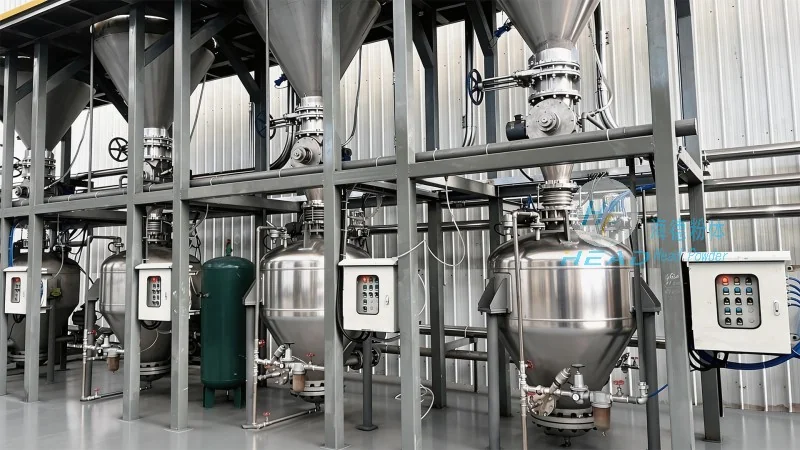
Pneumatic conveying is a widely adopted method for transporting catalyst powders due to its ability to handle fine particles and provide a closed system that minimizes environmental exposure. This technique uses compressed air or other gases to move the powder through a pipeline. There are two main types of pneumatic conveying: pressure and vacuum systems. Pressure systems are suitable for long-distance transport and high-volume applications, while vacuum systems are ideal for shorter distances and more delicate powders. HeadPowder specializes in designing and manufacturing customized pneumatic conveying solutions that ensure consistent flow rates and minimal particle degradation. The company’s expertise in material handling ensures that the conveyed catalyst powders remain intact, preserving their reactivity and effectiveness in downstream processes.
2. Screw Conveyors
Screw conveyors, also known as auger conveyors, are another common method for catalyst powder transport. These systems use a rotating helical screw to move the powder along a trough. Screw conveyors are particularly effective for handling bulk quantities of catalyst powders and can be configured in various orientations to suit different plant layouts. They are often used in combination with other equipment, such as hoppers and feeders, to create a seamless material flow. HeadPowder offers screw conveyor solutions tailored to the specific characteristics of catalyst powders, including particle size, moisture content, and flowability. The company’s engineers consider factors like screw speed, pitch, and material contact to optimize the conveying efficiency and prevent clogging or wear. This ensures that the catalyst powders are transported safely and efficiently, minimizing downtime and maintenance costs.
3. Belt Conveyors
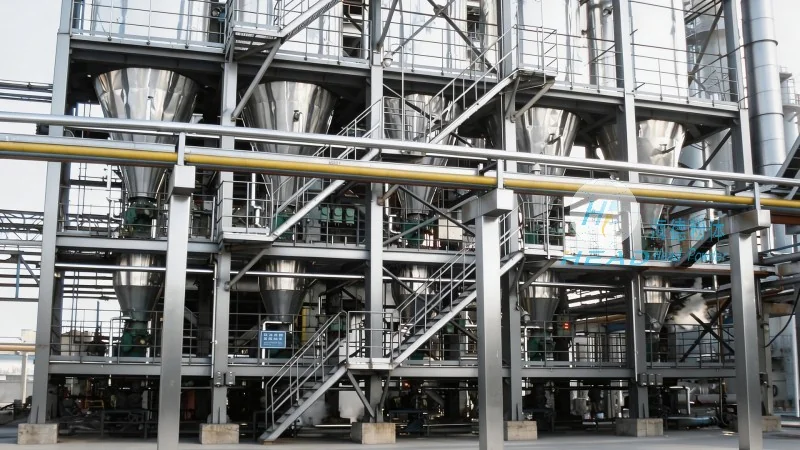
Belt conveyors are widely used in the chemical and petrochemical industries for transporting catalyst powders, especially in applications requiring high throughput and continuous operation. These systems consist of a continuous belt that moves over rollers or pulleys, carrying the powder from one location to another. Belt conveyors are particularly effective for handling large volumes of catalyst powders and can be equipped with special features, such as side walls or cleats, to prevent material spillage. HeadPowder provides belt conveyor solutions that are designed to handle the abrasive nature of catalyst powders, using durable materials like rubber or polyurethane for the belt and housing. The company’s expertise in conveyor design ensures that the belt speed, tension, and alignment are optimized to maintain consistent material flow and prevent damage to the catalyst particles. This method is particularly suitable for applications where the catalyst powders need to be transported over longer distances or integrated with other processing equipment.
4. Bucket Elevators
Bucket elevators are vertical or inclined conveyor systems that use a series of buckets attached to a chain or belt to lift and transport catalyst powders. This method is ideal for applications where the powder needs to be elevated to a higher level, such as in storage silos or processing units. Bucket elevators are capable of handling a wide range of particle sizes and can be designed to operate under vacuum or pressure conditions. HeadPowder’s bucket elevator solutions are engineered to ensure smooth and reliable transport of catalyst powders, minimizing the risk of material spillage or degradation. The company’s focus on material compatibility and system integration ensures that the bucket elevator operates efficiently and safely, contributing to overall process reliability. This method is particularly useful in applications where vertical transport is required, such as in industrial plants with multiple levels or in facilities where catalyst powders need to be transferred between different processing stages.
5. Hydraulic Conveying
Hydraulic conveying, also known as slurry transport, is a method that uses water or other liquids to transport catalyst powders as a slurry. This technique is particularly effective for handling wet or sticky catalyst powders and can be used to transport materials over long distances. Hydraulic conveying systems typically consist of a pump, pipeline, and a settling tank to separate the solid particles from the liquid. HeadPowder offers hydraulic conveying solutions that are designed to handle the specific properties of catalyst powders, including their particle size distribution and moisture content. The company’s engineers optimize the slurry concentration and pump pressure to ensure efficient transport while minimizing energy consumption and wear on the system components. This method is particularly suitable for applications where the catalyst powders are produced in a wet form or need to be transported from a processing unit to a storage or treatment facility.
6. Vibrating Conveyors
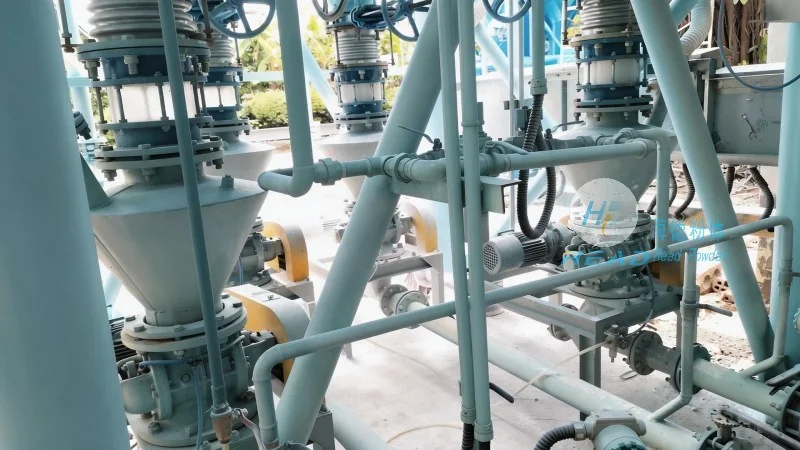
Vibrating conveyors use vibration to move catalyst powders along a trough. These systems are particularly effective for handling cohesive or sticky powders that may be difficult to convey using other methods. The vibration helps to break up agglomerates and maintain a consistent flow of material. Vibrating conveyors are often used in applications where the powder needs to be transported over short distances or integrated with other equipment, such as hoppers and feeders. HeadPowder provides vibrating conveyor solutions that are tailored to the specific characteristics of catalyst powders, including their flowability and particle size. The company’s expertise in vibration technology ensures that the conveyor operates efficiently and safely, minimizing the risk of material clogging or equipment wear. This method is particularly useful in applications where the catalyst powders are sensitive to mechanical stress or where a gentle handling approach is required.
7. Air-Lift Conveyors
Air-lift conveyors are a specialized form of pneumatic conveying that uses a vertical pipe with an air inlet at the bottom and an outlet at the top to transport catalyst powders. The air is introduced at the bottom, creating a low-pressure zone that draws the powder up the pipe. This method is particularly effective for handling fine or light catalyst powders and can be used to transport materials over vertical distances. HeadPowder’s air-lift conveyor solutions are designed to ensure efficient and reliable transport of catalyst powders, minimizing the risk of particle degradation or loss. The company’s engineers optimize the air flow rate and pipe diameter to achieve the desired conveying capacity and vertical lift. This method is particularly suitable for applications where vertical transport is required, such as in industrial plants with limited horizontal space or in facilities where catalyst powders need to be transferred between different processing levels.
8. Combination Systems
In many industrial applications, a single conveyance method may not be sufficient to meet the requirements of catalyst powder transport. Therefore, combination systems that integrate multiple technologies are often used. For example, a pneumatic conveying system may be combined with a screw conveyor to handle both long-distance and bulk transport needs. HeadPowder specializes in designing and implementing combination systems that optimize the transport of catalyst powders based on the specific process requirements. The company’s engineers consider factors such as material characteristics, plant layout, and operational constraints to develop customized solutions that enhance overall efficiency and reliability. These combination systems often include features like automatic controls, monitoring systems, and material flow sensors to ensure consistent and safe transport of catalyst powders. By integrating multiple technologies, HeadPowder ensures that the catalyst powders are handled in a manner that preserves their quality and effectiveness, contributing to the success of downstream processes.
Key Considerations for Catalyst Powder Conveyance
When selecting a conveyance method for catalyst powders, several factors must be considered to ensure optimal performance and efficiency. These include the physical properties of the catalyst powder, such as particle size, density, moisture content, and flowability. The distance and layout of the plant, as well as the required throughput and speed of transport, are also critical factors. Additionally, the need for a closed system to prevent environmental contamination and the potential for material degradation during transport must be addressed. HeadPowder, with its expertise in material handling and process engineering, provides comprehensive solutions that consider all these factors. The company’s engineers work closely with clients to understand their specific needs and design conveyance systems that meet the highest standards of efficiency, reliability, and safety. By leveraging advanced technologies and customized designs, HeadPowder ensures that catalyst powders are transported in a manner that preserves their quality and effectiveness, supporting the success of industrial processes.

 Shandong Headpowder Engineering Co., Ltd.
 156-6277-7102(Quản lý Trương)
  0531-83386006
  Thành phố Tế Nam, Tỉnh Sơn Đông, Trung Quốc
Điện thoại
WeChatTư vấn
Lên đầu