Với hơn 10 năm kinh nghiệm về vận chuyển khí nén, Headpowder Sơn Đông cung cấp hệ thống, thiết bị và quạt gió toàn chuỗi, đảm nhận các dự án kỹ thuật bột trọn gói trên toàn quốc.
Polystyrene (PS), as a common thermoplastic, is widely used in industrial production. Efficient and stable conveying methods are essential for its handling. HeadPowder, or Shandong HeadPowder Engineering Co., Ltd., specializes in powder and granular material conveying solutions, providing various effective methods for users.
Mechanical Conveying Methods
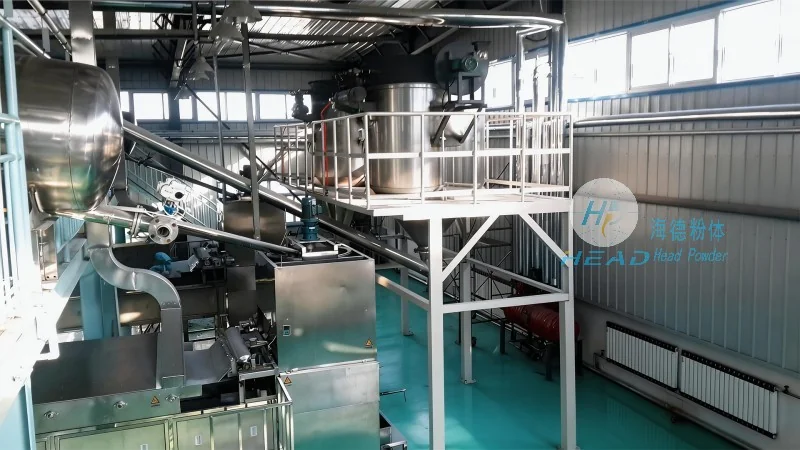
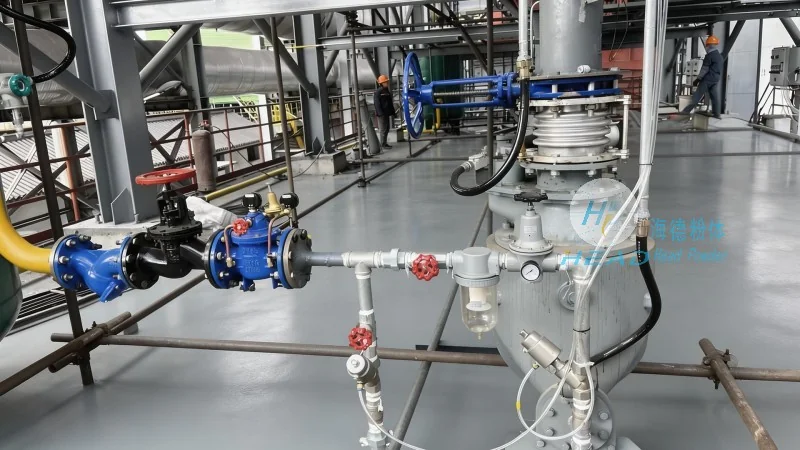
Mechanical conveying is one of the most traditional and widely applied methods for polystyrene conveying. It typically includes belt conveyors, screw conveyors, and bucket elevators. Belt conveyors use friction to move materials along the conveyor belt, suitable for long-distance and large-capacity polystyrene conveying, especially in packaging, warehousing, and processing stages. Screw conveyors push materials forward through rotating spiral blades, with a compact structure, ideal for horizontal or inclined conveying in limited spaces. Bucket elevators vertically lift materials using bucket troughs, suitable for vertical conveying from silos to processing equipment. These mechanical conveying devices have simple structures, easy operation, and low maintenance costs, meeting the needs of most industrial scenarios.
Air-Flow Conveying Methods
Air-flow conveying is a non-mechanical method that uses air flow to transport powders or granular materials, offering significant advantages for light, dust-prone polystyrene. Through a fan, air flow is generated to suck or blow polystyrene particles into or out of the conveying pipeline, achieving continuous material transport. Depending on the air flow direction and pressure, air-flow conveying can be classified as suction-type and pressure-type. Suction-type is used to collect materials from multiple sources, sucking them into the pipeline from silos or storage tanks. Pressure-type pushes materials from the start point to the endpoint, suitable for high-position delivery. Air-flow conveying systems usually include pipelines, fans, separators, and dust collectors. Compared to mechanical conveying, it has no mechanical wear, fast transport speed, and multi-point unloading advantages, but higher equipment investment and particle size/humidity requirements. HeadPowder's air-flow conveying systems are optimized to handle polystyrene, ensuring dry and clean material during transport, reducing dust, and improving efficiency.
Vacuum Conveying Methods
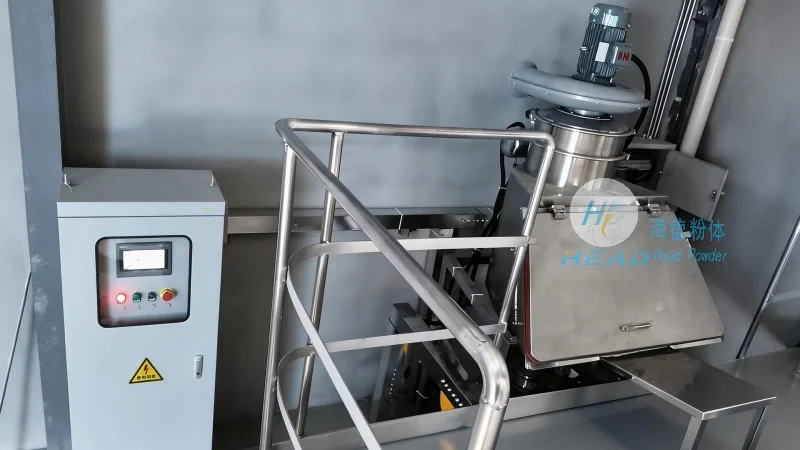
Vacuum conveying is a special form of air-flow conveying, using negative pressure in the pipeline to suck materials with atmospheric pressure difference. It is especially suitable for low-to-high material transport or collecting from multiple dispersed points. Vacuum conveying systems include vacuum pumps, pipelines, hoppers, and unloading devices. When the vacuum pump runs, negative pressure is formed in the pipeline, and materials enter the pipeline under gravity or auxiliary devices, sucked and transported to the destination. Vacuum conveying has advantages like long-distance transport, fine powder handling, and low wear. HeadPowder's vacuum conveying equipment uses advanced vacuum control technology, ensuring stable and reliable transport, with efficient dust collectors to reduce environmental pollution. Through vacuum conveying, users can handle polystyrene safely and efficiently, reducing manual operation risks and improving production line automation.
Other Auxiliary Conveying Methods
Besides the main methods, some auxiliary methods are used for polystyrene conveying in specific scenarios. For example, vibratory conveyors move materials in the conveying trough through vibration, suitable for low-flowability polystyrene particles. Combined systems of air-flow and mechanical conveying integrate both advantages. For small batches or lab-scale polystyrene, manual or semi-automatic devices like hoppers, funnels, and pumps are used. These auxiliary methods have narrow application ranges but still play important roles. HeadPowder provides customized conveying solutions based on customer needs, including selecting suitable equipment, optimizing parameters, and designing pipeline layouts, ensuring efficient and safe polystyrene transport.
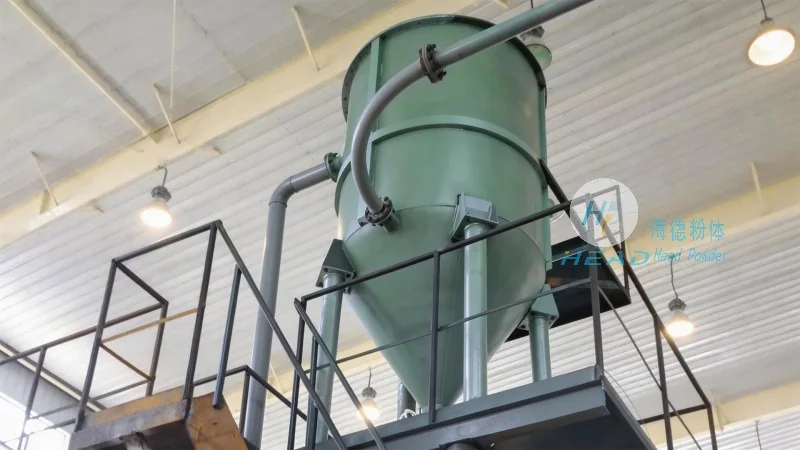
HeadPowder Engineering Co., Ltd., located in Shandong, China, is committed to providing professional conveying solutions for polystyrene and other materials, helping clients improve production efficiency and reduce operational costs.

 Shandong Headpowder Engineering Co., Ltd.
 156-6277-7102(Quản lý Trương)
  0531-83386006
  Thành phố Tế Nam, Tỉnh Sơn Đông, Trung Quốc
Điện thoại
WeChatTư vấn
Lên đầu