Với hơn 10 năm kinh nghiệm về vận chuyển khí nén, Headpowder Sơn Đông cung cấp hệ thống, thiết bị và quạt gió toàn chuỗi, đảm nhận các dự án kỹ thuật bột trọn gói trên toàn quốc.
For companies like Shandong HeadPowder Engineering Co., Ltd., which specializes in nanopowder processing and handling, selecting the right conveying method is critical to maintaining product integrity and operational efficiency. Nanopowders, due to their ultrafine particle size and often high reactivity, require specialized equipment and techniques to prevent agglomeration, contamination, and loss of material. This article explores the common methods used for nanopowder conveying, highlighting the key considerations and applications for each approach.
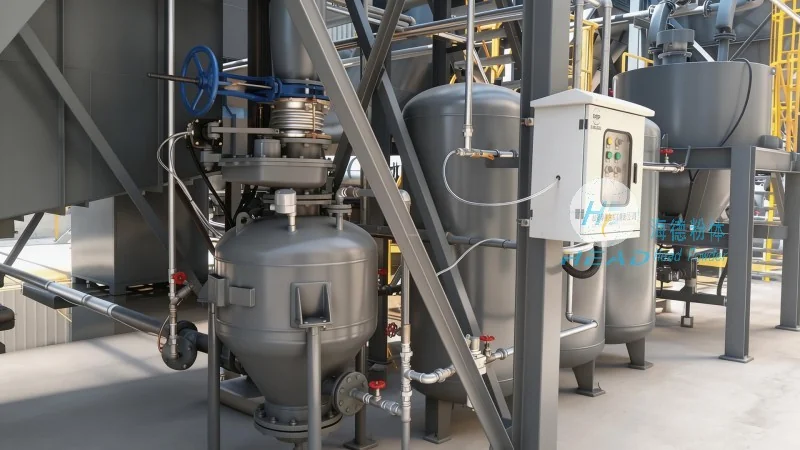
1. Air-Liquid or Pneumatic Conveying Systems
Air-liquid or pneumatic conveying is one of the most widely used methods for transporting nanopowders. This technique involves transporting the powder particles through a pipeline using a gas stream, typically air or a mixture of air and other gases. The primary advantage of pneumatic conveying is its ability to handle powders with high moisture content or those that are prone to caking, as the gas stream helps to keep the particles suspended and prevents them from sticking to the pipeline walls. For headpowder, specialized pneumatic systems are designed to maintain particle integrity, ensuring that the nanopowders reach their destination without degradation. These systems often incorporate features such as pressure control, particle size separation, and filtration to enhance performance and product quality.
2. Screw or Auger Conveyors
Screw or auger conveyors are another common method for nanopowder handling, particularly in applications where the powder needs to be moved over relatively short distances or in a controlled manner. These conveyors consist of a rotating screw or auger that moves the powder along a tube or trough. The design of the screw, including its pitch and diameter, is critical for controlling the speed and pressure of the material flow. For headpowder, screw conveyors are often customized to handle sensitive nanopowders, with materials like stainless steel or food-grade plastics used for the conveyor components to prevent contamination. The advantage of screw conveyors lies in their simplicity and reliability, making them suitable for continuous production lines where consistent material transfer is required.
3. Vibratory Conveyors
Vibratory conveyors utilize mechanical vibration to move nanopowders along a trough or tube. The vibration is typically generated by an electric motor with an unbalanced weight, which creates a sinusoidal motion that propels the particles forward. This method is particularly effective for powders that are cohesive or have a tendency to stick to surfaces, as the vibration helps to break up agglomerates and maintain a consistent flow. For Shandong HeadPowder Engineering Co., Ltd., vibratory conveyors are engineered to handle a wide range of nanopowder types, from fine metal powders to ceramic powders, with adjustable vibration frequencies and amplitudes to optimize performance. The design also includes features such as anti-static coatings and dust collection systems to ensure safety and compliance with industry standards.
4. Hydraulic Conveying
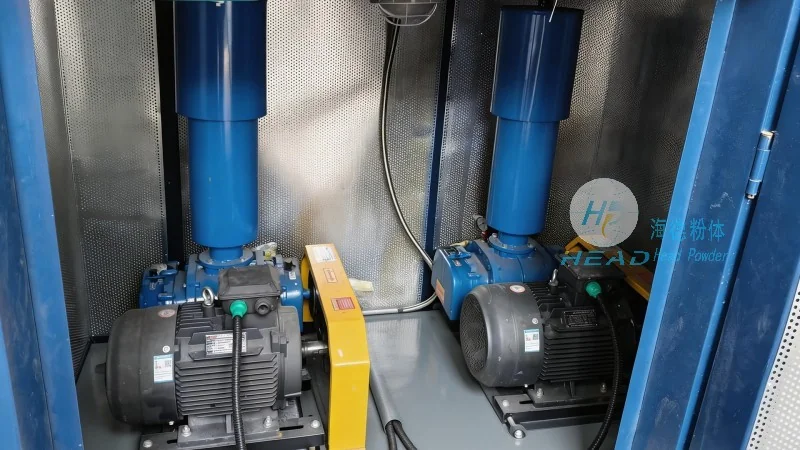
Hydraulic conveying, also known as slurry or liquid conveying, involves transporting nanopowders suspended in a liquid medium, such as water or a specific carrier fluid. This method is often used when the powder needs to be moved over long distances or through complex piping systems. The liquid acts as a carrier, preventing the particles from settling and ensuring a smooth flow. For headpowder, hydraulic systems are designed to handle high-purity nanopowders, with filtration and separation processes to remove the liquid before the powder is used in subsequent applications. The primary benefits of hydraulic conveying include its ability to handle large volumes of material and its suitability for abrasive or corrosive nanopowders, though it requires additional equipment for liquid removal and drying.
5. Belt Conveyors
Belt conveyors are a traditional method for material handling and can be adapted for nanopowder transport, especially in bulk processing applications. These systems use a continuous belt that moves the powder along a path, with the belt often made of materials like rubber or PVC to prevent sticking and contamination. For headpowder, belt conveyors are customized with features such as adjustable speed, variable tension, and dust suppression systems to handle nanopowders effectively. The advantage of belt conveyors is their high capacity and ability to transport materials over long distances, making them suitable for large-scale production environments. However, they require regular maintenance to ensure the belt remains in good condition and to prevent material buildup.
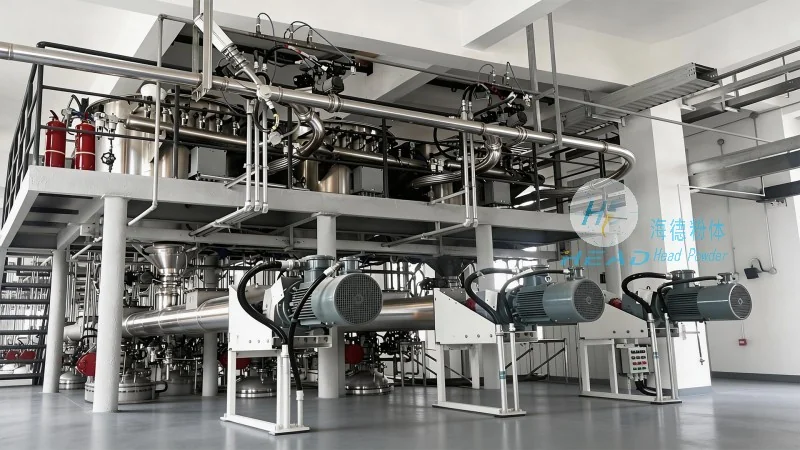
6. Magnetic Conveyors
Magnetic conveyors are specialized systems designed for transporting magnetic nanopowders, such as iron or steel powders. These conveyors use a series of magnets embedded in a conveyor belt or trough to attract and move the magnetic particles. The design allows for precise control over the flow of magnetic powders, preventing segregation and ensuring uniform distribution. For headpowder, magnetic conveyors are engineered to handle fine magnetic powders, with adjustable magnetic fields to control the speed and direction of the material flow. This method is particularly useful in applications where the nanopowders need to be separated from non-magnetic materials or where a controlled, low-speed transport is required.
7. Vacuum Conveying
Vacuum conveying is a method that uses a vacuum to draw nanopowders into a collection container or transport system. This technique is often used for handling powders that are light, dusty, or require a gentle handling process. The vacuum system creates a pressure differential that pulls the powder particles into the pipeline, where they are then transported to the destination. For Shandong HeadPowder Engineering Co., Ltd., vacuum conveyors are designed with features such as low-pressure operation, particle size filtration, and dust collection to ensure safe and efficient transport. The advantage of vacuum conveying is its ability to handle powders in a closed system, reducing dust emissions and improving workplace safety. However, it may not be suitable for very heavy or abrasive nanopowders, as the system may struggle to maintain the necessary vacuum pressure.
8. Hydraulic and Mechanical Combination Systems
In some cases, a combination of hydraulic and mechanical conveying methods may be used to handle nanopowders, especially in complex production processes where multiple materials need to be transported simultaneously. These hybrid systems often involve a hydraulic pump to move a liquid carrier, which is then mixed with the nanopowder and transported through a pipeline. The liquid is later separated from the powder, allowing for reuse or disposal. For headpowder, combination systems are engineered to optimize material flow and reduce energy consumption, with features such as automated control systems and real-time monitoring to ensure consistent performance. The primary benefit of these systems is their flexibility and ability to handle a wide range of nanopowder types and processing requirements.
When selecting a nanopowder conveying method, it is essential to consider factors such as the particle size, density, moisture content, and reactivity of the powder, as well as the distance to be covered and the required throughput. Shandong HeadPowder Engineering Co., Ltd. offers a range of specialized conveying solutions tailored to these specific needs, ensuring that companies can maintain product quality and operational efficiency. By understanding the advantages and limitations of each method, manufacturers can choose the most appropriate system for their nanopowder handling requirements, ultimately contributing to improved productivity and cost-effectiveness.

 Shandong Headpowder Engineering Co., Ltd.
 156-6277-7102(Quản lý Trương)
  0531-83386006
  Thành phố Tế Nam, Tỉnh Sơn Đông, Trung Quốc
Điện thoại
WeChatTư vấn
Lên đầu