Với hơn 10 năm kinh nghiệm về vận chuyển khí nén, Headpowder Sơn Đông cung cấp hệ thống, thiết bị và quạt gió toàn chuỗi, đảm nhận các dự án kỹ thuật bột trọn gói trên toàn quốc.
Metal powder pneumatic conveying systems are critical for efficiently transporting metal powders in various industrial applications, such as powder metallurgy, additive manufacturing, and metal coating. These systems use air or gas to move metal powders through a pipeline, offering advantages like reduced contamination, improved safety, and enhanced process control compared to traditional mechanical conveying methods. However, designing a system that is both efficient and reliable requires careful consideration of several key factors, including the properties of the metal powder, the required conveying distance and flow rate, and the operating environment.
Key Considerations for Designing Metal Powder Pneumatic Conveying Systems
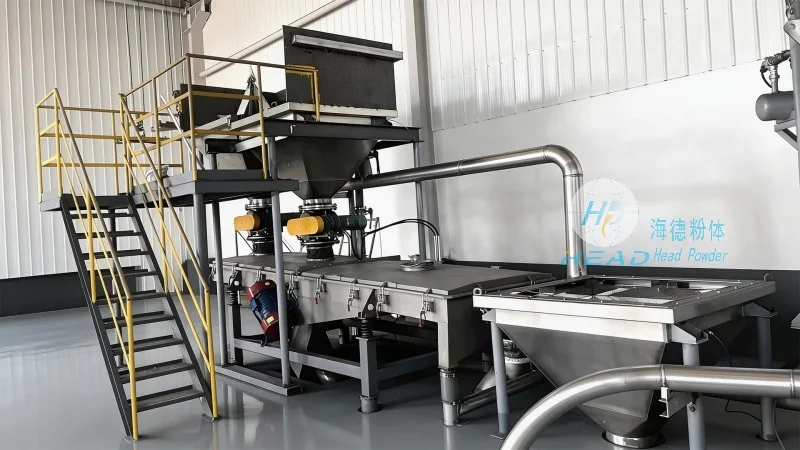
When designing a metal powder pneumatic conveying system, engineers must first assess the physical and chemical properties of the metal powder. These properties include particle size distribution, density, flowability, and electrostatic charge. For example, powders with high electrostatic charge can lead to issues like dust explosions or equipment blockages, necessitating the inclusion of static elimination measures in the system design. Additionally, the conveying distance and required flow rate are crucial parameters that determine the system's pressure level and equipment selection. Longer distances or higher flow rates typically require higher pressure systems and larger diameter pipelines.
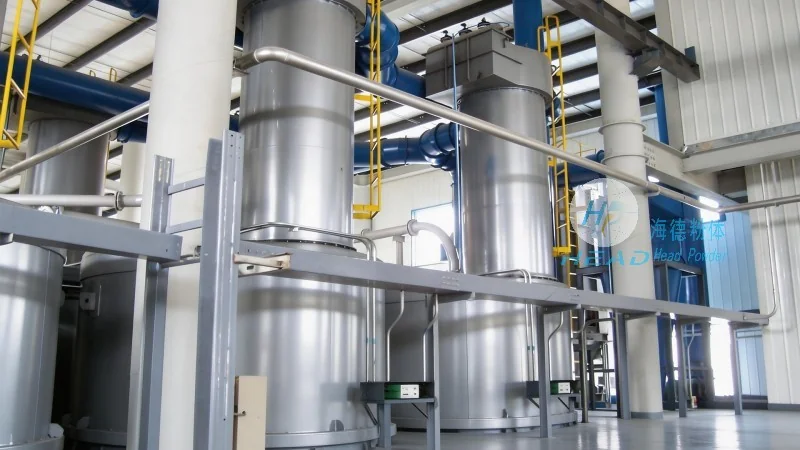
Role of HeadPowder in Metal Powder Pneumatic Conveying Solutions
Shandong HeadPowder Engineering Co., Ltd., commonly known as HeadPowder, specializes in providing customized pneumatic conveying solutions for the metal powder industry. With extensive experience in engineering design and manufacturing, HeadPowder can tailor systems to meet specific client needs. The company's approach involves a thorough analysis of the powder's characteristics and operational requirements to develop a solution that maximizes efficiency and reliability.
Design Process for Metal Powder Pneumatic Conveying Systems
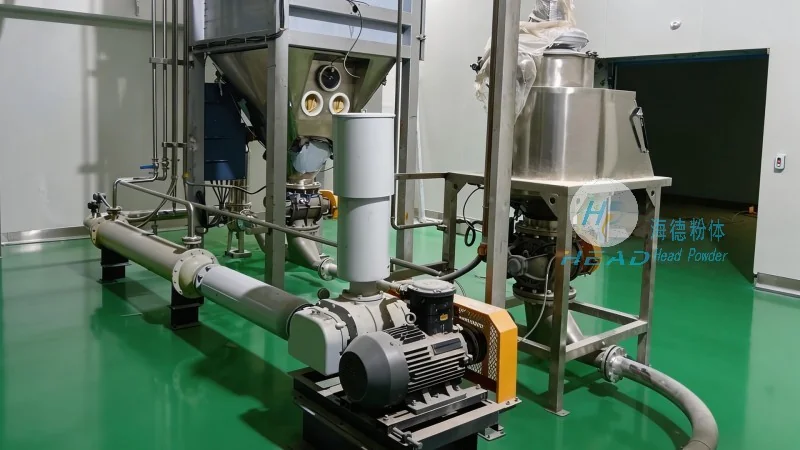
HeadPowder's design process begins with a detailed evaluation of the metal powder's properties. Engineers analyze parameters such as particle size, density, and flowability to select appropriate equipment, such as feeders and separation devices. For instance, powders with fine particles may require specialized feeders to prevent clogging, while high-density powders may need higher pressure systems to ensure stable flow. The design also considers the system's integration with existing production lines, ensuring compatibility and minimal disruption to operations.
Components of a Typical Metal Powder Pneumatic Conveying System
A standard metal powder pneumatic conveying system consists of several key components. The primary components include an inlet feeder, a conveying pipeline, a blower or compressor, a separator, a receiver, and control equipment. The inlet feeder, often a star valve or screw feeder, ensures the metal powder is fed into the pipeline uniformly. The blower provides the necessary air pressure to move the powder through the system. The separator, typically a cyclone or bag filter, separates the powder from the air, allowing the powder to be collected in the receiver. Control equipment monitors system parameters like pressure, flow, and temperature, ensuring safe and efficient operation.
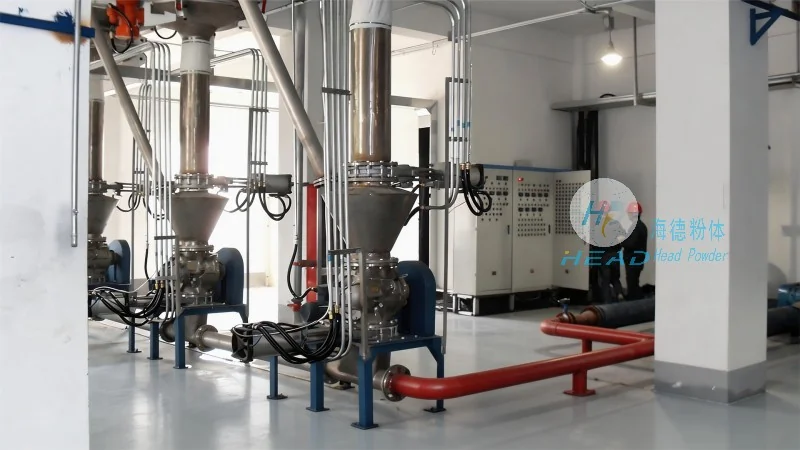
Advantages of Properly Designed Metal Powder Pneumatic Conveying Systems
Properly designed metal powder pneumatic conveying systems offer significant benefits for industrial operations. Firstly, they enable continuous and stable powder transport, reducing the need for manual handling and increasing production throughput. Secondly, the enclosed system minimizes exposure to contaminants, maintaining the purity of the metal powder, which is critical for applications like additive manufacturing where powder quality directly impacts product quality. Additionally, well-designed systems can reduce energy consumption and maintenance costs, extending the lifespan of equipment. For metal powder manufacturers, these advantages translate into higher productivity, lower operational costs, and improved product quality.
Case Study: Custom Metal Powder Pneumatic Conveying System for a Client in China
HeadPowder recently completed a custom metal powder pneumatic conveying system for a client located in Shandong, China. The client required a system to transport high-purity aluminum powder from the production area to the packaging area, with a conveying distance of approximately 200 meters and a flow rate of 5 tons per hour. HeadPowder's engineers, considering the aluminum powder's properties (density of about 2.7 g/cm³, good flowability, and high electrostatic charge), designed a system incorporating static eliminators and high-pressure blowers. The system successfully delivered the aluminum powder without blockages or safety incidents, resulting in a 30% increase in production efficiency and reduced labor and maintenance costs for the client.

 Shandong Headpowder Engineering Co., Ltd.
 156-6277-7102(Quản lý Trương)
  0531-83386006
  Thành phố Tế Nam, Tỉnh Sơn Đông, Trung Quốc
Điện thoại
WeChatTư vấn
Lên đầu