Với hơn 10 năm kinh nghiệm về vận chuyển khí nén, Headpowder Sơn Đông cung cấp hệ thống, thiết bị và quạt gió toàn chuỗi, đảm nhận các dự án kỹ thuật bột trọn gói trên toàn quốc.
When it comes to transporting gypsum pellets efficiently and reliably, selecting the right conveying method is crucial for industrial operations. Gypsum, a widely used material in construction and manufacturing, requires specialized equipment to handle its unique properties such as density, moisture content, and particle size. This article explores various gypsum pellet conveying methods, highlighting their applications, advantages, and considerations for different industrial settings. The choice of conveying system directly impacts productivity, material handling costs, and overall operational efficiency in gypsum processing plants.
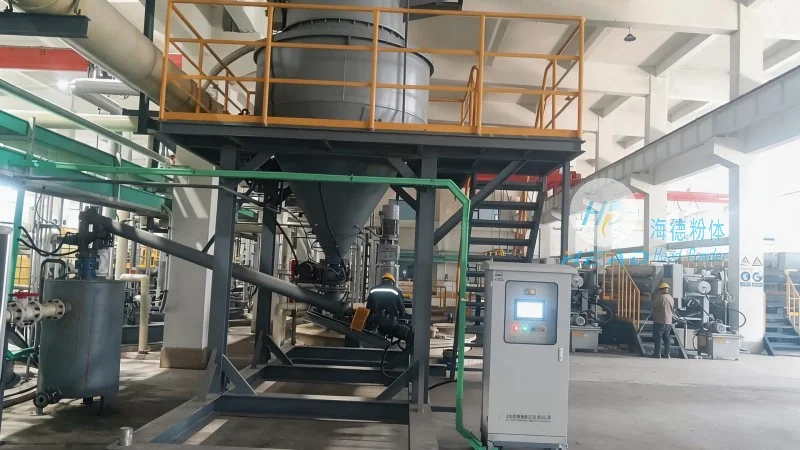
1. Pneumatic Conveying Systems
Pneumatic conveying, also known as air conveying, is a popular method for transporting gypsum pellets due to its ability to handle fine particles and minimize dust exposure. This system utilizes compressed air to move material through a pipeline, making it ideal for applications where dust control is critical. There are two main types of pneumatic conveying: pressure and vacuum systems. Pressure systems use positive pressure to push material through the line, while vacuum systems use negative pressure to pull material from a hopper. For gypsum pellets, pressure systems are often preferred as they can handle longer distances and higher material loads. The equipment typically includes a hopper, a rotary airlock valve, a conveyor line, and a dust collector. The rotary airlock valve ensures a continuous flow of material into the pipeline, preventing air leakage and maintaining consistent pressure. The dust collector captures any fine particles that may escape, ensuring a clean and safe operation. Pneumatic conveying is particularly suitable for applications where the material needs to be transported over long distances or to elevated locations, such as in large-scale gypsum processing plants. It also offers the advantage of being able to transport material through multiple turns and changes in elevation without the need for additional equipment. However, it requires a significant amount of energy to operate and may not be suitable for very large quantities of material due to the pressure drop in the pipeline.
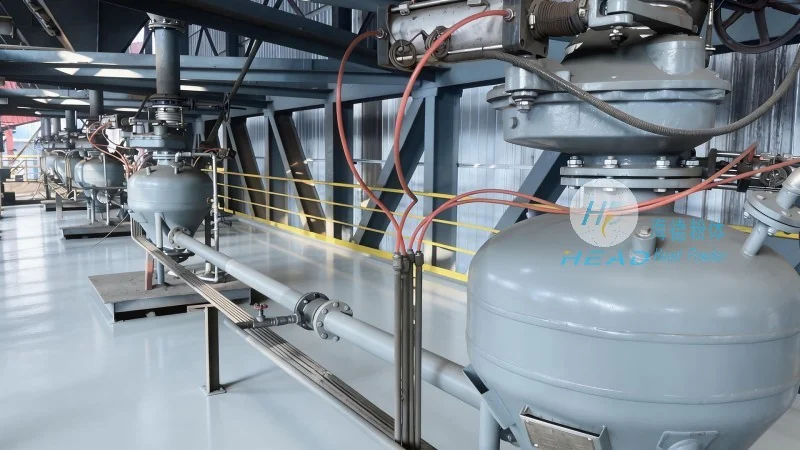
2. Screw Conveyors
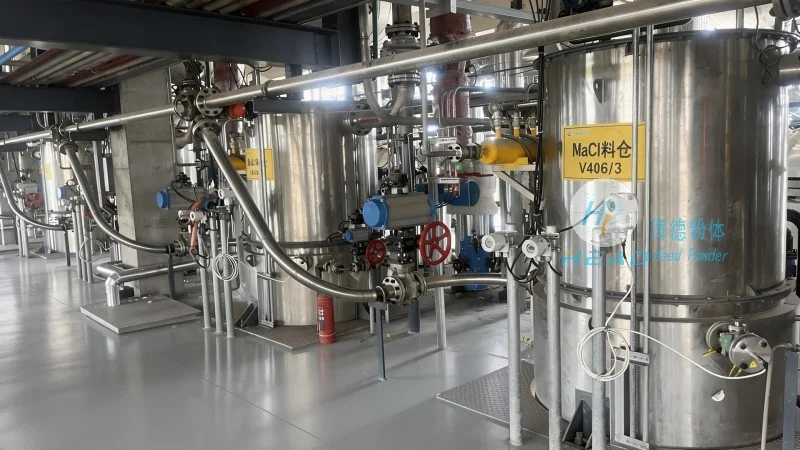
Screw conveyors, also known as auger conveyors, are another common method for transporting gypsum pellets. These systems use a rotating screw or auger to move material along a trough. The screw is typically made of stainless steel or other corrosion-resistant materials to handle the acidic nature of gypsum. The trough is usually made of metal or plastic, and the screw can be either solid or with flights. The speed of the screw and the pitch of the flights can be adjusted to control the flow rate and the material's movement. Screw conveyors are suitable for horizontal or slightly inclined transport, and they can handle a wide range of particle sizes. They are often used in applications where the material needs to be mixed or blended, as the screw can provide a gentle mixing action. The main advantage of screw conveyors is their simplicity and low maintenance. They do not require any moving parts in the material path, which reduces the risk of clogging and wear. However, they are not suitable for vertical transport or long distances, as the material may slip or fall back due to the friction between the screw and the trough. Screw conveyors are commonly used in small to medium-sized gypsum processing plants, where the material is transported short distances or to a storage silo. They are also used in applications where the material needs to be conveyed at a controlled rate, such as in a batching system.
3. Belt Conveyors
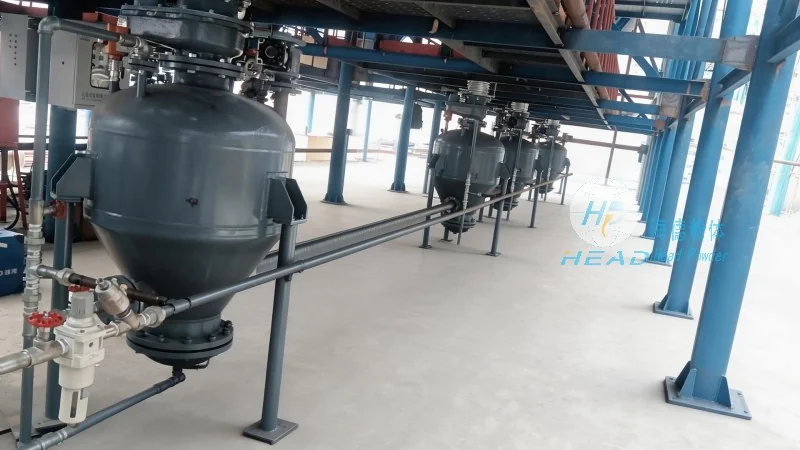
Belt conveyors are a widely used method for transporting gypsum pellets, especially in large-scale industrial applications. These systems use a continuous belt that moves over rollers to transport material. The belt is typically made of rubber or plastic, and the rollers are made of steel or other durable materials. The conveyor can be designed for horizontal or inclined transport, and the speed can be adjusted to control the flow rate. Belt conveyors are suitable for transporting large quantities of material over long distances, and they can handle a wide range of particle sizes. The main advantage of belt conveyors is their high capacity and low cost. They can transport large volumes of material at a relatively low cost per ton, making them ideal for bulk handling. However, they require regular maintenance, such as belt tensioning and roller replacement, to ensure smooth operation. Belt conveyors are commonly used in gypsum processing plants for transporting raw material from the storage area to the processing equipment, or for transporting finished products to the packaging area. They are also used in applications where the material needs to be conveyed at a high rate, such as in a continuous production line.
4. Hydraulic Conveying
Hydraulic conveying is a less common method for transporting gypsum pellets, but it is used in some specialized applications. This system uses a liquid medium, such as water or a slurry, to transport the material. The material is mixed with the liquid to form a slurry, which is then pumped through a pipeline. The slurry is then separated from the liquid in a settling tank, and the material is recovered. Hydraulic conveying is suitable for transporting fine particles that are difficult to handle with other methods, such as very fine gypsum dust. It is also used in applications where the material needs to be transported over long distances or to elevated locations. The main advantage of hydraulic conveying is its ability to handle very fine particles and minimize dust exposure. However, it requires a significant amount of water and energy to operate, and the slurry may need to be treated to remove the liquid before disposal. Hydraulic conveying is commonly used in gypsum processing plants that handle very fine material, such as in the production of gypsum board or plaster. It is also used in applications where the material needs to be transported in a slurry form, such as in a wastewater treatment plant.

 Shandong Headpowder Engineering Co., Ltd.
 156-6277-7102(Quản lý Trương)
  0531-83386006
  Thành phố Tế Nam, Tỉnh Sơn Đông, Trung Quốc
Điện thoại
WeChatTư vấn
Lên đầu