Với hơn 10 năm kinh nghiệm về vận chuyển khí nén, Headpowder Sơn Đông cung cấp hệ thống, thiết bị và quạt gió toàn chuỗi, đảm nhận các dự án kỹ thuật bột trọn gói trên toàn quốc.
Lithium manganese dioxide (LiMnO₂) is a critical component in various industrial applications, particularly in battery manufacturing and chemical processing. The efficient and safe transport of this material is essential to ensure consistent quality and operational efficiency in production lines. Different transport methods are employed depending on the specific requirements of the process, such as material characteristics, handling volume, and environmental considerations. This article provides an overview of common transport methods for lithium manganese dioxide, with a focus on the air-flow transport technique, which is widely recognized for its effectiveness in handling fine powders like LiMnO₂.
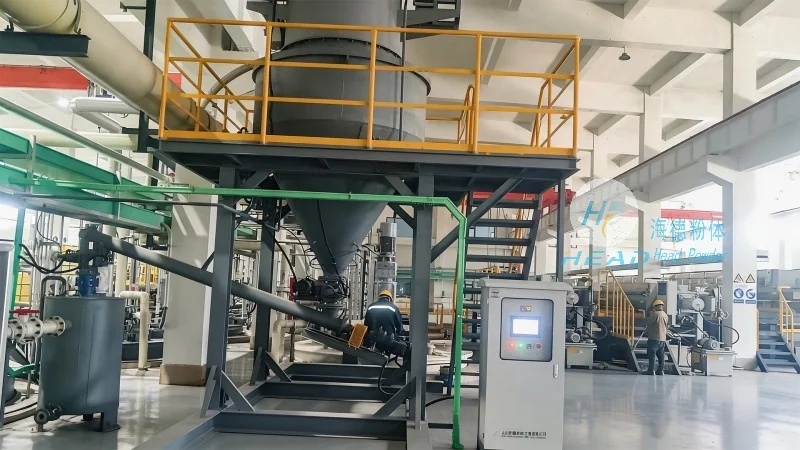
Overview of Common Transport Methods for Lithium Manganese Dioxide
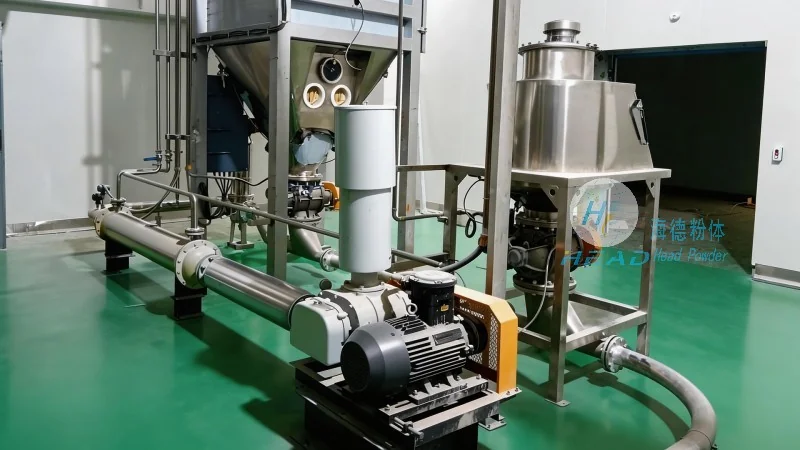
Several methods are commonly used to transport lithium manganese dioxide, each with its own advantages and limitations. The primary methods include mechanical conveying systems, such as belt conveyors and screw conveyors, and pneumatic conveying systems, which utilize air to move the material. Mechanical conveyors are often preferred for bulk handling and when the material is not overly fine or abrasive. However, for lithium manganese dioxide, which is typically a fine powder, mechanical systems may pose challenges related to dust control and material degradation. Pneumatic conveying, particularly air-flow transport, offers a more suitable solution due to its ability to handle fine powders with minimal particle breakage and reduced risk of contamination.
The Air-Flow Transport Method: Principles and Benefits
Air-flow transport, also known as pneumatic conveying, operates by using compressed air to move the material through a pipeline. The process involves creating a pressure differential that draws the powder into the conveying line. For lithium manganese dioxide, this method is advantageous because it minimizes the risk of particle agglomeration and maintains the material's integrity. The air-flow system typically consists of a hopper, a feeder, a pipeline, and a receiver. The feeder controls the flow rate of the powder, while the pipeline transports it to the destination. The receiver collects the material and may include a dust collection system to ensure environmental compliance. Key benefits of air-flow transport for LiMnO₂ include: reduced material degradation, improved dust control, lower maintenance requirements compared to mechanical systems, and the ability to handle long distances and multiple transfer points.
Factors Influencing the Choice of Transport Method
The selection of a transport method for lithium manganese dioxide depends on several factors, including the particle size distribution, moisture content, and flowability of the material. Fine powders like LiMnO₂ are more susceptible to caking and bridging, which can impede the operation of mechanical conveyors. Air-flow transport is particularly effective for such materials because it prevents particle-to-particle contact, reducing the likelihood of agglomeration. Additionally, the system's design must consider the material's dust explosion risk, as lithium manganese dioxide is a combustible powder. Proper explosion-proof measures, such as spark detection and suppression systems, are essential when implementing air-flow transport. The scale of the operation also plays a role; small-scale applications may use simple pneumatic systems, while large-scale industrial plants may require more complex, multi-stage conveying networks.
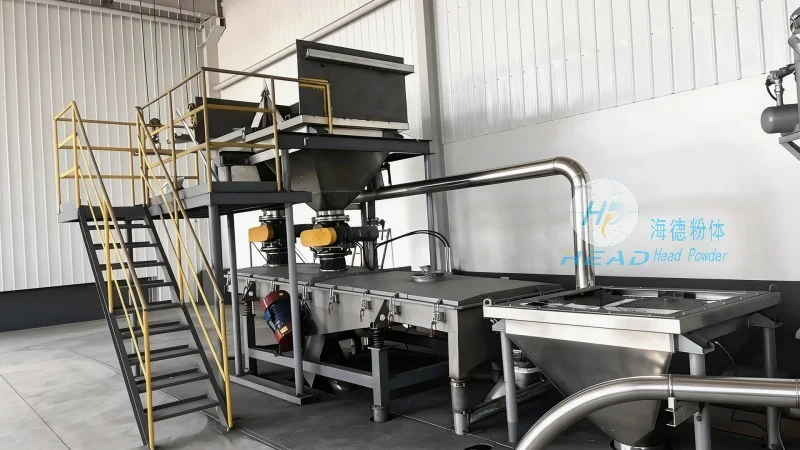
Applications of Air-Flow Transport in Lithium Manganese Dioxide Handling
Air-flow transport is widely used in the processing of lithium manganese dioxide for battery production. In these applications, the material is transported from storage silos to mixing and charging units. The system ensures that the powder is delivered in a consistent and controlled manner, which is crucial for maintaining the uniformity of the final battery product. Additionally, air-flow transport is used in the recovery and recycling of spent lithium manganese dioxide batteries. The process involves crushing and grinding the batteries to extract the LiMnO₂, and then conveying the powder to the next stage of the recycling process. The efficiency of the air-flow system in these applications contributes to higher recovery rates and reduced environmental impact.
Conclusion and Company Introduction
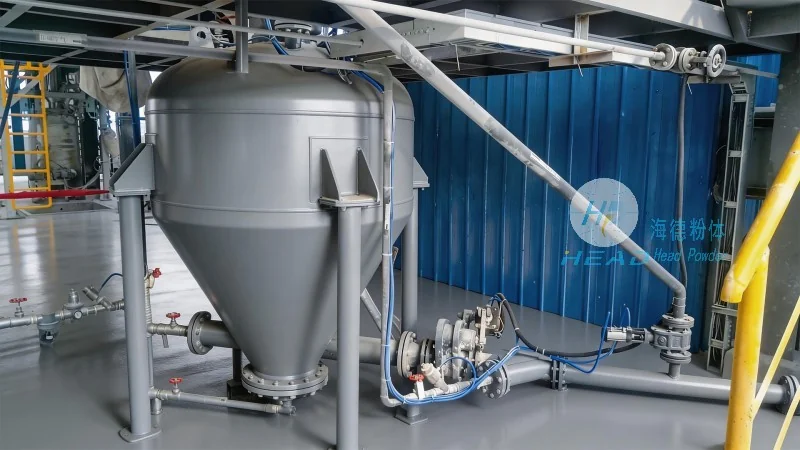
Efficient transport of lithium manganese dioxide is vital for the success of industrial operations. While various methods are available, air-flow transport stands out as a reliable and effective solution, especially for fine powders. The technology's ability to maintain material integrity, control dust, and adapt to different operational scales makes it a preferred choice in many industries. As a leading provider of powder handling solutions, Shandong HeadPowder Engineering Co., Ltd. specializes in designing and implementing air-flow transport systems tailored to the specific needs of lithium manganese dioxide applications. With a focus on quality and innovation, HeadPowder ensures that their systems meet the highest standards of safety and performance, supporting the efficient and sustainable processing of lithium manganese dioxide in various industrial sectors.

 Shandong Headpowder Engineering Co., Ltd.
 156-6277-7102(Quản lý Trương)
  0531-83386006
  Thành phố Tế Nam, Tỉnh Sơn Đông, Trung Quốc
Điện thoại
WeChatTư vấn
Lên đầu