Với hơn 10 năm kinh nghiệm về vận chuyển khí nén, Headpowder Sơn Đông cung cấp hệ thống, thiết bị và quạt gió toàn chuỗi, đảm nhận các dự án kỹ thuật bột trọn gói trên toàn quốc.
When handling seaweed powder, selecting the right conveying method is crucial for efficiency, cost-effectiveness, and product integrity. The choice of equipment can significantly impact operational performance, especially in industrial settings where large volumes of seaweed powder are processed. This article provides a detailed comparison of common seaweed powder conveying methods, highlighting their advantages and disadvantages to help businesses make informed decisions.
1. Screw Conveyor (Auger Conveyor)
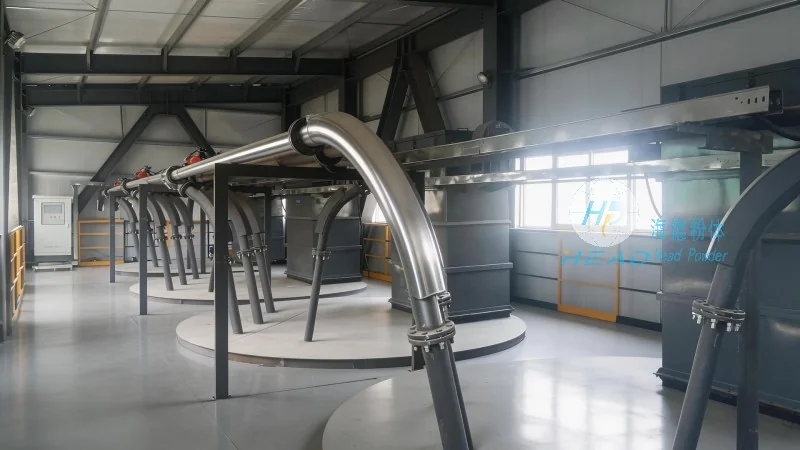
Screw conveyors are widely used for transporting seaweed powder due to their simplicity and reliability. These systems consist of a rotating screw inside a trough, which moves material forward through the channel. The primary advantage of screw conveyors is their ability to handle a wide range of powder types, including those with varying moisture content and particle sizes. They are also relatively low-cost to install and maintain, making them an attractive option for small to medium-sized operations. However, screw conveyors have limitations, such as the risk of product degradation due to friction and heat generation. Additionally, they may not be suitable for very fine or cohesive powders, as these can cause blockages or uneven flow. For Shandong HeadPowder Engineering Co., Ltd., screw conveyors are often recommended for applications where gentle handling and moderate throughput are required.
2. Pneumatic Conveying System
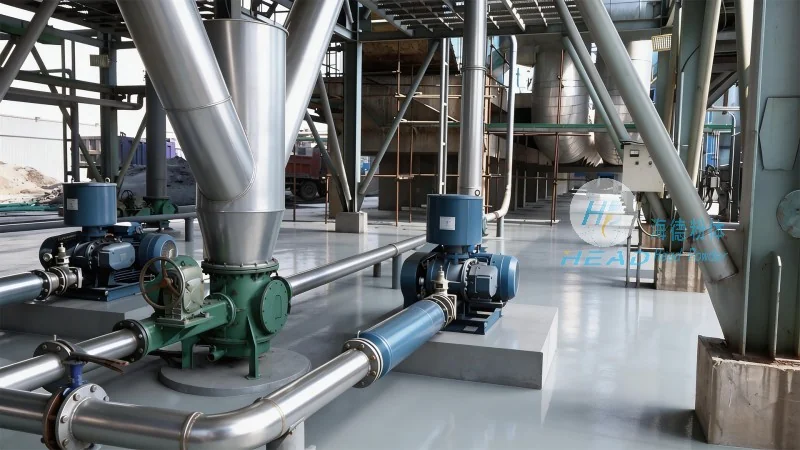
Pneumatic conveying systems use air or gas to transport seaweed powder through a pipeline. These systems can be classified into two main types: pressure and vacuum. Pressure systems are suitable for short-distance transport, while vacuum systems are ideal for longer distances or when material needs to be drawn from multiple sources. The main advantage of pneumatic conveying is its ability to handle fine powders and prevent product contamination, as the material is enclosed within the pipeline. This method also allows for flexible routing and integration with other processing equipment. However, pneumatic conveying has higher energy consumption compared to mechanical systems, and it may not be efficient for very large volumes. Additionally, the system requires regular maintenance of air filters and compressors to ensure smooth operation. Shandong HeadPowder Engineering Co., Ltd. often recommends pneumatic conveying for applications requiring high-purity transport or when space constraints limit the use of other equipment.
3. Belt Conveyor
Belt conveyors are commonly used in bulk material handling, including seaweed powder, due to their high capacity and ability to transport materials over long distances. These systems consist of a continuous belt that moves material from one point to another, often with multiple idlers and pulleys to support the belt and guide the material. The primary advantage of belt conveyors is their high throughput and low maintenance cost for long-term operations. They are also suitable for transporting large quantities of seaweed powder with minimal product degradation. However, belt conveyors have limitations, such as the need for a level surface and the risk of product spillage or contamination if the belt is not properly sealed. Additionally, they may not be suitable for very fine powders, as these can cause the belt to slip or cause uneven loading. Shandong HeadPowder Engineering Co., Ltd. typically recommends belt conveyors for applications with high volume requirements and long transport distances.
4. Bucket Elevator
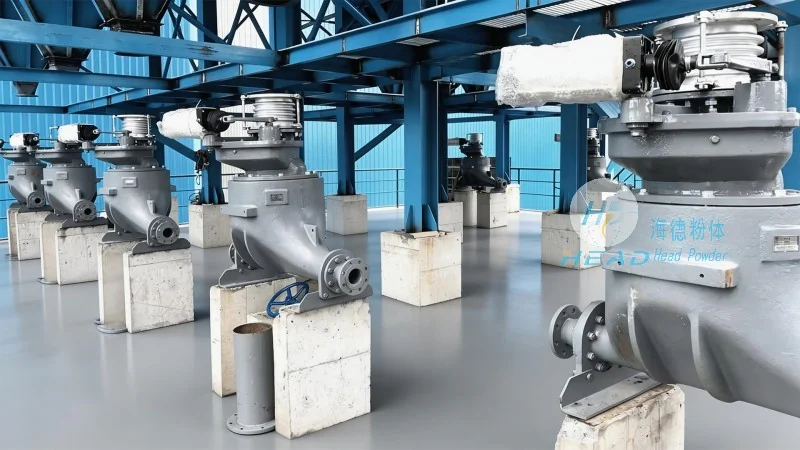
Bucket elevators are vertical or inclined conveyors that use buckets attached to a chain or belt to transport seaweed powder. These systems are ideal for vertical or steep incline transport, allowing material to be lifted from lower to higher levels without the need for additional horizontal space. The main advantage of bucket elevators is their high vertical lifting capacity and ability to handle heavy loads. They are also relatively low-cost to install and maintain, making them a cost-effective solution for vertical transport. However, bucket elevators have limitations, such as the risk of product degradation due to high speeds and friction. Additionally, they may not be suitable for very fine or cohesive powders, as these can cause buckets to jam or the chain to break. Shandong HeadPowder Engineering Co., Ltd. often recommends bucket elevators for applications requiring vertical transport of seaweed powder, such as in storage silos or processing facilities.
5. Hydraulic Conveying
Hydraulic conveying systems use water or other liquids to transport seaweed powder through a pipeline. These systems are typically used for long-distance transport and can handle very fine powders. The main advantage of hydraulic conveying is its ability to transport material over long distances with minimal energy consumption. It also allows for the mixing of seaweed powder with liquids, which can be useful in certain processing applications. However, hydraulic conveying has limitations, such as the need for regular cleaning of pipelines to prevent clogging and the risk of product contamination from the liquid medium. Additionally, the system requires additional equipment for liquid handling and disposal, increasing overall operational costs. Shandong HeadPowder Engineering Co., Ltd. may recommend hydraulic conveying for applications where long-distance transport is required and where the cost of energy is a significant factor.

 Shandong Headpowder Engineering Co., Ltd.
 156-6277-7102(Quản lý Trương)
  0531-83386006
  Thành phố Tế Nam, Tỉnh Sơn Đông, Trung Quốc
Điện thoại
WeChatTư vấn
Lên đầu