Với hơn 10 năm kinh nghiệm về vận chuyển khí nén, Headpowder Sơn Đông cung cấp hệ thống, thiết bị và quạt gió toàn chuỗi, đảm nhận các dự án kỹ thuật bột trọn gói trên toàn quốc.
When it comes to handling glass fiber powder, selecting the right conveying method is crucial for efficiency, safety, and cost-effectiveness. Various technologies are available, each with its own set of advantages and disadvantages. This article provides a detailed comparison of common glass fiber powder conveying methods, helping industrial professionals make informed decisions for their applications.

Overview of Conveying Technologies for Glass Fiber Powder
Glass fiber powder, a key material in composite manufacturing and other industrial applications, requires specialized handling due to its fine particle size and potential for dust generation. Conveying systems must address challenges such as particle segregation, dust control, and material flow consistency. The following methods are widely used in the industry, each with distinct characteristics that influence their suitability for different scenarios.
1. Screw Conveyors (Auger Conveyors)
Screw conveyors are one of the most common methods for transporting glass fiber powder. These systems use a rotating helical screw to move material along a trough or tube. The primary advantages of screw conveyors include their simplicity, low maintenance requirements, and ability to handle a wide range of materials, including abrasive powders like glass fiber. They are particularly effective for horizontal or slightly inclined transport, making them suitable for short to medium distances. However, screw conveyors have limitations when dealing with very fine or cohesive powders, as they may experience clogging or reduced efficiency. Additionally, they are less effective for vertical lifting compared to other methods, and the risk of material degradation due to friction is higher with abrasive powders.
2. Pneumatic Conveying Systems
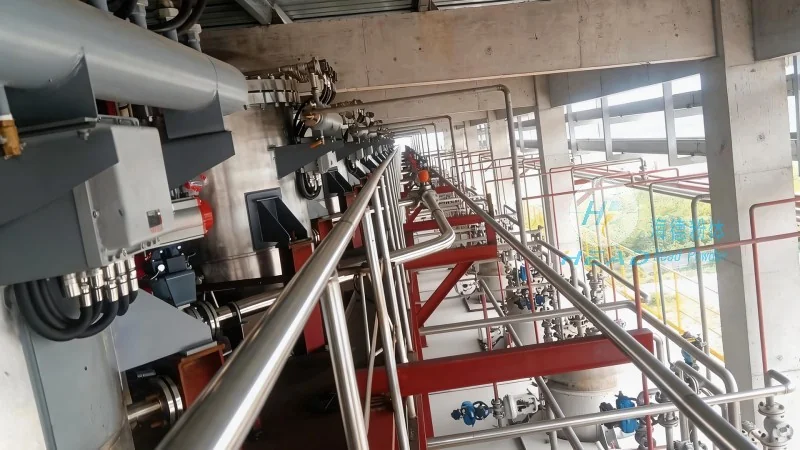
Pneumatic conveying uses air or other gases to transport glass fiber powder through a pipeline. This method can be categorized into pressure and vacuum systems. Pressure systems are ideal for long-distance transport and high-volume applications, as they can move material over several hundred meters with minimal pressure loss. Vacuum systems, on the other hand, are suitable for short distances or when material needs to be drawn from a hopper or silo. The advantages of pneumatic conveying include high efficiency, ability to handle fine powders without segregation, and reduced risk of dust exposure compared to mechanical systems. However, these systems require more energy to operate, and the initial investment is higher. Moreover, they may not be suitable for very abrasive or moisture-sensitive powders, as the air flow can cause particle attrition and degrade material quality.
3. Vacuum Conveying Systems
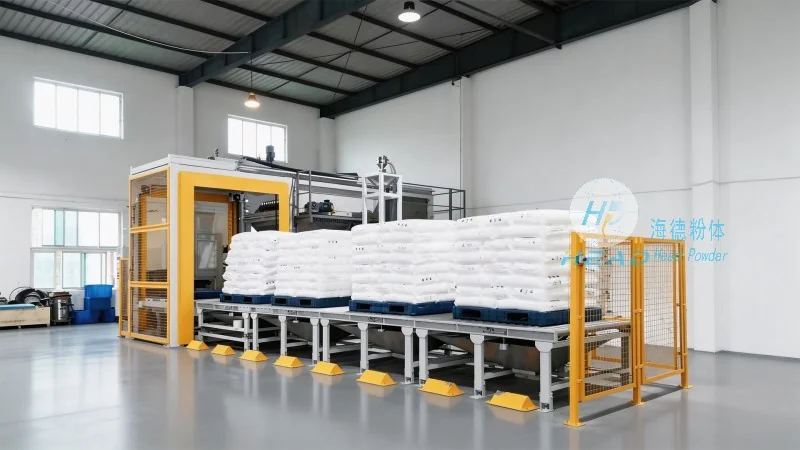
Vacuum conveying systems are a type of pneumatic conveying that uses negative pressure to draw material from a source. They are commonly used for handling glass fiber powder in applications where dust control is critical, such as in cleanroom environments or when transporting material from elevated hoppers. The main advantages of vacuum systems include their ability to handle fine powders without clogging, low noise operation, and suitability for vertical lifting. They are also effective for short to medium distances and can be integrated with dust collection systems to ensure compliance with environmental regulations. However, vacuum systems have lower capacity compared to pressure systems and may require more frequent maintenance due to the wear on components from abrasive powders. Additionally, they are less efficient for long-distance transport and may experience pressure drop issues over extended pipelines.
4. Bucket Elevators
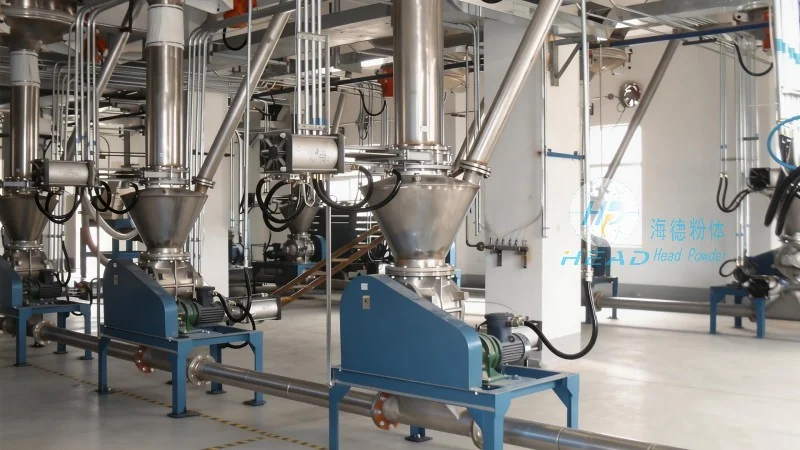
Bucket elevators are mechanical systems that use a series of buckets attached to a chain or belt to lift and transport glass fiber powder vertically. These systems are highly effective for vertical transport and can handle large volumes of material with high efficiency. The advantages of bucket elevators include their ability to transport material over significant vertical heights, minimal material degradation due to gentle handling, and low energy consumption compared to pneumatic systems. They are particularly suitable for applications requiring vertical lifting, such as feeding mixers or processing equipment. However, bucket elevators have limitations when dealing with very fine or cohesive powders, as the buckets may not effectively lift material, leading to clogging or reduced capacity. Additionally, they require more maintenance than other systems due to the wear on buckets and chains, and the initial cost is higher.
Key Considerations for Selecting a Conveying Method
Choosing the right glass fiber powder conveying method involves evaluating several factors, including the material's properties, the required transport distance, and the application's specific requirements. For example, if the application involves long-distance horizontal transport with high volume, a pressure pneumatic system may be the most efficient choice. Conversely, for short-distance vertical transport in a cleanroom environment, a vacuum system might be preferred. It is also essential to consider the cost of installation, energy consumption, and maintenance over the system's lifespan. Companies like Shandong HeadPowder Engineering Co., Ltd. specialize in designing and manufacturing customized conveying solutions tailored to the unique needs of their clients, ensuring optimal performance and compliance with industry standards.
Conclusion
In conclusion, the choice of glass fiber powder conveying method significantly impacts operational efficiency and material quality. Each method has its strengths and weaknesses, and the best option depends on the specific application and operational constraints. By understanding the advantages and disadvantages of different technologies, industrial professionals can select the most suitable system to meet their needs. Whether it's a screw conveyor for simple horizontal transport or a pneumatic system for complex vertical and long-distance applications, the goal is to achieve reliable, safe, and cost-effective material handling. Shandong HeadPowder Engineering Co., Ltd. remains committed to providing innovative solutions that enhance productivity and ensure the quality of glass fiber powder in various industrial processes.

 Shandong Headpowder Engineering Co., Ltd.
 156-6277-7102(Quản lý Trương)
  0531-83386006
  Thành phố Tế Nam, Tỉnh Sơn Đông, Trung Quốc
Điện thoại
WeChatTư vấn
Lên đầu