Với hơn 10 năm kinh nghiệm về vận chuyển khí nén, Headpowder Sơn Đông cung cấp hệ thống, thiết bị và quạt gió toàn chuỗi, đảm nhận các dự án kỹ thuật bột trọn gói trên toàn quốc.
Desulfurization gypsum, a byproduct of flue gas desulfurization in power plants and industrial facilities, requires efficient and reliable conveying systems to transport it from the desulfurization unit to storage or processing areas. The choice of conveying method significantly impacts operational efficiency, cost, and environmental compliance. This article provides a detailed comparison of common desulfurization gypsum conveying methods, focusing on their applications, advantages, and considerations for industrial use.
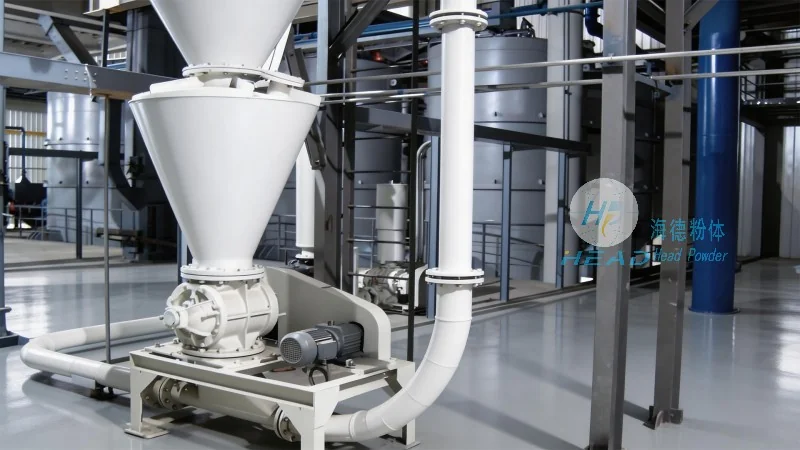
1. Belt Conveyor System
The belt conveyor is one of the most widely used methods for transporting bulk materials, including desulfurization gypsum. It consists of a continuous loop of conveyor belt supported by rollers and driven by a motor. The system is capable of handling large volumes of gypsum with minimal maintenance. Key advantages include high capacity, long-distance transport capability, and low energy consumption. However, belt conveyors require a relatively flat and stable surface for installation and may be susceptible to material buildup or belt wear over time. The HeadPowder Engineering Co., Ltd. specializes in designing and manufacturing customized belt conveyor systems tailored to the specific requirements of desulfurization gypsum handling, ensuring optimal performance and durability.
2. Screw Conveyor (Auger Conveyor)
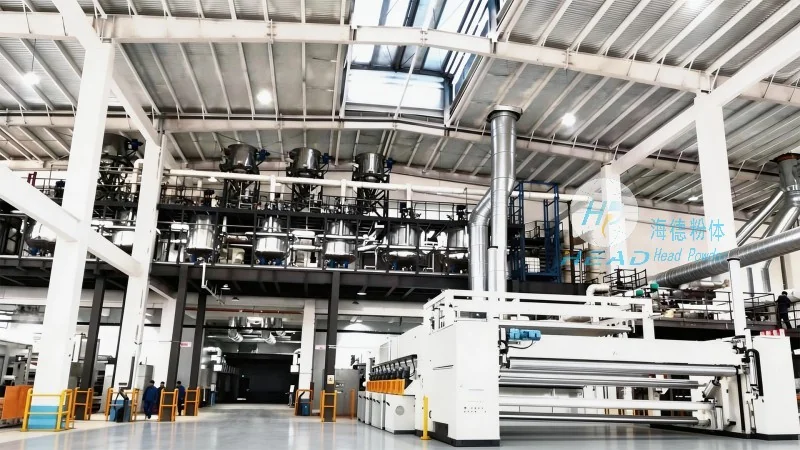
Screw conveyors are another common option for transporting desulfurization gypsum, particularly in applications where vertical or inclined transport is needed. This type of conveyor uses a rotating screw (auger) to move material along a U-shaped or cylindrical trough. Screw conveyors are compact, easy to install, and suitable for both horizontal and vertical transport. They are ideal for smaller-scale operations or when space is limited. However, they have lower capacity compared to belt conveyors and may experience higher wear on the screw and trough due to the abrasive nature of gypsum. HeadPowder Engineering Co., Ltd. offers screw conveyor solutions that are engineered to withstand the abrasive properties of desulfurization gypsum, ensuring long service life and reliable operation.
3. Pneumatic Conveying System
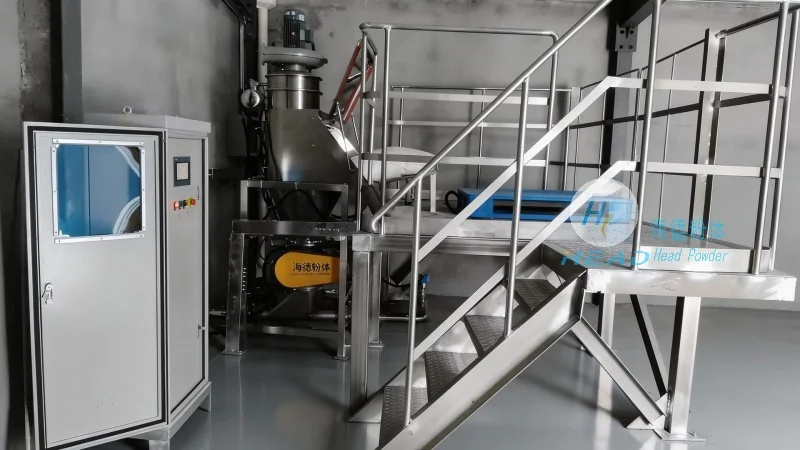
Pneumatic conveying systems use air or other gases to transport desulfurization gypsum as a slurry or dry powder through a pipeline. This method is particularly useful for long-distance or high-rise transport, as it eliminates the need for multiple transfer points. Pneumatic systems are flexible and can be integrated with existing infrastructure. However, they require higher energy input and may be less efficient for very fine or cohesive gypsum particles. The efficiency of pneumatic conveying depends on the particle size, moisture content, and air velocity. HeadPowder Engineering Co., Ltd. provides advanced pneumatic conveying solutions that optimize air flow and particle transport, minimizing energy consumption and ensuring consistent material delivery.
4. Hydraulic Conveying System
Hydraulic conveying systems utilize water to transport desulfurization gypsum as a slurry through pipelines. This method is effective for long-distance transport and can handle high volumes of material. However, it requires additional equipment for slurry preparation and dewatering, increasing operational complexity and cost. Hydraulic systems are suitable for applications where the gypsum has a high moisture content and needs to be transported over long distances. HeadPowder Engineering Co., Ltd. offers hydraulic conveying solutions that are designed to handle the specific properties of desulfurization gypsum, ensuring efficient transport and minimal environmental impact.
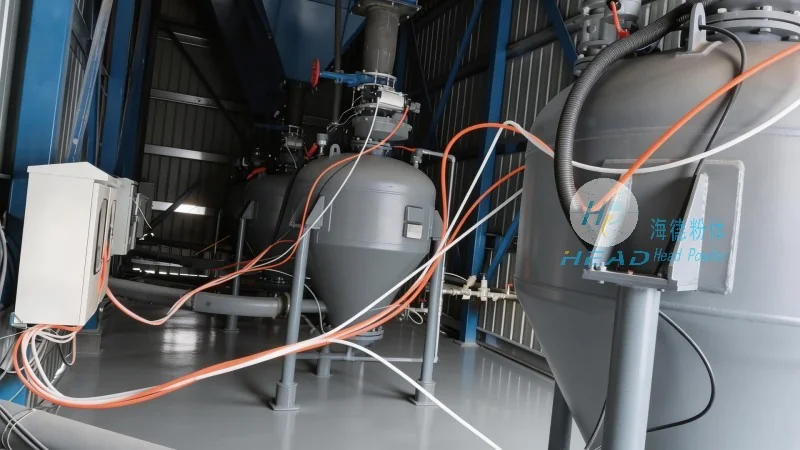
5. Comparison and Selection Criteria
When selecting a desulfurization gypsum conveying method, several factors must be considered, including the volume of material to be transported, the distance and elevation changes, the space available for installation, and the budget. Belt conveyors are generally preferred for large-scale, long-distance horizontal transport due to their high capacity and low cost. Screw conveyors are suitable for smaller-scale operations or when vertical transport is required. Pneumatic and hydraulic systems are ideal for applications where flexibility and long-distance transport are critical, but they may have higher operational costs. The choice of system should also consider the properties of the gypsum, such as particle size, moisture content, and abrasiveness, to ensure optimal performance and longevity. HeadPowder Engineering Co., Ltd. provides comprehensive consulting services to help clients evaluate their specific needs and select the most appropriate conveying method for their desulfurization gypsum handling requirements.

 Shandong Headpowder Engineering Co., Ltd.
 156-6277-7102(Quản lý Trương)
  0531-83386006
  Thành phố Tế Nam, Tỉnh Sơn Đông, Trung Quốc
Điện thoại
WeChatTư vấn
Lên đầu