Với hơn 10 năm kinh nghiệm về vận chuyển khí nén, Headpowder Sơn Đông cung cấp hệ thống, thiết bị và quạt gió toàn chuỗi, đảm nhận các dự án kỹ thuật bột trọn gói trên toàn quốc.
For industrial applications that require the efficient and safe transport of foam powder, designing a well-optimized pneumatic conveying system is crucial. A properly designed system ensures minimal product degradation, consistent flow rates, and reduced operational costs. This article provides a comprehensive guide on the key considerations and steps involved in creating an effective foam powder pneumatic conveying system plan, with a focus on practical implementation and adherence to industry standards. The information is presented by Shandong HeadPowder Engineering Co., Ltd., a leading provider of engineering solutions for material handling systems.
Understanding the Core Principles of Foam Powder Pneumatic Conveying
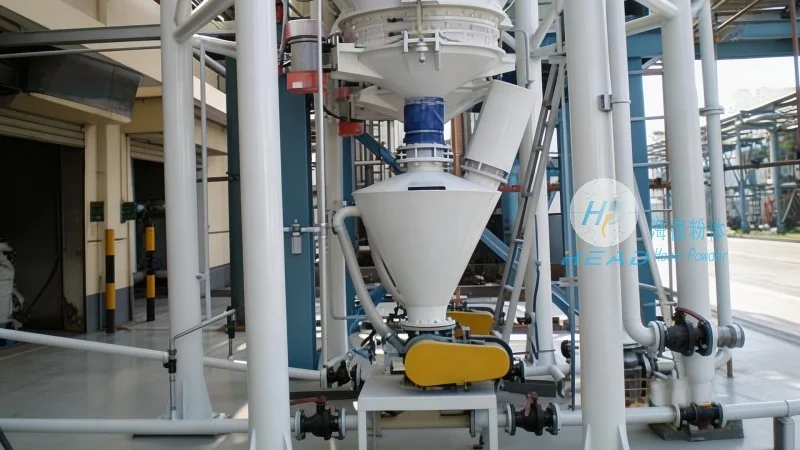
Before diving into the design specifics, it's essential to grasp the fundamental principles of pneumatic conveying for foam powders. Foam powders, characterized by their light weight and potentially delicate particle structure, demand a conveying system that can handle low to moderate air velocities without causing particle breakage or agglomeration. The primary goal is to achieve a stable, uniform flow of material through the system, minimizing pressure drops and ensuring reliable delivery to the destination point.
Key Design Factors for a Successful Foam Powder Pneumatic Conveying System
Several critical factors must be considered when designing a foam powder pneumatic conveying system. These include the material's physical properties, the required conveying distance and elevation, the desired flow rate, and the available space for installation. Each of these elements directly impacts the system's performance and efficiency.
First, the physical properties of the foam powder, such as particle size distribution, bulk density, and moisture content, play a significant role. Larger or more fragile particles may require a lower air velocity to prevent breakage, while higher moisture content could affect the material's flowability and require additional drying measures. The company, Shandong HeadPowder Engineering Co., Ltd., specializes in tailoring conveying solutions to match these specific material characteristics, ensuring optimal performance.
Second, the conveying distance and elevation changes are critical. For short distances, a positive pressure system (like a blower or compressor) is often sufficient. However, for longer distances or when lifting the material to higher levels, a combination of positive and negative pressure (a vacuum system) or a more complex multi-stage system may be necessary. The design must account for the pressure losses due to friction in the pipes and changes in elevation, ensuring that the air flow maintains sufficient velocity to keep the powder suspended.
Third, the required flow rate and system capacity are essential. The system must be sized to handle the expected production volume, with considerations for peak demand periods. This involves calculating the air volume and pressure required to achieve the desired material flow rate without excessive energy consumption. Shandong HeadPowder Engineering Co., Ltd. employs advanced computational fluid dynamics (CFD) and empirical formulas to accurately determine these parameters, ensuring the system operates within optimal efficiency ranges.
Fourth, the available space and layout constraints must be considered. The system design must fit within the existing facility, taking into account the location of the feed point, the discharge point, and any intermediate storage or processing equipment. The company's engineers work closely with clients to assess these spatial requirements, designing layouts that maximize efficiency while minimizing installation complexity and cost.
System Components and Their Role in Foam Powder Conveying
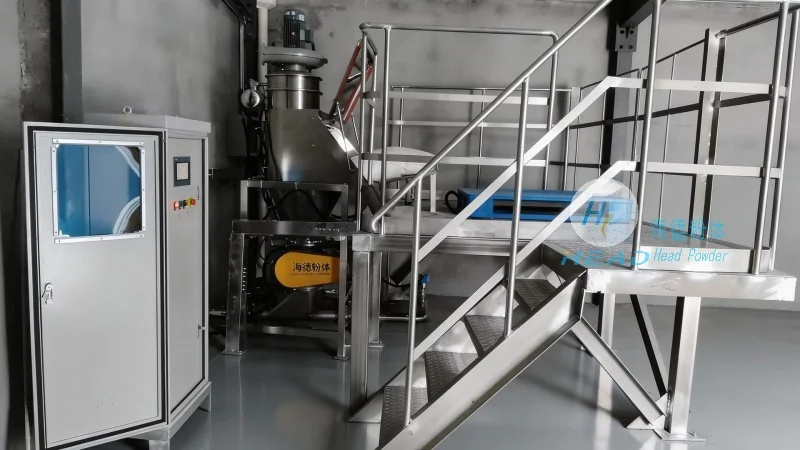
A foam powder pneumatic conveying system typically consists of several key components, each playing a vital role in the overall operation. These components include the material feed system, the air supply unit, the conveying pipes, the control valves, and the discharge equipment. Each component must be selected and integrated carefully to ensure the system functions as a cohesive unit.
The material feed system is responsible for introducing the foam powder into the conveying line. For bulk materials, a hopper or a rotary valve is commonly used to control the flow rate and prevent blockages. The feed system must be designed to handle the material's flow characteristics, ensuring a consistent and stable feed to the system. The company's expertise in material handling equipment allows them to recommend the most suitable feed mechanisms for different foam powder types.
The air supply unit provides the necessary pressure and volume of air to move the powder through the system. This can be a positive pressure blower or a vacuum pump, depending on the system design. The choice of air supply equipment depends on the required pressure, flow rate, and the system's overall energy efficiency. Shandong HeadPowder Engineering Co., Ltd. offers a range of air compressors and blowers, optimized for low noise and high efficiency, to meet the specific needs of foam powder conveying applications.
The conveying pipes are a critical component, as they determine the pressure drop and flow characteristics of the system. The pipe material, diameter, and length all affect the system's performance. For foam powders, stainless steel or food-grade plastic pipes are often preferred to prevent material contamination and corrosion. The company's engineers design the pipe network to minimize bends and fittings, as each bend introduces additional pressure loss and can cause particle separation or agglomeration. Proper pipe sizing is also essential to maintain the required air velocity for stable powder transport.
The control valves, such as butterfly valves or ball valves, are used to regulate the air flow and material discharge. These valves allow for precise control over the system's operation, enabling adjustments to the flow rate or pressure as needed. The company integrates advanced control systems that can monitor and adjust these parameters in real-time, ensuring the system operates at peak efficiency and preventing overloading or underloading.
The discharge equipment, such as a rotary valve or a dust collector, is responsible for collecting the foam powder at the end of the conveying line. The discharge system must be designed to handle the material's flow characteristics and prevent re-entrainment of dust or powder back into the system. The company's dust collection systems are engineered to capture fine particles, ensuring compliance with environmental regulations and maintaining a clean working environment.
Design Considerations for Energy Efficiency and Maintenance
Energy efficiency and ease of maintenance are important considerations when designing a foam powder pneumatic conveying system. A well-designed system minimizes energy consumption while ensuring long-term reliability and low maintenance costs.
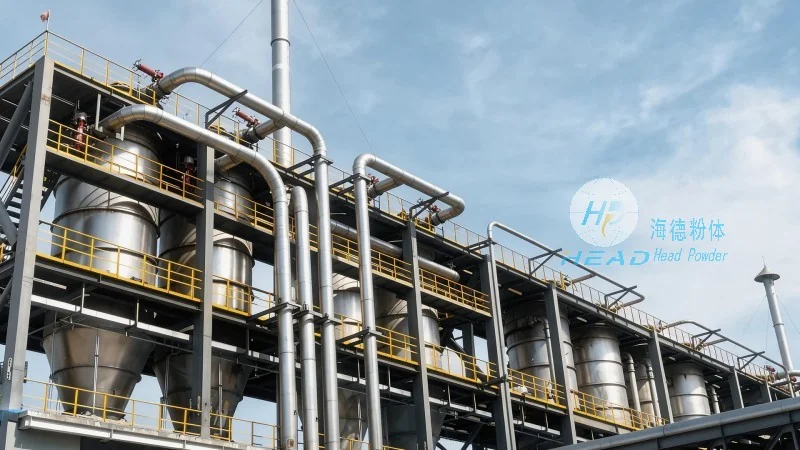
Energy efficiency can be improved by selecting the appropriate air supply equipment and optimizing the system's pressure and flow rates. The company's engineers use energy analysis tools to identify opportunities for reducing power consumption, such as using variable frequency drives (VFDs) to adjust the blower speed based on the actual conveying demand. This dynamic control helps to reduce energy waste during periods of low production.
Maintenance considerations include the selection of durable materials and components that can withstand the abrasive nature of foam powders. Regular maintenance schedules are also critical to ensure the system operates at optimal performance. The company provides comprehensive maintenance services, including regular inspections, component replacements, and system upgrades, to extend the system's lifespan and minimize downtime.
Case Study: Customized Foam Powder Pneumatic Conveying System for a Client
Shandong HeadPowder Engineering Co., Ltd. recently completed a project for a client in the food processing industry, where they needed to transport a delicate foam powder from a production line to a storage silo. The client's primary concerns were maintaining the powder's quality and ensuring a reliable, low-maintenance system.
The company's engineers first conducted a thorough analysis of the material's properties, including particle size (ranging from 100 to 500 microns) and moisture content (around 5%). Based on this analysis, they recommended a positive pressure system with a stainless steel pipe network and a rotary valve feed system. The system was designed to operate at a low air velocity (around 10-12 m/s) to prevent particle breakage and agglomeration.
The air supply unit was a high-efficiency blower with a variable frequency drive, allowing for adjustable pressure and flow rates. The pipe network was carefully laid out to minimize bends, with a total length of 150 meters and a vertical lift of 20 meters. The discharge equipment was a dust collector with a cyclone separator, designed to capture fine particles and maintain a clean environment.
After installation and commissioning, the system demonstrated excellent performance, with a consistent flow rate of 2 tons per hour and minimal pressure drop. The client reported that the system maintained the foam powder's quality, with no visible degradation or agglomeration, and required minimal maintenance. This case study highlights the company's ability to design and implement customized foam powder pneumatic conveying systems that meet specific client needs and operational requirements.

 Shandong Headpowder Engineering Co., Ltd.
 156-6277-7102(Quản lý Trương)
  0531-83386006
  Thành phố Tế Nam, Tỉnh Sơn Đông, Trung Quốc
Điện thoại
WeChatTư vấn
Lên đầu