Với hơn 10 năm kinh nghiệm về vận chuyển khí nén, Headpowder Sơn Đông cung cấp hệ thống, thiết bị và quạt gió toàn chuỗi, đảm nhận các dự án kỹ thuật bột trọn gói trên toàn quốc.
For industrial applications involving resin pellets, selecting an appropriate pneumatic conveying system is crucial for efficiency, cost-effectiveness, and operational reliability. This article outlines key considerations and steps to design a well-suited resin pellet pneumatic conveying system, focusing on practical implementation and system optimization.
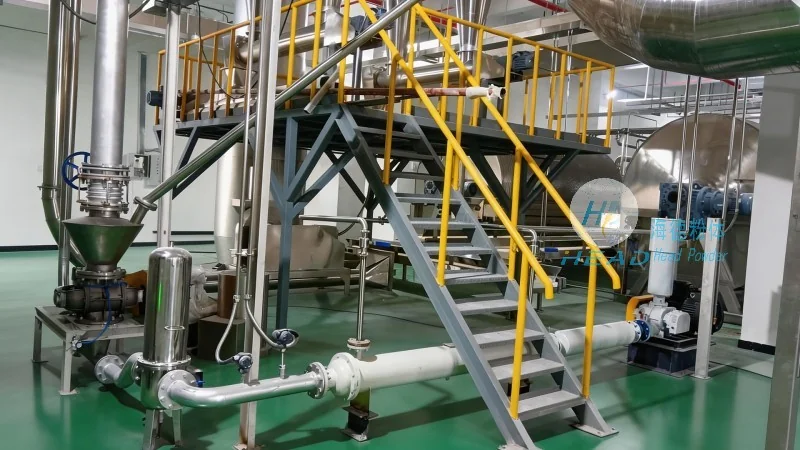
Understanding the Core Principles of Resin Pellet Pneumatic Conveying
Resin pellets are commonly used in various manufacturing processes, and their transport requires specialized equipment to handle the material's characteristics. Pneumatic conveying systems utilize air or gas to move particles through pipelines, offering advantages such as reduced contamination, lower maintenance compared to mechanical systems, and the ability to handle fine or abrasive materials like resin pellets. The design of such a system must account for factors like particle size, density, moisture content, and the desired conveying distance and throughput.
Key Design Factors for Resin Pellet Pneumatic Conveying Systems
Several critical parameters influence the successful design of a resin pellet pneumatic conveying system. First, the material's physical properties, including particle size distribution, bulk density, and flowability, are essential. Resin pellets often have a specific size range, typically from 1 to 10 mm, and their density may vary based on the resin type (e.g., polyethylene, polypropylene). These properties affect the air velocity required for reliable transport, as higher air speeds are needed for smaller or lighter particles to prevent settling or blockages.
Second, the conveying distance and elevation changes must be considered. The system's layout, including the number of bends, vertical lifts, and horizontal runs, impacts the air pressure and power consumption. For longer distances or significant vertical lifts, positive pressure systems (where air is blown into the material) are often preferred, as they can maintain sufficient velocity over longer pipelines. Conversely, negative pressure systems (suction) are suitable for shorter distances or when the material needs to be collected from multiple sources.
System Components and Their Roles in Resin Pellet Conveying
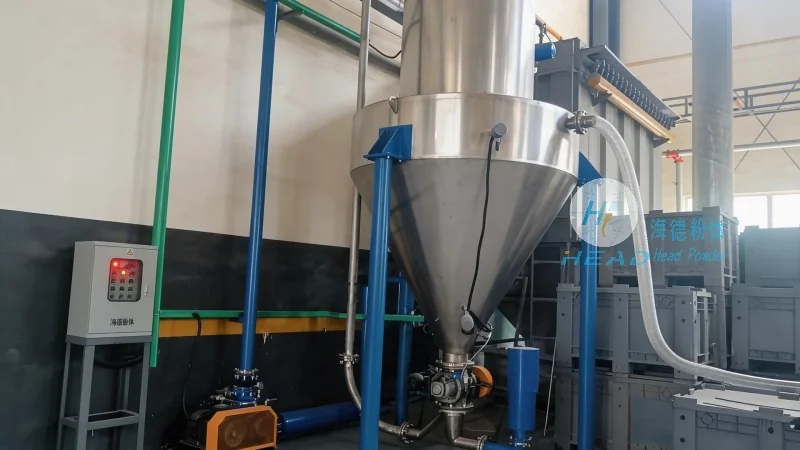
A typical resin pellet pneumatic conveying system consists of several key components, each playing a vital role in the overall operation. The primary components include the material feed hopper, which stores and feeds the resin pellets into the system; the air compressor or vacuum pump, which provides the necessary air pressure or suction; the conveying line, which transports the material; and the discharge equipment, such as a cyclone separator or filter, which separates the resin pellets from the air stream.
The feed hopper is designed to minimize material bridging and ensure a consistent flow rate. It may include a rotary valve or screw feeder to control the material discharge. The air compressor or vacuum pump must be sized appropriately to deliver the required air volume and pressure. For resin pellets, a positive pressure system often uses a blower with sufficient capacity to maintain the air velocity needed for transport. The conveying line is typically made of stainless steel or other corrosion-resistant materials to handle the resin's potential chemical properties and prevent contamination.
Optimizing Air Velocity and Pressure for Efficient Resin Pellet Transport
One of the most critical design aspects is determining the optimal air velocity and pressure. The air velocity must be high enough to keep the resin pellets suspended in the air stream but not excessively high, which would increase energy consumption and cause wear on the system components. The relationship between particle size, density, and air velocity is governed by the Stokes' law for particle settling, and engineers use empirical formulas or computational fluid dynamics (CFD) simulations to calculate the required velocity.
For resin pellets, a common rule of thumb is to maintain an air velocity of 20-30 m/s (65-98 ft/s) for horizontal transport and 15-25 m/s (49-82 ft/s) for vertical lifts. However, these values can vary based on the specific material properties and system configuration. The pressure drop along the conveying line is another important factor, as it indicates the energy required to move the material. Engineers calculate the pressure drop using the Darcy-Weisbach equation, considering factors like pipe diameter, length, and the roughness of the internal surface.
Considerations for System Maintenance and Reliability
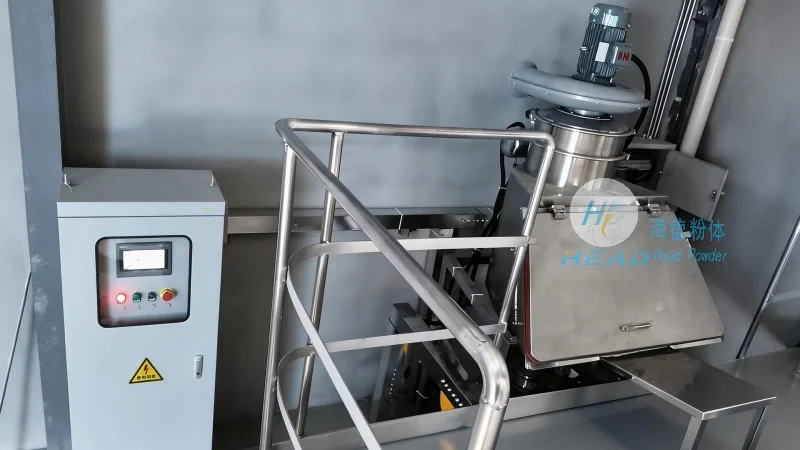
Ensuring the long-term reliability of a resin pellet pneumatic conveying system involves proper maintenance and component selection. Resin pellets can be abrasive, leading to wear on the conveying line and other components. Therefore, using high-quality, corrosion-resistant materials such as stainless steel or special alloys is essential. Regular maintenance, including cleaning the cyclone separator, checking for air leaks, and inspecting the feed hopper for blockages, is crucial to prevent system downtime and maintain efficiency.
The system's design should also account for potential issues like material buildup or clogging, especially in areas with high particle concentration or sharp bends. Installing cleaning mechanisms, such as reverse air pulses or mechanical scrapers, can help maintain system performance. Additionally, monitoring the system's performance through pressure sensors and flow meters allows for early detection of issues and timely adjustments.
Case Study: Design of a Resin Pellet Pneumatic Conveying System by Shandong HeadPowder Engineering Co., Ltd.
Shandong HeadPowder Engineering Co., Ltd., a leading provider of pneumatic conveying solutions, has extensive experience in designing systems for resin pellet applications. For a client requiring the transport of polypropylene resin pellets over a distance of 100 meters with a vertical lift of 15 meters, the company conducted a thorough analysis of the material properties and system requirements. The design included a positive pressure system with a high-capacity blower, a stainless steel conveying line with appropriate bends and a cyclone separator for material recovery.
The system was optimized for air velocity and pressure, ensuring the resin pellets were efficiently transported with minimal energy consumption. The feed hopper was equipped with a rotary valve to control the material flow, and the cyclone separator was designed to capture over 99% of the resin pellets, reducing waste and improving overall efficiency. The system has been in operation for over two years, demonstrating high reliability and consistent performance, with minimal maintenance required.
Conclusion: Designing an Effective Resin Pellet Pneumatic Conveying System
Designing a reasonable resin pellet pneumatic conveying system requires a comprehensive understanding of the material properties, system requirements, and operational constraints. By considering factors such as particle size, conveying distance, air velocity, and system components, engineers can develop a system that is efficient, cost-effective, and reliable. Shandong HeadPowder Engineering Co., Ltd. specializes in providing tailored pneumatic conveying solutions for resin pellet applications, leveraging their expertise to deliver systems that meet the specific needs of industrial clients.

 Shandong Headpowder Engineering Co., Ltd.
 156-6277-7102(Quản lý Trương)
  0531-83386006
  Thành phố Tế Nam, Tỉnh Sơn Đông, Trung Quốc
Điện thoại
WeChatTư vấn
Lên đầu