Với hơn 10 năm kinh nghiệm về vận chuyển khí nén, Headpowder Sơn Đông cung cấp hệ thống, thiết bị và quạt gió toàn chuỗi, đảm nhận các dự án kỹ thuật bột trọn gói trên toàn quốc.
When handling calcium oxide (CaO), also known as quicklime, efficient and reliable dry powder conveying is crucial for industrial applications. The choice of conveying method significantly impacts operational efficiency, safety, and cost-effectiveness. This article provides a detailed comparison of common calcium oxide dry powder conveying methods, highlighting their advantages and disadvantages to help industrial operators select the most suitable solution for their specific needs.
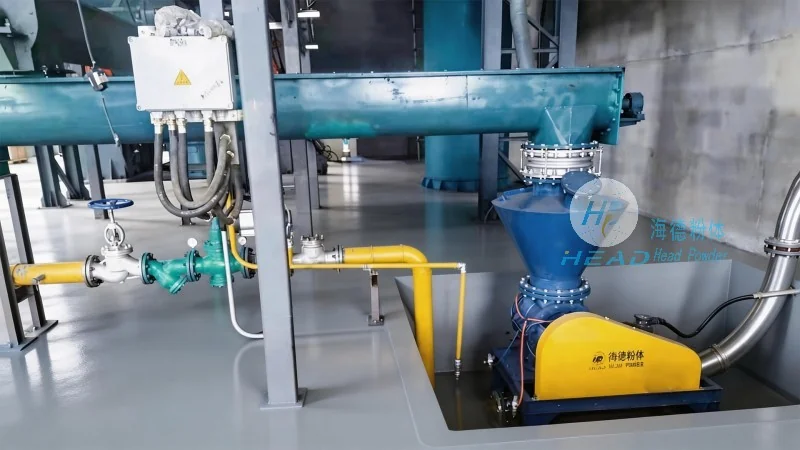
1. Pneumatic Conveying Systems
Pneumatic conveying is a widely used method for transporting calcium oxide dry powder due to its ability to handle fine powders and operate in a closed system. This method utilizes air pressure to move the material through a pipeline. There are two main types: pressure and vacuum systems. Pressure systems use compressed air to push the powder, while vacuum systems use a vacuum to pull the material. The advantages of pneumatic conveying include high conveying capacity, flexibility in layout, and the ability to transport materials over long distances. However, it has some drawbacks, such as higher energy consumption, potential for material degradation if the powder is sensitive to air exposure, and the need for regular maintenance of air filtration systems. For calcium oxide, which can be reactive with moisture and air, the choice of system (pressure vs. vacuum) and the quality of air filtration are critical to maintain product quality.
2. Screw Conveyors
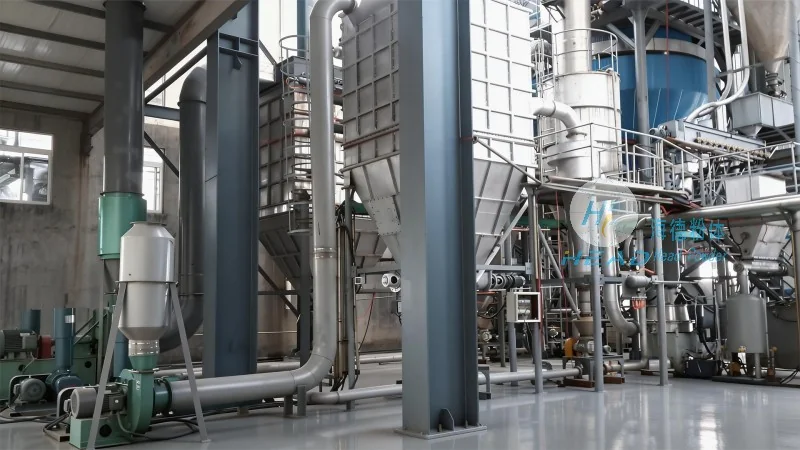
Screw conveyors, also known as auger conveyors, are mechanical devices that use a rotating screw to move dry powder through a trough or tube. They are suitable for transporting calcium oxide in bulk, especially in applications where a horizontal or slightly inclined path is required. The advantages of screw conveyors include simplicity, low maintenance, and the ability to handle a wide range of particle sizes. They are also relatively inexpensive compared to other conveying systems. However, screw conveyors have limitations, such as lower conveying capacity compared to pneumatic systems, potential for material degradation due to friction and heat generation, and the need for regular cleaning to prevent clogging, especially with fine powders like calcium oxide. The design of the screw (e.g., flight type, pitch) and the material of construction (e.g., stainless steel, carbon steel) are important factors that affect performance and longevity.
3. Bucket Elevators
Bucket elevators are vertical or inclined conveyors that use a series of buckets attached to a belt or chain to lift and transport calcium oxide dry powder. They are ideal for applications requiring vertical transport or steep inclines. The advantages of bucket elevators include high vertical lifting capacity, ability to handle abrasive materials without significant wear, and the ability to operate in a closed system to contain dust. However, they have some disadvantages, such as higher initial cost, complexity in installation and maintenance, and limitations in horizontal transport. The design of the bucket (e.g., deep or shallow, open or closed) and the speed of the elevator affect the conveying efficiency and the risk of material spillage or degradation.
4. Pipeline Conveying (Fluidized Bed or Slurry)
Pipeline conveying, particularly in the form of fluidized bed or slurry systems, involves transporting calcium oxide mixed with a liquid (e.g., water or a carrier fluid) through a pipeline. This method is suitable for applications where the powder needs to be transported over long distances or where a high degree of mixing is required. The advantages of this method include high conveying capacity, ability to handle very fine powders, and the ability to control the moisture content of the material. However, it has significant drawbacks, such as higher energy consumption due to the need to pump the slurry, potential for material degradation due to prolonged exposure to liquid, and the need for specialized equipment for separation and drying. The choice of carrier fluid and the design of the pipeline system are critical to ensure efficient and cost-effective operation.
Conclusion and Recommendations
Selecting the appropriate calcium oxide dry powder conveying method requires a thorough evaluation of operational requirements, material characteristics, and budget constraints. Pneumatic conveying is ideal for high-volume, long-distance transport with fine powders, while screw conveyors are suitable for moderate volumes and horizontal transport. Bucket elevators are best for vertical or steep incline applications, and pipeline conveying is effective for high-capacity, long-distance transport with the ability to mix materials. Industrial operators should consider factors such as material reactivity, dust control needs, energy consumption, and maintenance requirements when making their choice.
Shandong HeadPowder Engineering Co., Ltd., a leading manufacturer in the field, specializes in providing customized conveying solutions for calcium oxide and other industrial powders. With years of experience and a commitment to quality, HeadPowder offers a range of conveying systems tailored to meet the specific needs of its clients. Whether you require a pneumatic system, screw conveyor, bucket elevator, or pipeline conveying solution, HeadPowder provides reliable, efficient, and cost-effective equipment designed to enhance your operational performance and ensure product quality. Contact HeadPowder today to learn more about how their conveying solutions can optimize your calcium oxide handling processes.

 Shandong Headpowder Engineering Co., Ltd.
 156-6277-7102(Quản lý Trương)
  0531-83386006
  Thành phố Tế Nam, Tỉnh Sơn Đông, Trung Quốc
Điện thoại
WeChatTư vấn
Lên đầu