Với hơn 10 năm kinh nghiệm về vận chuyển khí nén, Headpowder Sơn Đông cung cấp hệ thống, thiết bị và quạt gió toàn chuỗi, đảm nhận các dự án kỹ thuật bột trọn gói trên toàn quốc.
For industries dealing with nanopowders, selecting the right conveying method is crucial for maintaining product quality, efficiency, and safety. This article provides a detailed comparison of common nanopowder conveying methods, highlighting their advantages, limitations, and applications. The information is presented by Shandong HeadPowder Engineering Co., Ltd., a leading manufacturer based in China, specializing in engineering solutions for powder handling systems.
Introduction to Nanopowder Conveying Methods
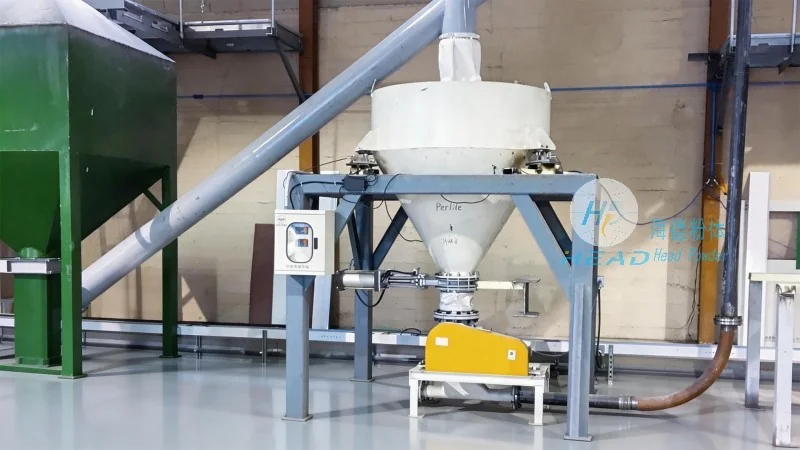
Nanopowders, with their extremely fine particle sizes (typically below 100 nanometers), present unique challenges during transportation due to their high surface area, tendency to agglomerate, and potential for static charge accumulation. Conventional conveying methods may not be suitable for these materials, as they can cause particle degradation, blockages, or loss of product integrity. Therefore, specialized conveying techniques are required to ensure efficient and safe handling of nanopowders. The primary methods include pneumatic conveying, mechanical conveying, and hybrid systems. Each method has distinct characteristics that make it suitable for specific applications.
Pneumatic Conveying: The Air-Driven Solution
Pneumatic conveying uses pressurized or vacuum air to transport powders through a pipeline. This method is widely used for nanopowders due to its ability to handle fine particles without mechanical contact, which minimizes particle attrition and agglomeration. There are two main types: pressure and vacuum systems. Pressure systems operate by blowing air into the pipeline, pushing the powder forward, while vacuum systems use suction to draw the powder from the source. The choice between the two depends on the distance, material properties, and system layout. For example, pressure systems are often preferred for long-distance transport, as they can maintain higher flow rates and reduce the risk of clogging. However, vacuum systems are better suited for applications where the material needs to be transported from a lower elevation or where the source is located in a confined space.
Advantages of pneumatic conveying for nanopowders include: 1) Gentle handling, which preserves the particle size distribution and prevents agglomeration; 2) Ability to handle abrasive or corrosive powders without wear on the system components; 3) Flexibility in system design, allowing for multiple inlets and outlets. However, the method has limitations, such as higher energy consumption compared to mechanical systems and the need for proper filtration to prevent dust emissions. Additionally, the system requires regular maintenance to ensure air quality and prevent particle buildup in the pipeline.
Mechanical Conveying: The Contact-Based Approach
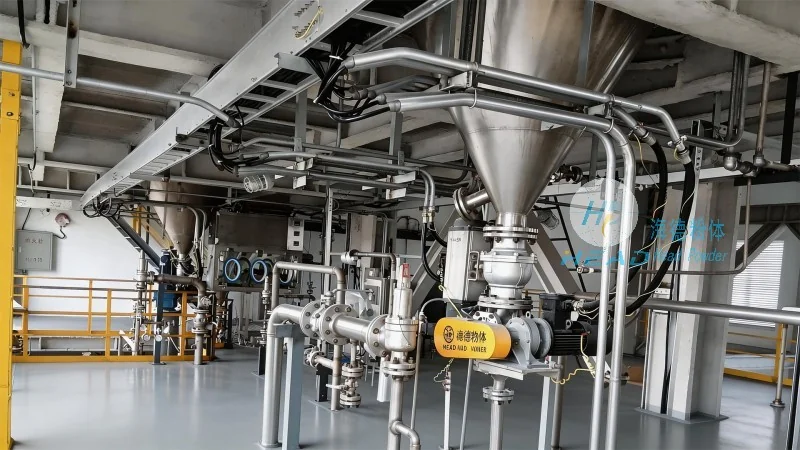
Mechanical conveying relies on mechanical components like screws, belts, or buckets to move powders. This method is commonly used for bulk materials but can also be adapted for nanopowders. The most common type for nanopowders is the screw conveyor, which uses a rotating screw to push the powder forward. Other mechanical systems include belt conveyors and bucket elevators. Mechanical conveying is generally more cost-effective for short-distance transport and is suitable for materials that are not highly abrasive or corrosive. However, it has significant drawbacks when handling nanopowders: 1) Direct contact with the conveying components can cause particle attrition and agglomeration, altering the powder's properties; 2) The risk of blockages due to the fine particle size, which can lead to system downtime and maintenance issues; 3) Higher risk of static charge buildup, which can cause dust explosions or material loss.
Despite these challenges, mechanical conveying can be effective when combined with specialized components. For instance, using a flexible screw conveyor with a smooth, non-stick surface can reduce friction and prevent agglomeration. Additionally, incorporating static control measures, such as grounding and ionizers, can mitigate the risk of static charge. However, for high-purity or sensitive nanopowders, pneumatic conveying is often preferred due to its gentler handling.
Hybrid Conveying Systems: Combining the Best of Both Worlds
Hybrid conveying systems integrate both pneumatic and mechanical components to leverage the advantages of each method. For example, a system may use a pneumatic conveyor to transport the nanopowder from the source to a mechanical screw conveyor for final delivery. This approach allows for efficient long-distance transport while maintaining the gentle handling required for nanopowders. Hybrid systems are particularly useful in complex production lines where multiple materials or processes are involved. They offer flexibility in handling different powder types and can adapt to varying production rates. However, the design and maintenance of hybrid systems are more complex, requiring expertise in both pneumatic and mechanical engineering.
Factors to Consider When Choosing a Conveying Method
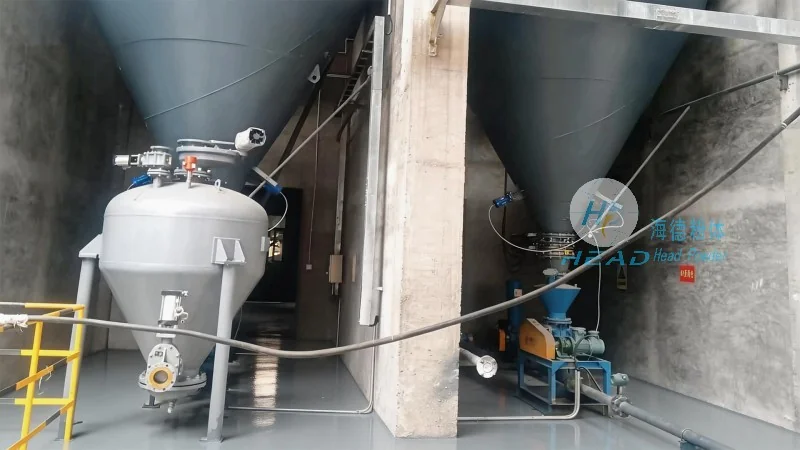
When selecting a nanopowder conveying method, several factors must be considered to ensure optimal performance and product quality. These include: 1) Particle size and density: Smaller particles require gentler handling, making pneumatic systems more suitable; 2) Material properties: Abrasive or corrosive powders may necessitate specialized components in both pneumatic and mechanical systems; 3) Distance and layout: Long-distance transport favors pneumatic systems, while short-distance transport can use mechanical systems; 4) Production rate: Higher production rates may require more robust systems, such as pressure pneumatic conveyors; 5) Cost and energy efficiency: Mechanical systems are generally more cost-effective for low-volume applications, while pneumatic systems may have higher energy costs but offer better particle protection.
Application Examples in Nanopowder Industries
The choice of conveying method depends on the specific application. For example, in the pharmaceutical industry, where nanopowders are used for drug delivery, pneumatic conveying is preferred to maintain the purity and stability of the powder. In the electronics industry, where nanopowders are used for coating or manufacturing, mechanical conveying may be used for short-distance transport from storage to the production line, with additional static control measures to prevent contamination. In the cosmetics industry, where nanopowders are used for pigments, both pneumatic and mechanical systems can be used, depending on the particle size and the desired final product quality.
Conclusion and Recommendations
Choosing the right nanopowder conveying method is critical for ensuring efficient, safe, and cost-effective powder handling. Pneumatic conveying is generally the best option for fine, sensitive nanopowders due to its gentle handling and ability to prevent agglomeration. Mechanical conveying may be suitable for short-distance transport or less sensitive materials, but requires careful design to mitigate particle degradation. Hybrid systems offer flexibility for complex applications but demand more expertise in system design and maintenance. Shandong HeadPowder Engineering Co., Ltd. provides customized conveying solutions tailored to the specific needs of nanopowder applications, ensuring optimal performance and product integrity. By considering the factors mentioned above and consulting with experts like HeadPowder, industries can select the most appropriate conveying method for their nanopowder handling needs.

 Shandong Headpowder Engineering Co., Ltd.
 156-6277-7102(Quản lý Trương)
  0531-83386006
  Thành phố Tế Nam, Tỉnh Sơn Đông, Trung Quốc
Điện thoại
WeChatTư vấn
Lên đầu