Với hơn 10 năm kinh nghiệm về vận chuyển khí nén, Headpowder Sơn Đông cung cấp hệ thống, thiết bị và quạt gió toàn chuỗi, đảm nhận các dự án kỹ thuật bột trọn gói trên toàn quốc.
For industrial applications involving the transport of gray calcium powder, selecting an appropriate pneumatic conveying system is crucial for efficiency, cost-effectiveness, and operational safety. This guide outlines key considerations and steps to design a rational system tailored to the specific needs of your facility.

Understanding the Core Requirements for Gray Calcium Powder Handling
Before diving into system design, it's essential to assess the material properties of gray calcium powder and the operational demands of your process. Gray calcium powder, often used in construction and industrial applications, presents unique challenges due to its particle size, density, and flow characteristics. These factors directly impact the choice of conveying method, equipment selection, and system configuration.
Key Factors Influencing Pneumatic Conveying System Design
The design of a pneumatic conveying system for gray calcium powder must consider several critical parameters to ensure optimal performance. First, the material's bulk density and particle size distribution are paramount. Gray calcium powder typically has a bulk density ranging from 0.8 to 1.2 kg/L, with particle sizes varying from fine powders to coarse granules. These characteristics affect the required air velocity and pressure to achieve reliable transport. Additionally, the system's capacity—measured in tons per hour or cubic meters per hour—must align with production rates and downstream processing requirements.
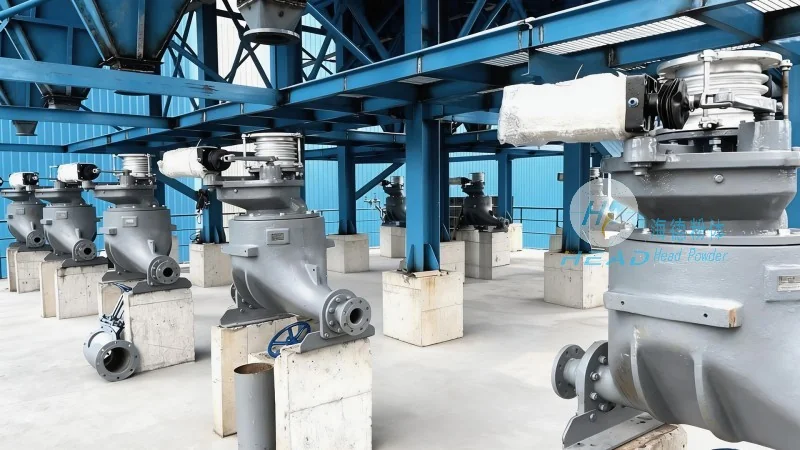
Second, the distance and layout of the conveying route are critical. Horizontal and vertical distances between the source and destination points determine whether a low-pressure or high-pressure system is more suitable. Horizontal runs may use dilute-phase systems with lower air velocities, while vertical lifts often require higher pressure to overcome gravitational forces. The system's layout also needs to account for any obstacles, such as equipment, structures, or changes in elevation, which can influence the selection of components like bends, elbows, and vertical ducts.
Equipment Selection for Gray Calcium Powder Pneumatic Conveying
Shandong HeadPowder Engineering Co., Ltd. specializes in designing and implementing pneumatic conveying systems tailored to the unique demands of gray calcium powder. Our approach involves selecting the right equipment to ensure efficient and reliable transport. For instance, the material's tendency to agglomerate or form bridging may necessitate the use of rotary valves or airlocks at the feed point to maintain consistent material flow. These components prevent blockages and ensure a steady supply of powder to the conveying line.
At the discharge end, the system may include cyclone separators or filter bags to separate the powder from the air stream. For gray calcium powder, which can be fine and prone to dust, efficient separation is vital to prevent material loss and maintain air quality. The choice of separation equipment depends on the particle size and the required recovery rate. Additionally, the system may incorporate air compressors and blower units to generate the necessary air pressure and volume. These components are selected based on the system's capacity and the required air velocity to achieve optimal conveying performance.
System Configuration and Operational Considerations
The configuration of the pneumatic conveying system for gray calcium powder must balance efficiency with cost-effectiveness. A well-designed system minimizes energy consumption while ensuring reliable transport. For example, using a dilute-phase system with appropriate air velocities can reduce energy costs compared to dense-phase systems, which require higher air pressure and may be more suitable for abrasive or sensitive materials. However, the choice between dilute and dense phase depends on the material's properties and the required handling conditions.
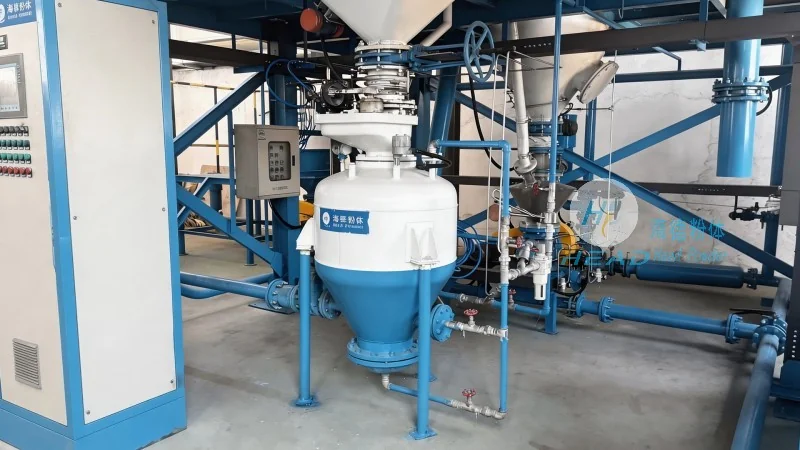
Operational considerations also include maintenance and downtime. The system should be designed with easy access to components for cleaning and maintenance, reducing the risk of material buildup and ensuring long-term reliability. Additionally, monitoring systems, such as pressure sensors and flow meters, can help detect issues early and prevent system failures. These features enhance the overall operational efficiency and reduce downtime for the facility.
Case Study: Successful Implementation by Shandong HeadPowder Engineering
Shandong HeadPowder Engineering Co., Ltd. has successfully implemented numerous pneumatic conveying systems for gray calcium powder in various industrial settings. One notable case involved a construction materials manufacturer in China who required a system to transport gray calcium powder from storage silos to a production line over a horizontal distance of 50 meters. Our team designed a low-pressure dilute-phase system using a rotary valve and a centrifugal blower, which achieved a conveying capacity of 10 tons per hour with minimal energy consumption. The system was installed in a facility located in Shandong, China, where the company's expertise in material handling and system design played a key role in the project's success.
The project demonstrated the importance of considering material properties, system layout, and operational requirements when designing a pneumatic conveying system. By selecting the appropriate equipment and configuration, the system not only met the client's capacity needs but also reduced maintenance costs and improved overall efficiency. This case study highlights the effectiveness of our approach in delivering customized solutions for gray calcium powder handling.
Conclusion: Designing a Rational System for Gray Calcium Powder
Designing a rational pneumatic conveying system for gray calcium powder requires a thorough understanding of material properties, operational demands, and system configuration. By considering factors such as particle size, bulk density, conveying distance, and equipment selection, you can develop a system that is efficient, cost-effective, and reliable. Shandong HeadPowder Engineering Co., Ltd. offers expertise in designing and implementing such systems, ensuring that your facility can handle gray calcium powder with optimal performance. With our tailored solutions, you can enhance your production processes and achieve better results in your industrial applications.

 Shandong Headpowder Engineering Co., Ltd.
 156-6277-7102(Quản lý Trương)
  0531-83386006
  Thành phố Tế Nam, Tỉnh Sơn Đông, Trung Quốc
Điện thoại
WeChatTư vấn
Lên đầu