Với hơn 10 năm kinh nghiệm về vận chuyển khí nén, Headpowder Sơn Đông cung cấp hệ thống, thiết bị và quạt gió toàn chuỗi, đảm nhận các dự án kỹ thuật bột trọn gói trên toàn quốc.
HeadPowder, a leading engineering firm based in Shandong, China, specializes in the design and implementation of efficient material handling solutions for industries dealing with nickel sulfate. The company's expertise lies in addressing the unique challenges of transporting nickel sulfate, a critical chemical used in battery manufacturing and other industrial applications. This article explores common conveying methods for nickel sulfate, with a particular focus on pneumatic conveying systems, which have become increasingly popular due to their efficiency and adaptability.
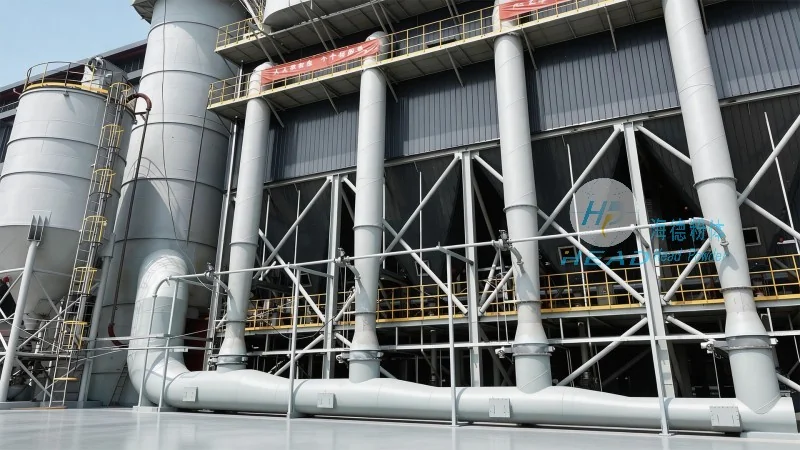
Company Profile: Shandong HeadPowder Engineering Co., Ltd.
HeadPowder, the brand name of Shandong HeadPowder Engineering Co., Ltd., is a professional engineering company headquartered in Shandong, China. The company has established itself as a trusted partner in the material handling sector, particularly for handling nickel sulfate and other fine chemicals. With a focus on innovation and customer-centric solutions, HeadPowder provides comprehensive services including system design, installation, and maintenance for conveying systems. The company's team of experienced engineers and technicians ensures that each project is tailored to meet the specific requirements of the client, ensuring optimal performance and reliability.
Common Sulfate Nickel Conveying Methods
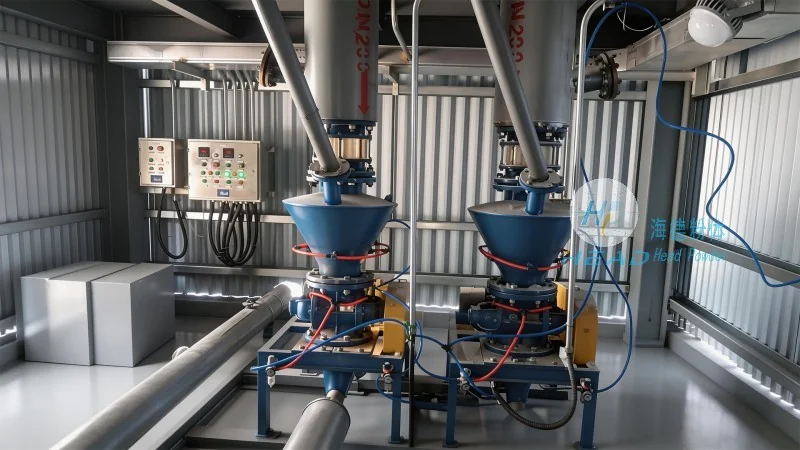
Transporting nickel sulfate requires careful consideration of several factors, including the material's physical properties, the distance to be covered, and the desired throughput. Different conveying methods are employed based on these factors, each with its own advantages and limitations. The primary methods used for nickel sulfate include gravity flow, mechanical conveyors, and pneumatic conveying. Each method is suitable for different scenarios, and the choice depends on the specific operational conditions and the scale of the application.
Gravity Flow Conveying
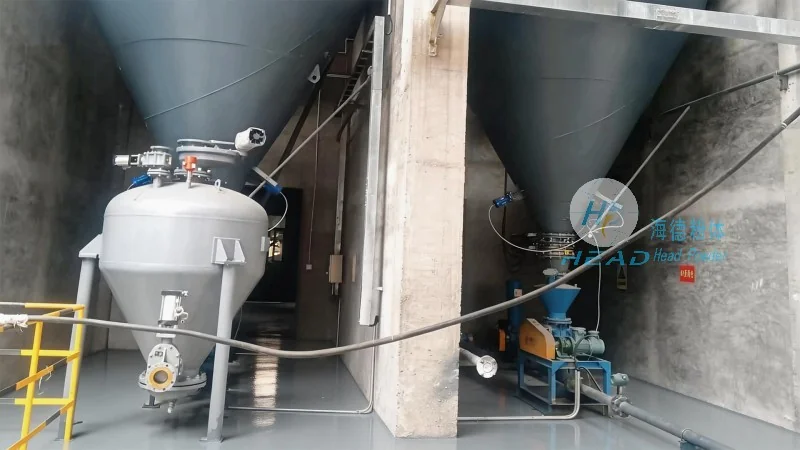
Gravity flow conveying, also known as bulk flow or pressure flow, relies on the natural force of gravity to move the material from a higher elevation to a lower one. This method is typically used for short distances and when the material is stored in a hopper or silo at a sufficient height. The system consists of a hopper, a conveyor trough, and a discharge point. The material flows through the trough under the influence of gravity, with minimal energy consumption. However, this method is limited by the vertical distance available and the angle of the conveyor. For nickel sulfate, which is often in a fine powder form, gravity flow can be effective for relatively short horizontal or inclined distances. The main advantage is its simplicity and low cost, making it suitable for small-scale operations or where the material is already stored at an appropriate height. The disadvantage is that it cannot handle long horizontal distances or vertical lifts without additional equipment, such as elevators or pumps.
Mechanical Conveyors
Mechanical conveyors are another common method for transporting nickel sulfate. These systems use mechanical components like belts, screws, or buckets to move the material. Belt conveyors are widely used for horizontal or slightly inclined transport, while screw conveyors are suitable for vertical or inclined transport. Bucket elevators are used for vertical lifting over longer distances. Mechanical conveyors are capable of handling larger volumes and can operate continuously, making them ideal for high-throughput applications. They are also relatively easy to maintain and can be integrated with other processing equipment. However, mechanical conveyors have some drawbacks. They require regular maintenance to prevent wear and tear, and they can be noisy. Additionally, they may cause some material degradation due to friction and impact, which can affect the quality of the nickel sulfate. For example, in the battery industry, where the purity of nickel sulfate is critical, mechanical conveyors may not be the best choice as they can introduce contaminants or cause particle size changes.
Pneumatic Conveying: An Overview
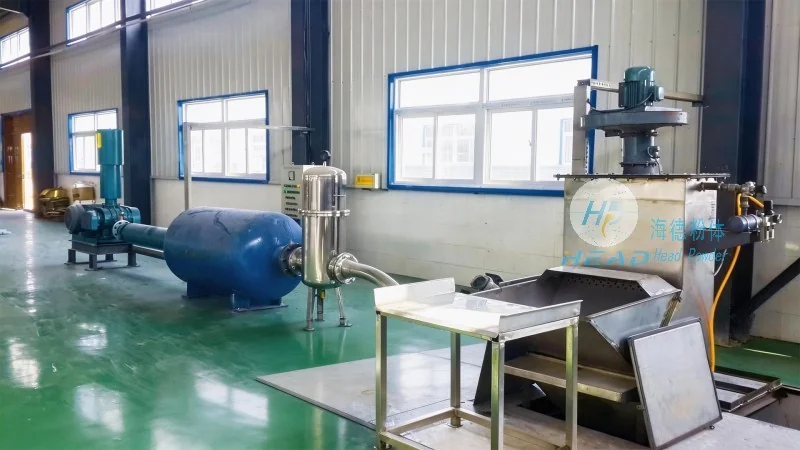
Pneumatic conveying, also known as air conveying, is a method that uses pressurized air or vacuum to transport material through a pipeline. This method is particularly suitable for fine powders like nickel sulfate, as it can handle long distances, vertical lifts, and multiple transfer points without the need for additional equipment. Pneumatic conveying systems consist of a blower or vacuum pump, a hopper, a conveyor line, and a receiver. The material is fed into the hopper and then drawn or pushed through the pipeline by the air flow. There are two main types of pneumatic conveying: dilute phase and dense phase. Dilute phase conveying uses low air velocity and is suitable for short to medium distances, while dense phase conveying uses higher air velocity and is suitable for longer distances or when the material is more abrasive.

 Shandong Headpowder Engineering Co., Ltd.
 156-6277-7102(Quản lý Trương)
  0531-83386006
  Thành phố Tế Nam, Tỉnh Sơn Đông, Trung Quốc
Điện thoại
WeChatTư vấn
Lên đầu