Với hơn 10 năm kinh nghiệm về vận chuyển khí nén, Headpowder Sơn Đông cung cấp hệ thống, thiết bị và quạt gió toàn chuỗi, đảm nhận các dự án kỹ thuật bột trọn gói trên toàn quốc.
Stone powder, a critical raw material in construction and manufacturing sectors, demands efficient and reliable conveying systems to maintain smooth production workflows. The selection of a conveying method directly influences operational efficiency, material quality, and overall cost-effectiveness. This article provides a comprehensive comparison of common stone powder conveying methods, outlining their advantages and disadvantages to assist industries in choosing the most appropriate solution.
1. Pneumatic Conveying Systems
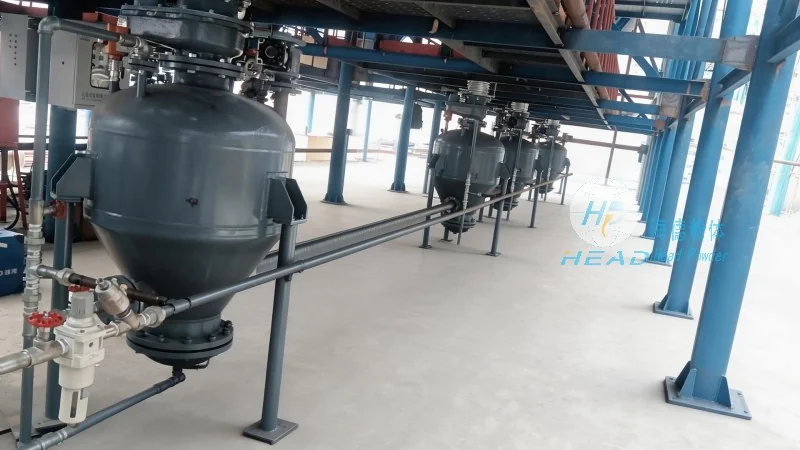
Pneumatic conveying, or air conveying, utilizes compressed air to transport stone powder through a pipeline network. This approach is widely adopted for its capability to handle fine powders and abrasive materials. A key advantage of pneumatic conveying is its high flexibility, allowing for complex routing and seamless integration with existing production lines. It can transport materials over extended distances with minimal maintenance, making it ideal for large-scale operations. However, this system has notable drawbacks, including high energy consumption due to continuous operation of air compressors. Additionally, it requires stringent dust control measures to prevent environmental contamination and equipment wear. The system's performance is also sensitive to the moisture content and particle size of the stone powder, which can affect conveying efficiency and increase operational costs.
2. Screw Conveyors
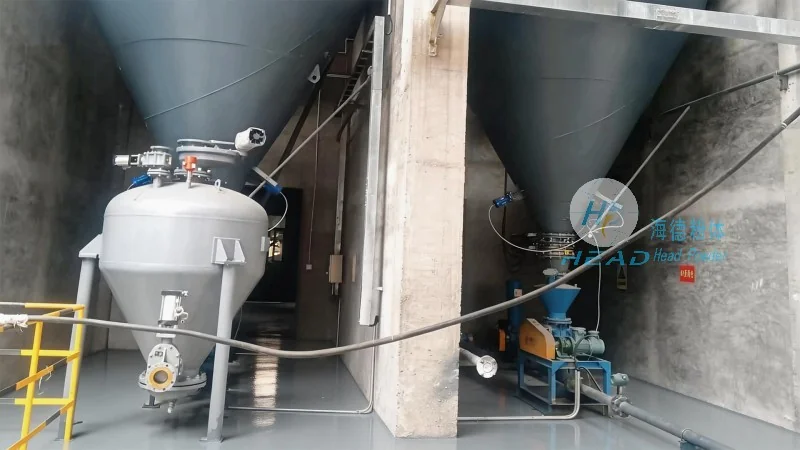
Screw conveyors, or auger conveyors, employ a rotating screw to move stone powder along a trough. This method is particularly suitable for handling dry, free-flowing powders with moderate particle sizes. The main advantage of screw conveyors is their simple and robust design, which reduces installation and maintenance costs. They are also capable of vertical and inclined transport, making them versatile for various spatial arrangements. However, screw conveyors have limitations in terms of maximum conveying capacity and particle size. Larger or sticky particles can cause blockages and increase wear on the screw and trough, leading to higher maintenance requirements. Moreover, the system's efficiency decreases with increased moisture content in the stone powder, as it can lead to clogging and reduced throughput.
3. Belt Conveyors
Belt conveyors utilize a continuous belt to transport stone powder horizontally or at a slight incline. This method is commonly used in bulk material handling due to its high capacity and ability to cover long distances. The primary advantage of belt conveyors is their ability to handle large volumes of material with consistent speed and minimal downtime. They are also relatively low in maintenance compared to other systems, as the main components (belt and rollers) are durable and easy to replace. However, belt conveyors have significant drawbacks, especially when dealing with fine and abrasive stone powders. The belt can suffer from abrasion and wear, reducing its lifespan and increasing replacement costs. Additionally, the system requires regular cleaning to prevent material buildup and ensure smooth operation. The design also limits the ability to transport materials vertically or over complex routes, which may necessitate additional equipment or modifications.
4. Other Conveying Solutions
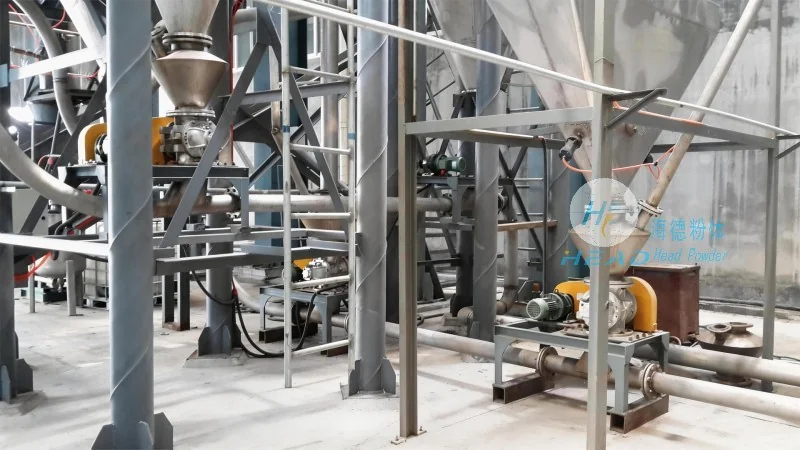
Beyond the mainstream methods, other auxiliary equipment serves specific scenarios. For instance, vibratory conveyors use a vibrating trough to transport stone powder, suitable for handling sticky or moist materials but with higher energy consumption and noise levels. Additionally, bucket elevators are used for vertical transport, offering high lifting heights and stable performance, though they have complex structures and higher installation costs. Shandong HeadPowder Engineering Co., Ltd. deeply understands the characteristics of these different conveying methods and can provide customized solutions based on client-specific needs, optimizing stone powder conveying efficiency and cost control.
When evaluating various conveying methods, enterprises should consider factors such as the physical properties of stone powder, transport distance, production scale, and budget constraints. For example, for long-distance, high-efficiency transport needs, pneumatic conveying may be more appropriate; while for short-distance, low-cost transport, screw conveyors might offer advantages. As a professional engineering company, Shandong HeadPowder Engineering Co., Ltd. is committed to providing tailored stone powder conveying systems for different industries, ensuring energy conservation, cost reduction, and long-term stable operation. By thoroughly analyzing the advantages and disadvantages of conveying methods and combining them with actual application scenarios, enterprises can make more informed decisions to enhance overall production efficiency and competitiveness.

 Shandong Headpowder Engineering Co., Ltd.
 156-6277-7102(Quản lý Trương)
  0531-83386006
  Thành phố Tế Nam, Tỉnh Sơn Đông, Trung Quốc
Điện thoại
WeChatTư vấn
Lên đầu