Với hơn 10 năm kinh nghiệm về vận chuyển khí nén, Headpowder Sơn Đông cung cấp hệ thống, thiết bị và quạt gió toàn chuỗi, đảm nhận các dự án kỹ thuật bột trọn gói trên toàn quốc.
When it comes to the efficient and reliable delivery of additives in industrial processes, understanding the various methods of conveying these materials is crucial. The choice of a suitable conveying system depends on several factors, including the physical properties of the additive, the required flow rate, the distance to be covered, and the overall operational environment. Shandong HeadPowder Engineering Co., Ltd., a leading manufacturer based in Shandong, China, specializes in providing high-quality conveying solutions tailored to meet the diverse needs of the additive industry. In this article, we will explore the common methods used for additive conveying, highlighting the key features and applications of each approach.
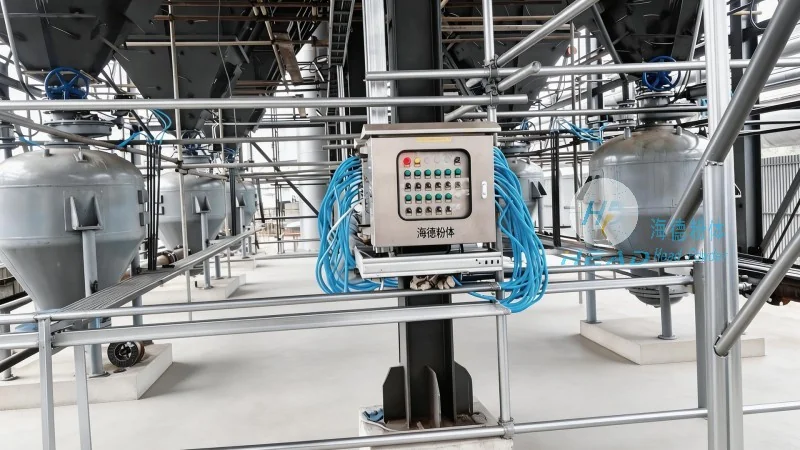
1. Pneumatic Conveying Systems
Pneumatic conveying, also known as air-powered conveying, is a widely used method for transporting additives, especially those that are fine powders or granules. This system utilizes compressed air or other gases to move the material through a pipeline. There are two main types of pneumatic conveying: pressure and vacuum systems. Pressure systems use compressed air to push the material forward, while vacuum systems create a negative pressure to draw the material into the pipeline. The choice between these two depends on the distance and the nature of the additive. For example, pressure systems are often used for short to medium distances, while vacuum systems are suitable for longer distances or when the material needs to be collected from multiple points. Pneumatic conveying offers advantages such as the ability to handle abrasive materials, the flexibility to route the system around obstacles, and the option to integrate with other processing equipment. However, it may require higher energy input compared to other methods and can be sensitive to the moisture content of the additive.
2. Screw Conveyors
Screw conveyors, also known as auger conveyors, are another common method for conveying additives. These systems consist of a rotating screw (auger) inside a trough or tube, which moves the material forward as the screw rotates. Screw conveyors are particularly effective for handling bulk materials that are free-flowing or semi-free-flowing. They are often used in applications where the additive needs to be mixed with other ingredients or where a gentle handling is required to avoid degradation. The design of the screw, including its pitch and diameter, can be customized to suit the specific characteristics of the additive. For instance, a high-pitch screw is suitable for free-flowing materials, while a low-pitch screw is better for sticky or cohesive materials. Screw conveyors are generally low-cost and easy to install, making them a popular choice for many industrial applications. They can be operated continuously or intermittently, depending on the process requirements. However, they may not be suitable for very fine powders that tend to clog the screw or for materials with high abrasiveness that can wear out the screw and trough quickly.
3. Pumped Conveying Systems
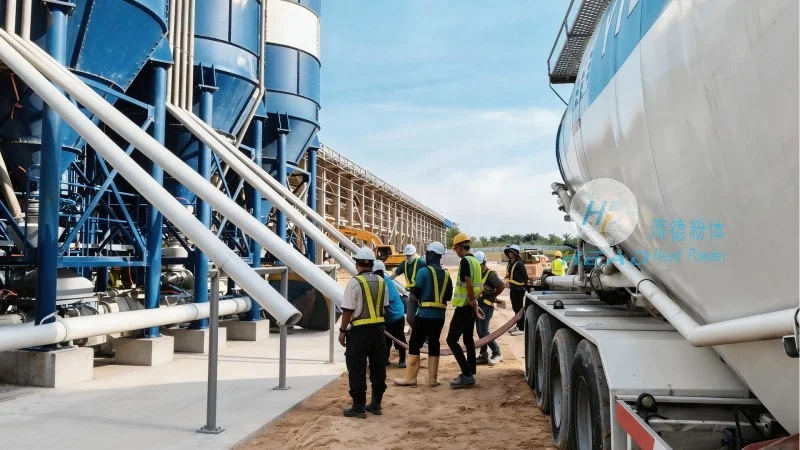
Pumped conveying systems, also referred to as slurry pumps or positive displacement pumps, are used for transporting additives that are in a liquid or slurry form. These systems use pumps to move the additive through a pipeline, often in combination with a carrier liquid such as water or oil. The choice of pump depends on the viscosity and density of the slurry. For example, centrifugal pumps are suitable for low to medium viscosity slurries, while positive displacement pumps like piston or diaphragm pumps are used for high viscosity or shear-sensitive materials. Pumped conveying offers the advantage of being able to handle a wide range of additive types, including those that are highly abrasive or corrosive. It can also be used for long-distance transport, as the pump can provide the necessary pressure to overcome friction losses in the pipeline. However, the system requires careful maintenance to prevent clogging and to ensure the pump operates efficiently. The use of a carrier liquid may also affect the final product, as it needs to be separated from the additive before use.
4. Belt Conveyors
Belt conveyors are a common method for transporting additives that are in a bulk form, such as granules or pellets. These systems consist of a continuous belt that moves over rollers or pulleys, carrying the additive from one point to another. Belt conveyors are often used in applications where the additive needs to be transported over a long distance or at a high capacity. They are particularly effective for handling free-flowing materials that do not stick to the belt. The design of the belt, including its width and material, can be selected based on the size and weight of the additive. For example, a wide belt is suitable for high-capacity applications, while a belt made of a non-stick material is better for sticky additives. Belt conveyors are generally reliable and can operate continuously for long periods. However, they may require regular maintenance to keep the belt tensioned and to prevent material buildup on the belt. They are also not suitable for very fine powders that can cause dust issues or for materials that are prone to degradation due to exposure to air.
5. Hydraulic Conveying
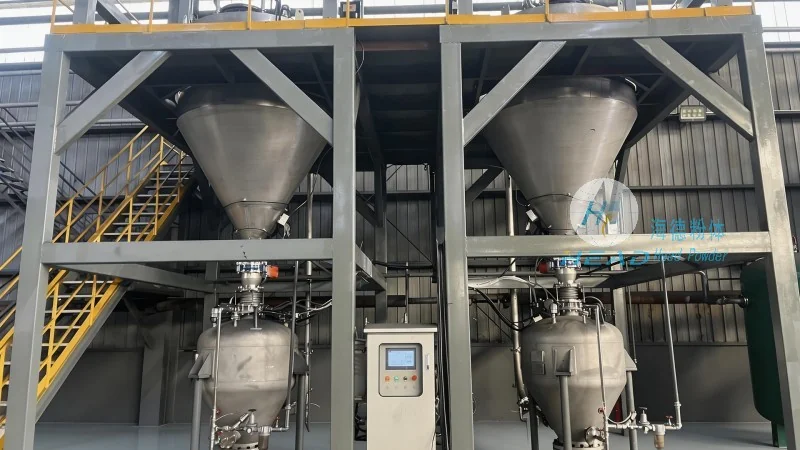
Hydraulic conveying is a method that uses a liquid medium, typically water or oil, to transport additives. The additive is mixed with the liquid to form a slurry, which is then pumped through a pipeline. This method is often used for additives that are difficult to handle by other means, such as very fine powders or those that are highly abrasive. Hydraulic conveying offers the advantage of being able to handle a wide range of additive types and to transport them over long distances with relatively low energy input. The system can also be designed to be self-cleaning, as the liquid helps to prevent clogging. However, it requires a separate system to separate the additive from the liquid after transport, which can add to the overall cost and complexity. The use of hydraulic conveying may also affect the additive's properties, as the liquid can cause changes in moisture content or particle size.
6. Vibratory Conveyors
Vibratory conveyors are a method that uses vibration to move additives along a trough. These systems consist of a trough that is mounted on vibration motors or eccentrics, which cause the trough to vibrate at a specific frequency and amplitude. The vibration helps to move the additive forward by causing it to slide or roll along the trough. Vibratory conveyors are particularly effective for handling sticky or cohesive materials, as the vibration helps to break up agglomerates and prevent material buildup. They are also suitable for fine powders that can be difficult to convey with other methods. The design of the conveyor, including the frequency and amplitude of the vibration, can be adjusted to suit the specific characteristics of the additive. For example, a higher frequency is suitable for fine powders, while a lower frequency is better for bulk materials. Vibratory conveyors are generally low-cost and easy to maintain, making them a popular choice for many industrial applications. However, they may not be suitable for very heavy or abrasive materials that can cause excessive wear on the trough and vibration components.

 Shandong Headpowder Engineering Co., Ltd.
 156-6277-7102(Quản lý Trương)
  0531-83386006
  Thành phố Tế Nam, Tỉnh Sơn Đông, Trung Quốc
Điện thoại
WeChatTư vấn
Lên đầu