Với hơn 10 năm kinh nghiệm về vận chuyển khí nén, Headpowder Sơn Đông cung cấp hệ thống, thiết bị và quạt gió toàn chuỗi, đảm nhận các dự án kỹ thuật bột trọn gói trên toàn quốc.
When it comes to handling and transporting mica powder, selecting the right conveying method is crucial for ensuring efficiency, safety, and product integrity. Mica powder, known for its unique reflective properties and wide industrial applications, requires specialized equipment to manage its fine particles and prevent issues like clogging or dust generation. This article provides a detailed comparison of common mica powder conveying methods, highlighting their advantages, limitations, and suitability for different operational scenarios.
HeadPowder: Your Trusted Partner in Mica Powder Handling Solutions
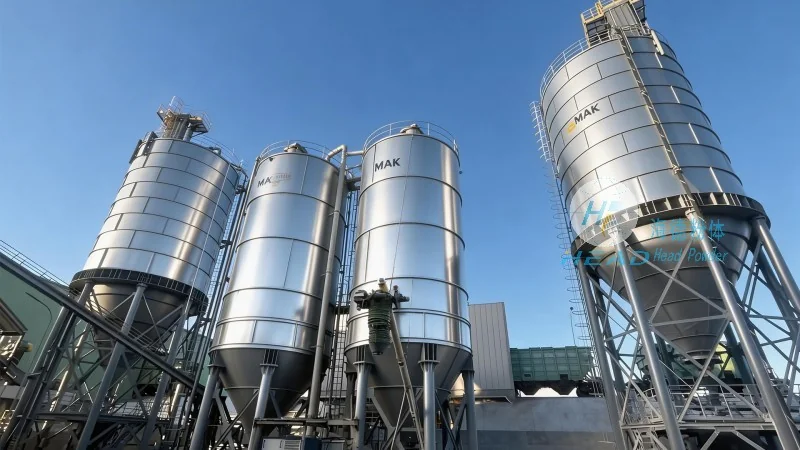
Shandong HeadPowder Engineering Co., Ltd., a leading manufacturer and supplier of mica powder processing equipment, specializes in providing tailored conveying solutions for various industrial needs. With years of experience in the field, HeadPowder understands the unique challenges associated with handling fine mica powders and offers reliable, efficient systems designed to meet the demands of modern production lines. The company’s commitment to quality and innovation ensures that clients receive equipment that not only enhances productivity but also maintains the purity and quality of their mica products. Located in Shandong, China, HeadPowder leverages its local expertise and advanced manufacturing capabilities to deliver high-performance conveying systems that stand the test of time.
1. Air-Pressure Conveying (Pneumatic Conveying)
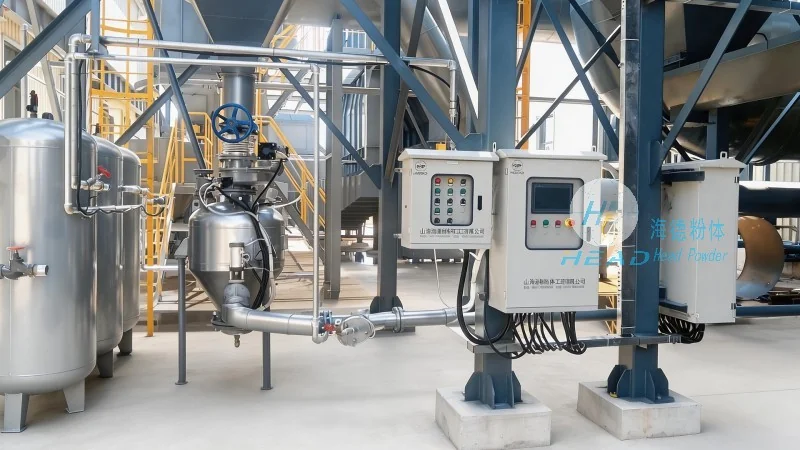
Air-pressure conveying, or pneumatic conveying, is a widely used method for transporting mica powder due to its ability to handle fine particles and operate in a closed system. This method involves using compressed air to move the powder through a pipeline, typically in a dilute-phase or dense-phase configuration. Dilute-phase pneumatic conveying is suitable for short to medium distances and low to moderate flow rates, where the powder is suspended in a high-velocity air stream. Dense-phase pneumatic conveying, on the other hand, uses lower air velocities and higher powder concentrations, making it ideal for longer distances and more viscous materials. The primary advantages of air-pressure conveying include its ability to transport mica powder without direct contact with mechanical components, reducing the risk of contamination and wear. However, it requires a reliable air supply system and may be less efficient for very fine or highly cohesive mica powders, as these can lead to blockages or increased energy consumption. HeadPowder offers advanced pneumatic conveying systems that incorporate features such as air filtration, particle size control, and pressure regulation to optimize performance and ensure consistent delivery of mica powder.
2. Screw Conveying
Screw conveying, also known as auger conveying, is a mechanical method that uses a rotating screw to move mica powder through a tube or trough. This method is particularly effective for handling dry, free-flowing mica powders and is commonly used in applications where the powder needs to be transported horizontally or at a slight incline. Screw conveyors are simple in design, requiring minimal maintenance, and can operate continuously without the need for external power sources beyond the motor driving the screw. The key advantage of screw conveying is its ability to handle a wide range of mica powder types, including those with varying particle sizes and moisture content. However, it may not be suitable for very fine or cohesive mica powders, as these can cause the screw to become clogged or require additional cleaning mechanisms. HeadPowder’s screw conveyors are equipped with adjustable screw speeds, variable pitch designs, and anti-wear coatings to enhance their durability and efficiency in mica powder handling. These features help prevent material buildup and ensure smooth, uninterrupted operation, even with challenging mica powder characteristics.
3. Vibrating Conveying
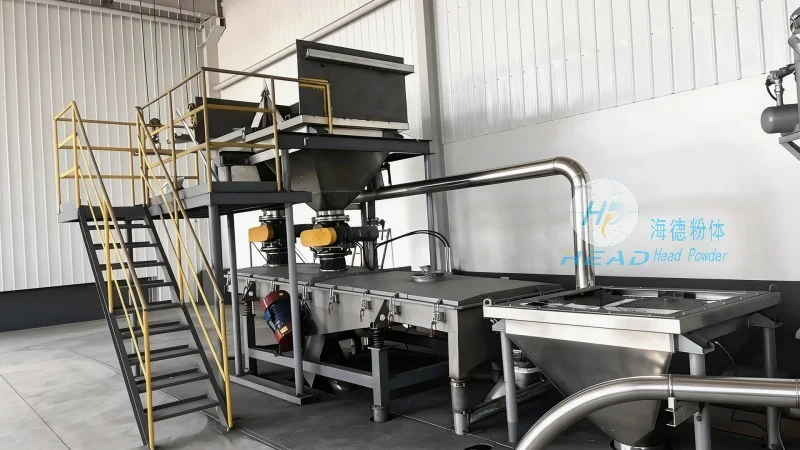
Vibrating conveying utilizes mechanical vibrations to move mica powder along a conveyor bed or trough. The system typically consists of a conveyor pan supported by vibration motors, which create a high-frequency, low-amplitude motion that causes the powder to move forward. This method is particularly effective for handling mica powders with high moisture content or those that tend to stick to surfaces, as the vibrations help break up agglomerates and prevent clogging. Vibrating conveyors are ideal for applications requiring gentle handling of the material, such as in food processing or pharmaceutical industries, but can also be adapted for mica powder transport. The primary benefits of vibrating conveying include its ability to handle sticky or cohesive mica powders and its low energy consumption compared to other mechanical methods. However, it may not be suitable for very fine or lightweight mica powders, as these can be carried away by the vibrations and cause loss of material. HeadPowder’s vibrating conveyors are designed with adjustable vibration frequencies and amplitudes, allowing for customization to suit different mica powder types. The equipment also includes features like dust suppression and material flow monitoring to ensure safe and efficient operation.
4. Hydraulic Conveying
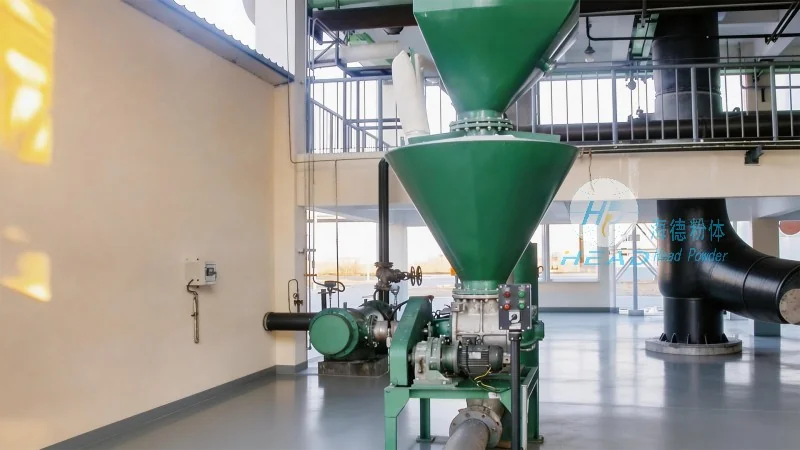
Hydraulic conveying, also known as slurry pumping, involves transporting mica powder mixed with a liquid medium through a pipeline. This method is particularly effective for handling very fine or cohesive mica powders that are difficult to convey using other methods. The liquid acts as a carrier, preventing the powder from settling and reducing the risk of blockages. Hydraulic conveying is commonly used in applications where the mica powder needs to be transported over long distances or through complex pipe networks. The primary advantage of this method is its ability to handle high concentrations of mica powder in the slurry, which can increase the overall throughput and reduce energy costs. However, it requires a separate liquid supply system and may introduce moisture into the mica powder, which could affect its properties in certain applications. HeadPowder offers hydraulic conveying systems that incorporate advanced mixing and pumping technologies to ensure consistent slurry quality and prevent clogging. The equipment is designed with corrosion-resistant materials to handle the abrasive nature of mica powder and the liquid medium, ensuring long-term reliability and minimal maintenance.
5. Comparison and Selection Criteria
When choosing a mica powder conveying method, several factors must be considered to ensure the best fit for the application. These include the particle size and density of the mica powder, the required flow rate and distance of transport, the presence of moisture or contaminants, and the overall budget and maintenance requirements. Air-pressure conveying is often preferred for its ability to handle fine particles and operate in a closed system, making it suitable for applications where dust control is critical. Screw conveying is a cost-effective option for horizontal transport of dry, free-flowing mica powders, while vibrating conveying is ideal for sticky or cohesive materials. Hydraulic conveying is best suited for long-distance transport of high-concentration mica slurries. HeadPowder recommends conducting a thorough analysis of the specific mica powder characteristics and operational requirements before selecting a conveying method. By working closely with HeadPowder’s engineering team, clients can receive personalized recommendations and equipment solutions that optimize performance, reduce downtime, and enhance the overall efficiency of their mica powder handling processes.

 Shandong Headpowder Engineering Co., Ltd.
 156-6277-7102(Quản lý Trương)
  0531-83386006
  Thành phố Tế Nam, Tỉnh Sơn Đông, Trung Quốc
Điện thoại
WeChatTư vấn
Lên đầu