Với hơn 10 năm kinh nghiệm về vận chuyển khí nén, Headpowder Sơn Đông cung cấp hệ thống, thiết bị và quạt gió toàn chuỗi, đảm nhận các dự án kỹ thuật bột trọn gói trên toàn quốc.
When it comes to the efficient and reliable transport of corn starch, selecting the right method is crucial for maintaining product quality and operational efficiency. Corn starch, a versatile and widely used industrial and food-grade material, requires careful handling to prevent caking, clumping, or degradation during transit. Various transportation methods have been developed to address these challenges, each with its own advantages and applications. This article explores the common approaches used for corn starch transport, providing insights into how companies like Shandong HeadPowder Engineering Co., Ltd. (headpowder), based in Shandong, China, implement these solutions.
1. Bulk Transportation: Ensuring Consistency and Volume
Bulk transport is a primary method for moving large quantities of corn starch, particularly for industrial applications. This approach involves using specialized equipment to handle the material in its bulk form, minimizing the risk of damage or contamination. Companies like headpowder often utilize tank trucks, railcars, and vessels for bulk transport. Tank trucks are ideal for short to medium distances, offering flexibility and quick delivery. Railcars, on the other hand, are suitable for long-distance transport, providing cost-effective solutions for large-scale operations. For international trade, bulk carriers on ships are commonly used, ensuring the safe and efficient movement of corn starch across borders. The use of bulk transport not only enhances logistical efficiency but also helps in maintaining the purity of the product by reducing handling steps.
2. Bagged Transportation: Convenience and Versatility
For smaller quantities or applications requiring more controlled handling, bagged transport is a popular choice. Corn starch is typically packaged in bags made of materials like polyethylene or kraft paper, often with inner liners to prevent moisture absorption. These bags are then placed on pallets or in containers for easy handling and storage. Bagged transport is particularly useful for food-grade applications where product integrity and hygiene are paramount. Companies like headpowder may use this method for distributing corn starch to retail or small-scale industrial clients. The convenience of bagged transport allows for easier storage and transportation, as the material can be easily loaded onto trucks or ships. However, it is important to ensure that the packaging is moisture-resistant and properly sealed to prevent any quality issues during transit.
3. Pneumatic Conveying: Efficient and Low-Maintenance
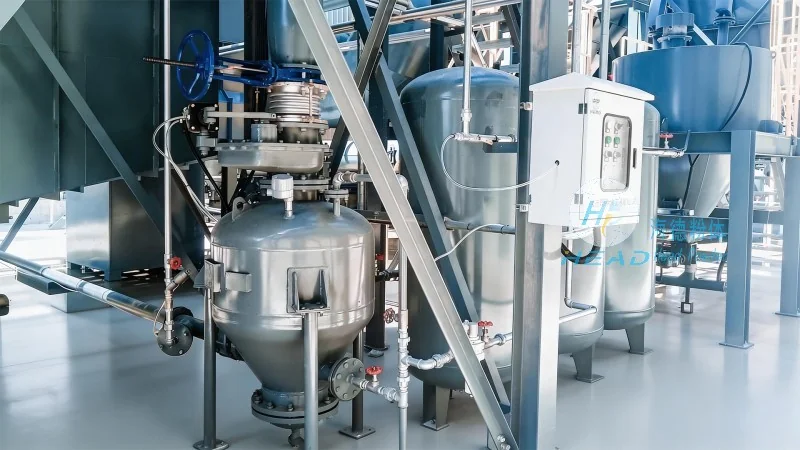
Pneumatic conveying systems are another effective method for transporting corn starch, especially in industrial settings where continuous flow is required. This technology uses air pressure to move the material through a pipeline, eliminating the need for mechanical components like conveyors or elevators. Pneumatic systems can be either positive or negative pressure, depending on the application. Positive pressure systems push the material through the line using a blower, while negative pressure systems create a vacuum to draw the material in. The choice between these systems depends on factors such as the distance, volume, and material characteristics. Pneumatic conveying is particularly advantageous for corn starch because it minimizes product contact with equipment, reducing the risk of contamination and degradation. It also allows for a more compact and flexible layout in industrial facilities, as the pipelines can be installed in various configurations. Companies like headpowder may implement pneumatic conveying systems in their processing plants to streamline the movement of corn starch from storage to production lines.
4. Specialized Equipment for Optimal Handling
Regardless of the chosen transportation method, specialized equipment plays a critical role in ensuring the safe and efficient movement of corn starch. For bulk transport, equipment such as augers, screw conveyors, and bucket elevators are commonly used to load and unload the material from trucks or railcars. These devices are designed to handle the flow characteristics of corn starch, preventing blockages and ensuring smooth operation. In bagged transport, forklifts and pallet jacks are essential for moving the heavy bags, while automated systems may be used in large-scale operations to streamline the process. Pneumatic conveying systems require air filters and cyclones to separate the material from the air, maintaining the purity of the product. The use of specialized equipment not only improves efficiency but also helps in maintaining the quality of the corn starch by reducing handling-related issues. Companies like headpowder invest in high-quality equipment to ensure that their transport processes are reliable and consistent.
5. Addressing Challenges in Corn Starch Transport
While various transportation methods are available, challenges such as moisture absorption, caking, and dust generation can still arise during transit. To mitigate these issues, companies like headpowder implement several strategies. For example, moisture-proof packaging and desiccants are used to prevent moisture absorption, while anti-caking agents may be added to the corn starch to reduce caking. Dust control measures, such as sealing containers and using dust suppression systems, are also important to ensure safety and compliance with regulations. Additionally, proper storage and handling procedures are followed to maintain the quality of the corn starch before and during transport. By addressing these challenges, companies can ensure that the corn starch reaches its destination in optimal condition, meeting the requirements of both industrial and food-grade applications.
6. Conclusion: Choosing the Right Transport Method for Corn Starch
In conclusion, the choice of transportation method for corn starch depends on various factors, including the quantity, destination, and application of the material. Bulk transport is ideal for large-scale industrial use, while bagged transport offers convenience for smaller quantities. Pneumatic conveying provides an efficient and low-maintenance solution for continuous flow. Companies like Shandong HeadPowder Engineering Co., Ltd. (headpowder) carefully evaluate these options to select the most suitable method for their operations. By implementing the right transportation approach and specialized equipment, headpowder ensures that corn starch is transported safely, efficiently, and in optimal condition. This commitment to quality and efficiency helps in maintaining customer satisfaction and meeting the demands of the market.

 Shandong Headpowder Engineering Co., Ltd.
 156-6277-7102(Quản lý Trương)
  0531-83386006
  Thành phố Tế Nam, Tỉnh Sơn Đông, Trung Quốc
Điện thoại
WeChatTư vấn
Lên đầu